
Does HVAC Mold Affect Indoor Allergies at Home?
A stuffy nose that starts every time the AC turns on is easy to dismiss as seasonal allergies. But does HVAC mold affect indoor allergies? It can. When mold grows inside air conditioning components or near supply vents, the system may circulate mold spores, fragments, and other irritating particles through the same air your family breathes every day.
That does not mean every sneeze points to mold, and it does not mean every dark spot in a vent is mold. Pollen, dust, pet dander, dirty filters, dry air, and outdoor pollution can all trigger similar symptoms. Still, recurring allergy-like symptoms that worsen indoors or during AC use are a reason to take your HVAC system seriously.
How HVAC Mold Can Trigger Indoor Allergy Symptoms
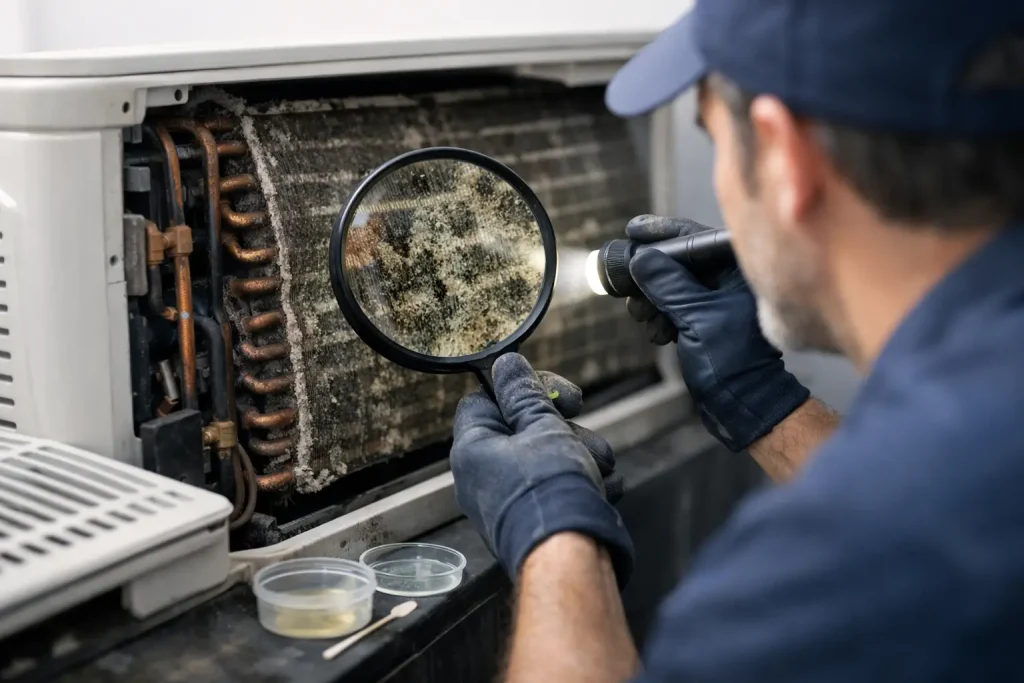
Mold needs moisture and organic material to grow. Your HVAC system can provide both, especially around the evaporator coil, drain pan, condensate line, insulation, and dusty duct surfaces. In humid climates, a system that does not drain correctly or runs for long periods can stay damp enough to support growth.
As air moves through the system, it can pick up particles from contaminated areas and carry them into rooms. People who are allergic or sensitive to mold may react when exposed. Common complaints include sneezing, a runny or stuffy nose, itchy or watery eyes, coughing, throat irritation, and worsening asthma symptoms.
Not everyone reacts the same way. One person may notice only a persistent musty smell, while another develops symptoms after spending a few hours in a cooled bedroom or office. Children, older adults, people with asthma, and those with allergies or weakened immune systems may be more affected by poor indoor air conditions.
Mold exposure can also irritate people who do not have a diagnosed mold allergy. That is why symptoms alone cannot confirm the source. The practical question is whether there is a contamination problem in the system that deserves attention before it spreads or becomes harder to address.
Signs Your AC System May Be Part of the Problem
A musty odor when the air conditioner starts is one of the clearest warning signs. The smell may fade after the system has run for a while, but it should not be ignored. Odor can come from microbial buildup on the coil or drain pan, moisture-damaged materials, or mold in or around ductwork.
You may also notice symptoms that follow a pattern: they become worse in one room, improve when you leave the building, return after the AC cycles on, or show up more often during humid weather. That pattern does not prove mold, but it gives you a useful reason to inspect and test rather than simply changing allergy medication.
Other clues include visible spotting around vents, repeated water leaks, condensation near registers, a clogged condensate drain, or filters that become damp or unusually dirty. A dirty filter by itself is not evidence of mold. However, it can reduce airflow and allow moisture to linger, creating conditions that make growth more likely.
Mold Allergies, Asthma, and Irritation Are Not the Same
People often use the word “allergies” for every respiratory reaction, but there is a difference between an allergic response, asthma aggravation, and general irritation. A true mold allergy involves the immune system. Asthma can flare when air contains mold particles, dust, or other triggers. Irritation can cause scratchy eyes, coughing, or throat discomfort without being a formal allergy.
The distinction matters because a medical professional can help identify the cause of ongoing symptoms. But from a home-maintenance perspective, the response is similar: reduce unnecessary exposure, find the moisture source, and correct the condition instead of masking it with air fresheners or stronger filters alone.
If someone has severe shortness of breath, wheezing that does not improve, chest tightness, or a serious asthma episode, seek medical care promptly. Indoor air testing is helpful for identifying a possible environmental issue, but it is not a substitute for medical diagnosis or urgent treatment.
Why HVAC Mold Is Easy to Miss
Most of an air conditioning system is hidden. The areas where mold is most likely to develop are often behind access panels, inside the air handler, below the coil, or beyond the vent opening. A clean-looking register does not guarantee that the system is clean deeper inside.
Professional HVAC or mold inspections can be appropriate, particularly after water damage, when contamination is visible, or when a building has persistent moisture issues. The trade-off is cost, scheduling, and the fact that homeowners may wait weeks while symptoms continue.
For many households and small businesses, an HVAC-specific test is a sensible first step. Clean Vent Air Solutions offers a low-cost DIY AC mold test designed to check the system that circulates air through the property. The process is simple: clip, combine, and cover, with results available in 24 to 48 hours and an optional lab report when additional validation is needed.
A test result does not replace a qualified remediation plan if contamination is confirmed. What it does provide is direction. Instead of guessing whether the odor or symptoms are connected to the AC, you have a clearer reason to call an HVAC professional, inspect drainage, clean affected components, or discuss next steps with a property manager.
What to Do If You Suspect Mold in Your HVAC System
Start with the moisture source. Check for standing water near the indoor unit, drain pan overflow, a blocked condensate line, or dripping around vents. Replace a dirty filter with the correct size and rating for your system. A filter helps capture particles, but it cannot fix active growth on a wet coil or inside contaminated materials.
Avoid spraying fragrances, bleach, or random cleaning chemicals into vents. These products can create fumes, damage components, and leave the actual moisture problem unresolved. If you see extensive growth, insulation damage, recurring leaks, or contamination after flooding, professional assessment is usually the safer route.
For renters, document odors, leaks, visible signs, and the timing of symptoms. Notify the landlord or property manager in writing so there is a record of the concern. For business owners, do not overlook complaints from staff or customers. A musty-smelling waiting room, classroom, salon, or small office can affect comfort, confidence, and day-to-day operations.
Reduce the Conditions Mold Likes
Preventing HVAC mold is less about one magic product and more about keeping the system dry, clean, and properly maintained. Have the AC serviced on schedule, especially before heavy cooling season. Ask the technician to inspect the evaporator coil, drain pan, condensate line, blower area, and accessible duct connections.
Keep indoor humidity under control. Many homes feel best around 30% to 50% relative humidity, though the right setting depends on climate and comfort. If humidity remains high even while the AC runs, the system may be oversized, poorly maintained, or not removing moisture effectively.
Do not close off too many vents or block returns with furniture. Restricted airflow can contribute to uneven cooling and moisture problems. If rooms have persistent condensation, a damp smell, or repeated mildew around windows, those conditions may point to a broader humidity issue that deserves attention beyond the HVAC system.
Your home should feel like relief from outdoor allergens, not the place where symptoms keep returning. If the air smells musty, your AC has had moisture trouble, or allergy symptoms seem tied to cooling cycles, a quick HVAC mold check can turn uncertainty into a clear next step.