
How to Spot AC Mildew Before It Affects Air
A musty smell that returns every time your air conditioner turns on is not something to cover with a candle or air freshener. It can be an early warning that moisture and microbial growth are present somewhere in the system moving air through your home or business. Knowing how to spot AC mildew helps you act before a small concern becomes a bigger air-quality, property, or HVAC problem.
People often use the word mildew for any dark or fuzzy-looking growth near an air conditioner. Technically, mildew is a type of mold growth, and the difference is less important than the source: unwanted moisture inside or around your AC system. Condensation, clogged drains, dirty filters, and humid conditions can create places where mold may grow. Your job is not to identify the species by sight. It is to recognize the warning signs, check safely, and get a clear answer.
How to Spot AC Mildew: Start With the Smell
A persistent musty, earthy, or damp-basement odor is one of the most common clues. Pay attention to when it appears. If the smell starts or gets stronger shortly after the AC blower comes on, contamination may be near the evaporator coil, drain pan, ductwork, air handler, or supply vents.
A brief odor after a long period without using the system can come from dust or temporary moisture. But an odor that keeps returning over several cooling cycles deserves attention. Do not assume a clean-looking room means the AC is clean. Much of the system is hidden behind grilles, panels, and ducts.
The smell may be strongest in one room, which can point to a nearby vent or duct branch. If it is noticeable throughout the house or office, the issue may be closer to the central air handler or in a shared part of the system.
Look for Visible Clues Around Vents and AC Components
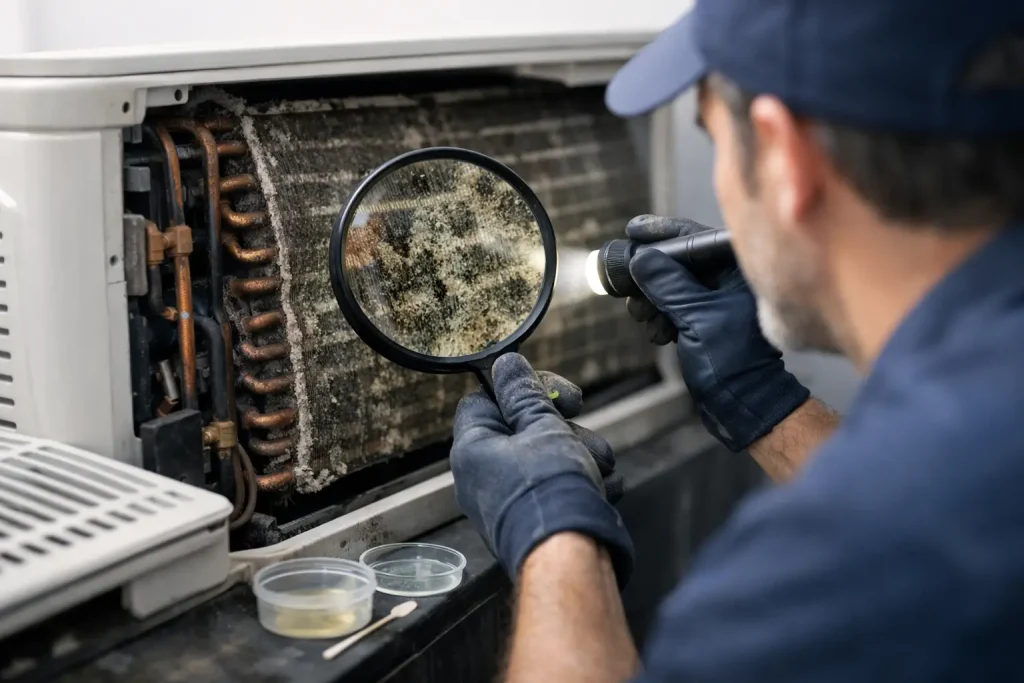
Turn off the system before inspecting accessible areas. Use a flashlight and look at vent covers, return-air grilles, the area behind removable registers, and the cabinet around an indoor air handler. You may see black, green, gray, brown, or white specks, smudges, or fuzzy patches.
Visible spots are a reason to investigate, but they are not proof of mildew on their own. Dust, soot, rust, and residue can look similar. A stain that returns after cleaning, spreads, or appears alongside moisture and a musty odor is more concerning.
Also look for condensation on vent covers, damp drywall or ceiling areas near vents, peeling paint, and water marks around the air handler. Moisture is the condition mildew needs to develop. Finding where the moisture is coming from matters as much as finding the growth itself.
A few locations are especially worth checking:
- Supply vents and return grilles, particularly in bathrooms, kitchens, basements, and humid rooms
- The condensate drain pan and drain line near the indoor unit
- Insulation around ducts, where sweating or leaks can keep materials damp
- Window units, portable AC units, and their filters, louvers, and drain areas
Avoid reaching deep into ductwork, disturbing a large visible patch, or opening equipment you are not qualified to service. That can spread debris and may damage the system.
Notice Changes in Your Air and Your Health
Mildew concerns are not always visible. Some people first notice irritated eyes, coughing, sneezing, a scratchy throat, congestion, or worsening allergy-like symptoms while the AC is running. These symptoms can have many causes, including seasonal pollen, dust, pets, viruses, and dry air. They cannot confirm mold exposure by themselves.
The useful pattern is timing. If symptoms happen mainly in one building, in one room, or when the cooling system cycles on, that pattern is worth taking seriously. Families with asthma, allergies, young children, older adults, or people with respiratory conditions may be especially motivated to identify indoor air concerns quickly.
Do not wait for symptoms to become severe before checking. Early detection gives you more options and may help prevent continued exposure to poor indoor air conditions.
Check for the Moisture Problem Behind the Mildew
AC systems naturally remove humidity from the air. That water has to drain correctly. When it does not, moisture can collect in places that should stay dry.
Start with the basics. A clogged filter restricts airflow and can contribute to coil condensation. A blocked condensate drain can cause standing water, leaks, or overflow near the indoor unit. Poorly insulated ducts can sweat in hot, humid areas such as attics, crawl spaces, garages, and basements. An oversized or poorly maintained AC system may cool quickly without removing enough humidity.
You can replace a dirty filter and keep accessible drain areas clean, but repeated water, leaks, or heavy condensation should be addressed by an HVAC professional. Cleaning a surface without correcting the moisture source often means the problem returns.
Use a Test When Sight and Smell Are Not Enough
A visual check is helpful, but it has limits. Growth inside ducts or on internal components may not be visible from the vent. Odors can be inconsistent, and surface stains are easy to misread. Testing provides a more direct first step when you need more than a guess.
A DIY AC mold test can be especially useful when there is a musty odor, recurring moisture, unexplained irritation while the system runs, or visible spotting near vents. It can also help after a leak, flooding event, long vacancy, or HVAC repair. The goal is not to panic over every speck of dust. It is to find out whether mold contamination may be part of the problem before paying for unnecessary services or ignoring a real concern.
Clean Vent Air Solutions offers a focused, low-cost way to check an AC system using a simple clip, combine, cover process. Results are available within 24 to 48 hours, with an optional lab report for additional validation. For homeowners, renters, and small business operators, that kind of early answer can make the next decision much clearer.
What to Do If You Suspect AC Mildew
First, reduce the conditions that support growth. Replace a dirty filter with the correct size and type for your system. Keep indoor humidity in a comfortable range, ideally below 50% when possible. Address leaks promptly, and make sure condensate is draining instead of pooling around the unit.
Next, document what you notice. Take clear photos of stains or moisture, note which vents smell musty, and write down when odors or symptoms occur. This information can help an HVAC technician or remediation professional locate the source faster.
Small amounts of surface residue on an accessible metal vent cover may be cleaned carefully after removing the cover, following safe cleaning-product instructions and allowing it to dry completely. Porous materials such as wet insulation, drywall, or duct liner are different. They may need professional assessment because contamination can be difficult to remove completely.
If you see extensive growth, find water-damaged building materials, have repeated AC leaks, or experience strong persistent odors, skip DIY cleanup and contact a qualified professional. Renters should notify the property owner or manager in writing and keep a record of the concern. Business owners should act promptly to protect employees, customers, and the property.
Do Not Let a Clean Vent Cover Create False Confidence
A freshly wiped register can look reassuring, but the vent cover is only the visible edge of a larger air-moving system. The underlying question is whether moisture or contamination is present where conditioned air travels. That is why odor patterns, visible moisture, system maintenance, and targeted testing work better together than any one sign alone.
Trust what your home is telling you. When the AC smells damp, vents show recurring spots, or the air feels like it is bothering people inside, a fast check is a practical step toward cleaner air and peace of mind.