
HVAC Drain Problems That Can Lead to Mold
A small puddle near your indoor AC unit is easy to dismiss. But HVAC drain problems are not just a housekeeping issue. When condensation cannot leave the system properly, standing water can create the damp conditions mold needs to grow inside or around the equipment that circulates air through your home or business.
That is why a dripping air handler, a musty smell when the AC starts, or unexplained water damage deserves a quick response. Catching the source early may prevent a simple drain issue from becoming a mold concern, a ceiling repair, or a larger HVAC service bill.
Why HVAC Drain Problems Happen
Your air conditioner removes humidity from indoor air as it cools. That moisture collects on the evaporator coil and drips into a condensate pan. From there, it should travel through a drain line and out of the home or into an approved drainage point.
The process is simple, but it depends on every part of the drainage path staying clear and properly positioned. Dust, slime, algae-like buildup, rust, insulation debris, and microbial growth can collect in the pan or line. Over time, the line may clog and water has nowhere to go except back into the unit, onto the floor, or through a ceiling.
In some cases, the drain line itself is clear, but the problem is mechanical. A cracked drain pan, disconnected pipe, failing condensate pump, poorly sloped line, or frozen evaporator coil can all produce water where it does not belong. The right fix depends on the cause.
Signs Your AC Drain May Be Failing
Water is the most obvious warning sign, but it is not the only one. Check around the indoor air handler, furnace cabinet, utility closet, attic installation, or ceiling below the unit. A wet floor, stained drywall, warped baseboard, or recurring damp spot should never be ignored.
A musty or sour odor when the system turns on can also point to moisture buildup. The smell may come from a wet drain pan, clogged condensate line, dirty coil, or mold growth in the system or nearby building materials. Odor alone cannot confirm mold, but it is a strong reason to investigate.
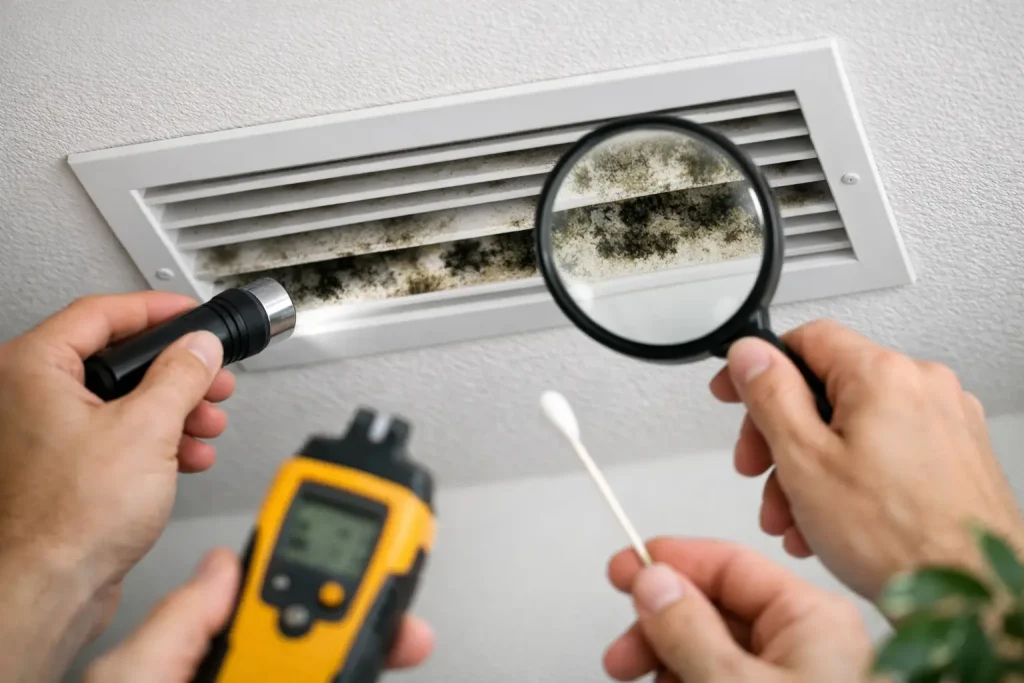
Other warning signs include the AC shutting off unexpectedly, unusually high indoor humidity, water dripping from a vent, or visible dark or fuzzy spots near the air handler. People in the space may also notice recurring allergy-like symptoms, throat irritation, coughing, or a stuffy feeling that improves when they leave the building. Those symptoms have many possible causes, so avoid guessing. Look for moisture sources and test when contamination is a concern.
A Full Drain Pan Is a Time-Sensitive Problem
Some systems have a float switch designed to shut the AC down when water rises in the pan. This protection can prevent an overflow, but it also means the system may stop cooling in the middle of a hot day. Other systems do not have a working safety switch, leaving water to spill until someone notices.
If you see standing water in or around the unit, turn the thermostat off before inspecting it. Do not keep running the AC in hopes that the water will disappear. Continued operation can worsen overflow damage and keep feeding moisture into a potential mold source.
What You Can Safely Check First
Start with what you can see without opening sealed equipment or handling electrical components. Confirm whether water is pooling around the indoor unit, whether the drain pan is visibly full, and whether the outside drain termination is dripping while the AC runs. In humid weather, some drainage outdoors is normal. No drainage combined with indoor water is not.
If you can safely access the drain line opening near the indoor unit, look for visible debris or sludge. A wet/dry vacuum at the outdoor end of the line can sometimes remove a simple clog. This may restore drainage, but it does not repair a cracked pan, failed pump, frozen coil, or line installed with the wrong slope.
Avoid pouring harsh chemicals into your HVAC system. Strong cleaners can damage components, create fumes, and may not reach the actual blockage. Bleach is often used as a quick fix online, but it can be hard on certain materials and should not be mixed with any other cleaner. If you are unsure what your system can handle, stop and contact a qualified HVAC professional.
You should also replace a visibly dirty air filter. A restricted filter can reduce airflow and contribute to coil freezing. When that ice melts, it can overwhelm a drain system that seemed fine before. Still, a new filter is not a cure for every water issue. If the coil is frozen, keep the system off and have the underlying airflow or refrigerant issue diagnosed.
When a Drain Issue Becomes a Mold Concern
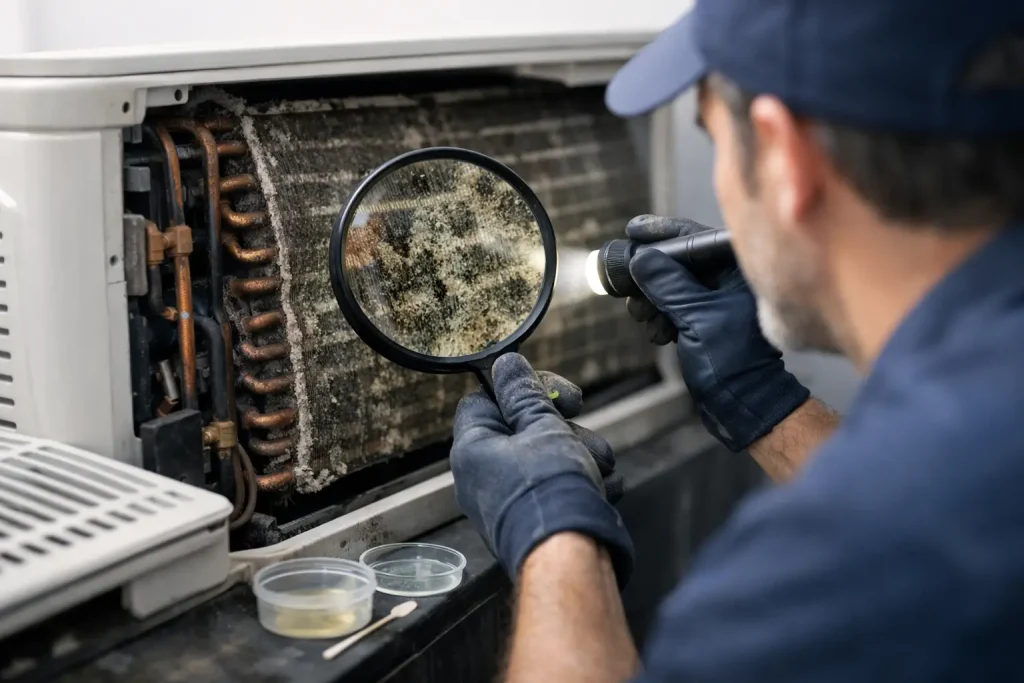
Mold needs moisture, a surface to grow on, and time. An overflowing pan or slow drain can provide all three, especially in warm, dark HVAC spaces. Dust and organic debris inside the system can give microbial growth something to feed on.
The risk is not limited to visible mold around the unit. If moisture and contamination develop near the coil, blower compartment, or duct connections, the HVAC system may move odors and particles through occupied rooms. That is especially concerning for families with children, older adults, people with asthma or allergies, and anyone with a weakened immune system.
It depends on how long the moisture has been present and where it traveled. A single, quickly cleaned spill may not create a major contamination issue. Repeated overflows, chronic musty odors, wet insulation, stained ceilings, or visible growth are different. Those signs call for a more careful assessment rather than a surface wipe and a return to normal operation.
Test Before You Assume
A drain clog tells you that moisture is present. It does not tell you whether mold is growing inside the AC system. Likewise, an odor can be a useful warning sign without identifying its source.
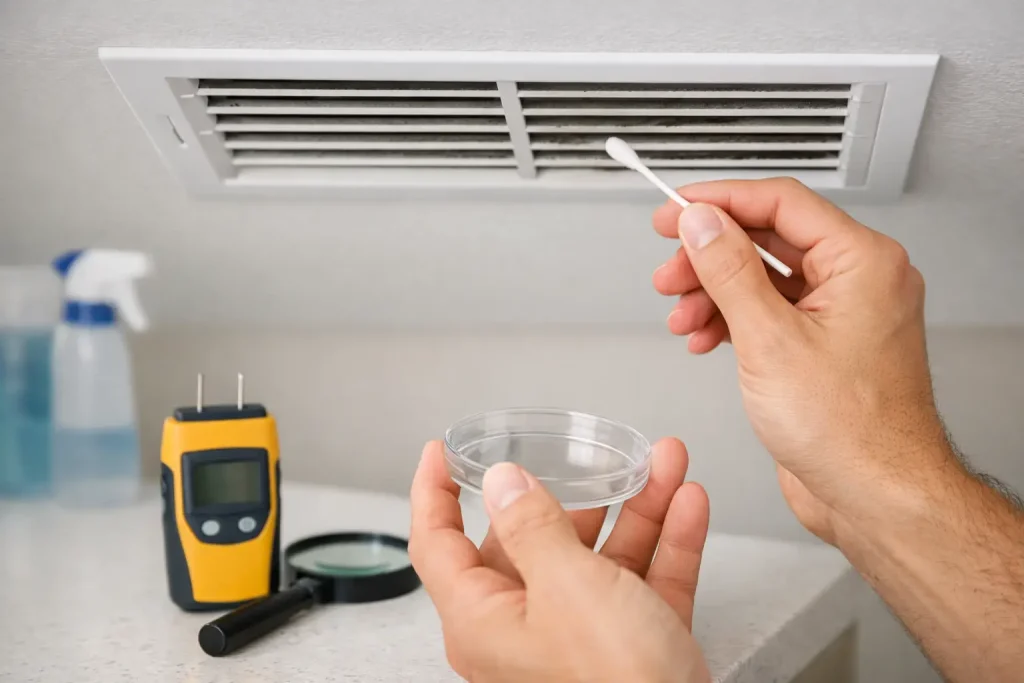
A focused AC mold test can give you a fast first answer before you decide how far to take the investigation. Clean Vent Air Solutions offers a simple DIY option built for air conditioning systems: clip, combine, and cover. Results are available within 24 to 48 hours, with an optional lab report when you want additional validation.
Testing is particularly useful after a recurring drain backup, before moving into a property with a musty AC smell, or when occupants experience symptoms that seem connected to the system running. A positive result is a reason to bring in qualified HVAC and remediation help to locate the moisture source and clean the system correctly. A negative result can also provide useful peace of mind while you address the drainage repair.
When to Call an HVAC Professional Right Away
Some HVAC drain problems are not appropriate for a DIY attempt. Call a qualified technician if water is leaking through a ceiling or wall, the unit keeps shutting down, the drain pan is cracked or rusted through, the evaporator coil is frozen, or the condensate pump is not working.
You should also get professional help if the drain line clogs repeatedly. A recurring blockage may mean the line needs to be reconfigured, cleaned more thoroughly, or fitted with an improved access point or safety switch. Repeatedly vacuuming the same line can buy time, but it does not always solve the reason buildup keeps returning.
If visible mold covers a large area, building materials are saturated, or the odor is strong throughout multiple rooms, avoid disturbing the affected area. Improper cleaning can spread particles rather than remove the problem. A professional can determine whether the issue is confined to the HVAC equipment or has moved into insulation, drywall, flooring, or ductwork.
Prevent the Next Backup
Drain prevention is basic maintenance, but it protects more than the equipment. Keep filters on schedule, have the AC serviced regularly, and make sure the condensate drain is checked during routine maintenance. Ask the technician to inspect the pan, line, trap, pump if present, and safety shutoff.
Pay attention after periods of heavy AC use. Summer humidity puts more water through the drain system, so small restrictions are more likely to show up then. A quick look around the indoor unit and an occasional check for normal outdoor drainage can help you spot trouble before water reaches your floors or ceilings.
Your AC should cool your space, not quietly add moisture and uncertainty to it. When a drain problem appears, act early, correct the water source, and get a clear answer if mold may be involved. Clean, dry HVAC equipment helps protect the air everyone in the space breathes.