
How to Inspect AC Drainage Before Mold Spreads
A working air conditioner should remove more than heat from your home. It also pulls moisture from the air, then sends that water safely outside or to a designated drain. When that pathway is blocked, leaking, or dirty, moisture can collect where it does not belong – creating conditions that can support mold growth in and around your HVAC system.
Learning to inspect AC drainage is one of the simplest ways to catch a small moisture problem before it becomes a musty odor, water-damaged ceiling, or indoor air concern. You do not need HVAC experience to spot many of the early warning signs. You do need to know what is normal, what is not, and when to stop troubleshooting and call for help.
Why AC Drainage Matters for Indoor Air
Your AC indoor unit contains an evaporator coil. As warm indoor air moves across that cold coil, water vapor condenses into liquid water, much like moisture forming on the outside of a cold glass. That condensation falls into a drain pan and flows through a condensate drain line.
In a humid climate, your system may remove gallons of water in a single day. If the drain line clogs with algae-like buildup, dust, sludge, or debris, the water can back up into the drain pan or overflow into the unit, walls, attic, closet, or ceiling below.
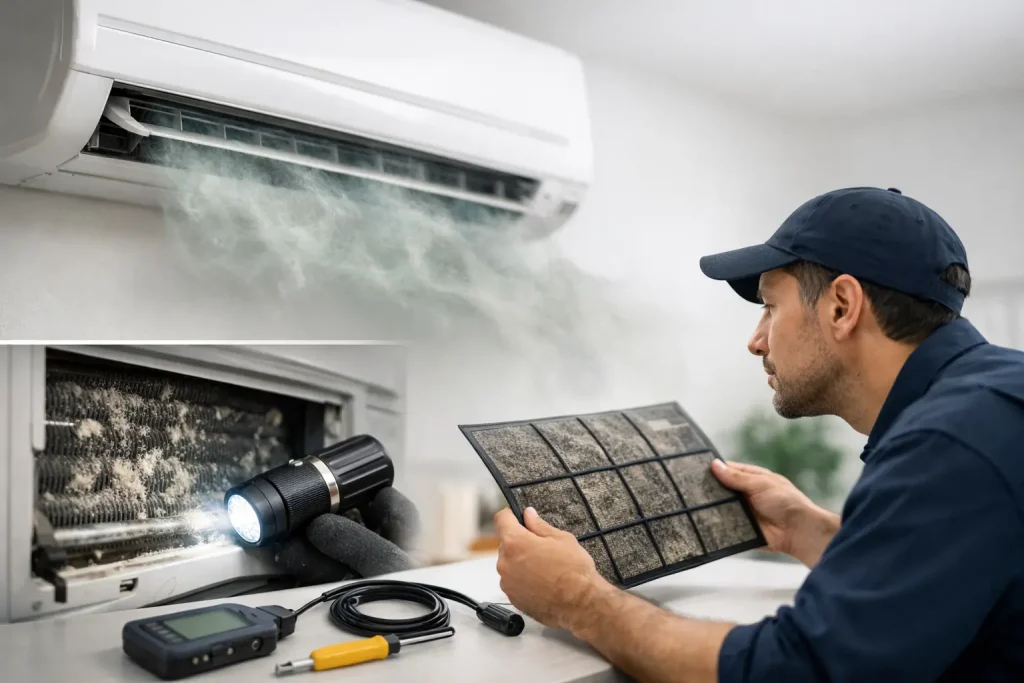
Standing water does not automatically mean mold is present in the air you breathe. But damp, dark HVAC areas can become a favorable place for microbial growth. That is why drainage problems deserve quick attention, especially if you also notice a musty smell when the AC turns on, visible spotting near vents, or recurring allergy-like irritation indoors.
When to Inspect AC Drainage
Check your AC drainage at the beginning of cooling season and at least once more during periods of heavy use. In hot, humid areas, monthly visual checks can be worthwhile. You should also inspect it promptly after an AC maintenance visit, a power outage, or any time the system is not cooling as expected.
Certain warning signs call for an immediate look. These include water around the indoor air handler, a wet or stained ceiling near the unit, water dripping from a secondary drain pipe, gurgling sounds, unusually high indoor humidity, or the AC shutting off unexpectedly. Some systems have a float switch that turns the unit off when drain water rises. That shutdown can protect your home from an overflow, but it is still a signal that the drain needs service.
How to Inspect AC Drainage Safely
Start by turning off the thermostat and, if you can access it safely, switching off power to the indoor unit. You are looking for signs of water and buildup, not taking apart electrical components. If your air handler is in a tight attic, near damaged wiring, or above a finished ceiling that is already wet, skip the DIY inspection and contact an HVAC professional.
Find the Indoor Unit and Drain Pan
The indoor unit may be located in a utility closet, garage, basement, crawlspace, or attic. Look around the base of the unit for pooled water, damp insulation, rust, staining, or a sour or musty odor.
Many systems have a primary condensate pan built into the unit and a larger secondary pan underneath it. The secondary pan is a backup, not a place where water should sit for long. A small amount of water may appear while the system is actively draining, but a full pan, rusted pan, or visible slime means the system needs attention.
Do not confuse normal condensation on an insulated refrigerant line with a drain leak. A properly insulated line can feel cool or slightly damp on the outside in humid conditions. Water collecting beneath it, however, may point to damaged insulation or another moisture issue worth addressing.
Follow the Condensate Drain Line
The primary drain line is usually a white PVC pipe leaving the indoor unit. Follow it as far as you can. It may run outdoors, connect to a plumbing drain, or terminate near an exterior wall. Look for cracked joints, loose fittings, sagging sections, drips, and damp drywall or flooring along its route.
If the line exits outdoors, check whether water is dripping while the AC has been running. On a hot, humid day, a steady drip is often a good sign that moisture is leaving the system. No outdoor dripping is not proof of a clog, because some systems drain elsewhere. Still, if there is no discharge and you see water near the indoor unit, treat that combination as a likely drainage problem.
Some homes have a secondary drain line that exits in a noticeable location, such as above a window or doorway. Water coming from that pipe is a warning, not normal operation. It often means the primary drain is blocked and the backup path is being used.
Check the Cleanout Opening
Many condensate lines have a capped vertical PVC opening near the air handler. This is often called a cleanout. Remove the cap carefully and shine a flashlight inside. Dark sludge, standing water near the top, or a strong musty odor can indicate buildup or a blockage farther down the line.
Avoid pushing wire, coat hangers, or sharp tools into the pipe. They can puncture the line or compact debris deeper into the drain. Also avoid mixing drain chemicals. Harsh cleaners can damage components, create fumes, and do little to solve a major clog.
If you are comfortable with basic maintenance, a wet/dry vacuum applied to the outdoor drain termination can sometimes remove a minor clog. Use a snug connection, run the vacuum briefly, and then recheck the indoor pan. If water does not begin draining normally, or if the pipe appears damaged, schedule HVAC service rather than repeating aggressive attempts.
What a Drainage Problem Can Look Like
A clogged line is common, but it is not the only reason drainage fails. A drain pan may be cracked, the drain line may have been installed without enough slope, or the system may have a problem that causes the evaporator coil to freeze and then release excess water as it thaws. A dirty filter, restricted airflow, or low refrigerant can contribute to coil freezing, so drainage symptoms sometimes have a larger cause.
This is why pouring cleaner into a line is not always a complete fix. If water keeps returning, the source must be identified. Repeated moisture around the air handler can damage building materials and create ongoing conditions that support mold growth.
Pay attention to the smell as well as the water. A damp basement-like odor when the system starts may come from a dirty drain pan, wet insulation, ductwork, or microbial growth on components. The odor alone cannot tell you exactly what is present, but it should not be ignored when it appears alongside drainage trouble.
Protect Your Home While You Wait for Service
If you find active leaking, turn the system off if doing so is safe and practical. Continuing to run an overflowing unit can worsen water damage quickly. Place towels or a shallow container under a minor accessible drip only as a temporary measure, and keep water away from electrical equipment.
Take clear photos of the pan, drain line, staining, and any visible growth before cleaning anything. This can help an HVAC technician identify the issue, and it gives you a useful record if there is damage to flooring, ceilings, or walls.
If you live in a rental, notify the property manager in writing right away. Mold concerns and water intrusion are easier to address when there is a documented timeline. Small business operators should do the same with their building contact, particularly if odors or leaks affect employees, customers, or inventory.
When to Test for Possible AC Mold
Drainage inspection tells you whether moisture may be feeding a problem. It does not confirm whether mold contamination is present inside the system that circulates your air. Consider testing when you have a persistent musty AC smell, unexplained respiratory irritation that improves away from the building, visible suspicious spots near vents or the air handler, or a known history of drain overflow.
A focused AC mold test can give you a fast first answer before you commit to expensive cleanup or major HVAC work. Clean Vent Air Solutions offers a simple DIY option designed specifically for AC and air vent testing, with results available in 24 to 48 hours. If results or conditions point to contamination, use that information to decide whether professional HVAC cleaning, repair, or remediation is needed.
Keep the Drain Clear Going Forward
The best drainage maintenance is consistent, not complicated. Replace filters on schedule, keep the area around the indoor unit clean and dry, and include condensate drainage in every seasonal AC checkup. Ask your HVAC technician to inspect the drain pan, flush the line appropriately, confirm proper slope, and test the float switch if your system has one.
Most importantly, trust recurring warning signs. A little water, a new musty smell, or a backup drain that starts dripping may seem minor, but those clues can prevent a much larger moisture problem. A quick inspection today can help protect your equipment, your property, and the air your family or customers breathe tomorrow.