
Renter AC Mold Rights When Your Air Smells Musty
A musty smell that starts every time the AC turns on is not something renters should have to ignore. Your renter AC mold rights may give you a path to require action from your landlord, especially when an air conditioning system is leaking, visibly contaminated, or affecting the safe use of your home.
Mold around an AC system can be easy to miss. It may be inside a return vent, on the evaporator coil, in a condensate drain pan, or behind a grille that looks perfectly clean from the room. Because central air moves through multiple rooms, a problem in one part of the system can affect the air your whole household breathes.
Renter AC Mold Rights Start With a Habitable Home
In most states, landlords must provide and maintain a habitable rental home. The exact wording differs by state and city, but habitability usually means the property must be safe, sanitary, weatherproof, and equipped with working systems required by local code. If the rental includes air conditioning, the landlord may be responsible for maintaining it, particularly when AC is required by a lease, local ordinance, or the property’s advertised features.
Mold laws are less uniform. Many states do not have one simple rule saying that every mold issue requires a specific response. Still, a landlord cannot simply dismiss a condition that stems from a plumbing leak, roof leak, poor drainage, defective HVAC equipment, or another maintenance problem they are responsible for fixing.
The key question is often not just, “Is there mold?” It is, “What caused the moisture, and who is responsible for correcting it?” If the AC system is producing excess condensation, has a blocked drain line, has water-damaged insulation, or has not been maintained as required, those facts matter.
A landlord may have a stronger argument when moisture resulted from a tenant’s actions, such as disabling ventilation, failing to report a leak for months, or creating unusually high indoor humidity. That is why early reporting and clear documentation protect you.
Signs Your AC May Need Immediate Attention
A dirty filter alone does not always mean mold is growing in the system. But recurring odors, visible spotting, water, and physical symptoms should not be brushed aside. Pay close attention if you notice a musty or sour odor when cooling starts, dark or fuzzy material near vents, water around an indoor unit, repeated condensation, or allergy-like irritation that improves when you leave the home.
Coughing, throat irritation, congestion, watery eyes, headaches, and worsening asthma can have many causes. They do not prove mold exposure on their own. But if symptoms consistently appear when the AC runs, record that pattern and take it seriously, particularly for children, older adults, people with asthma, and anyone with a weakened immune system.
If there is active water intrusion, extensive visible growth, a ceiling collapse risk, or a household member is experiencing severe breathing symptoms, treat the situation as urgent. Move away from the affected area when possible, seek appropriate medical care for health concerns, and notify the landlord or property manager immediately.
Document the Problem Before It Gets Worse
A phone call to a maintenance line can start the process, but written documentation creates a record. Take clear, date-stamped photos and videos of visible growth, water staining, wet insulation, puddles, damaged vents, or leaking AC equipment. If an odor is the main concern, note when it occurs, which rooms are affected, and whether it appears only when the system runs.
Keep a simple timeline with the date you first noticed the issue, every message you sent, each maintenance visit, and what was done. Save emails, portal screenshots, text messages, work orders, and replies. If a technician says a drain line is clogged or a coil is dirty, write down the technician’s name, company, and explanation while it is fresh.
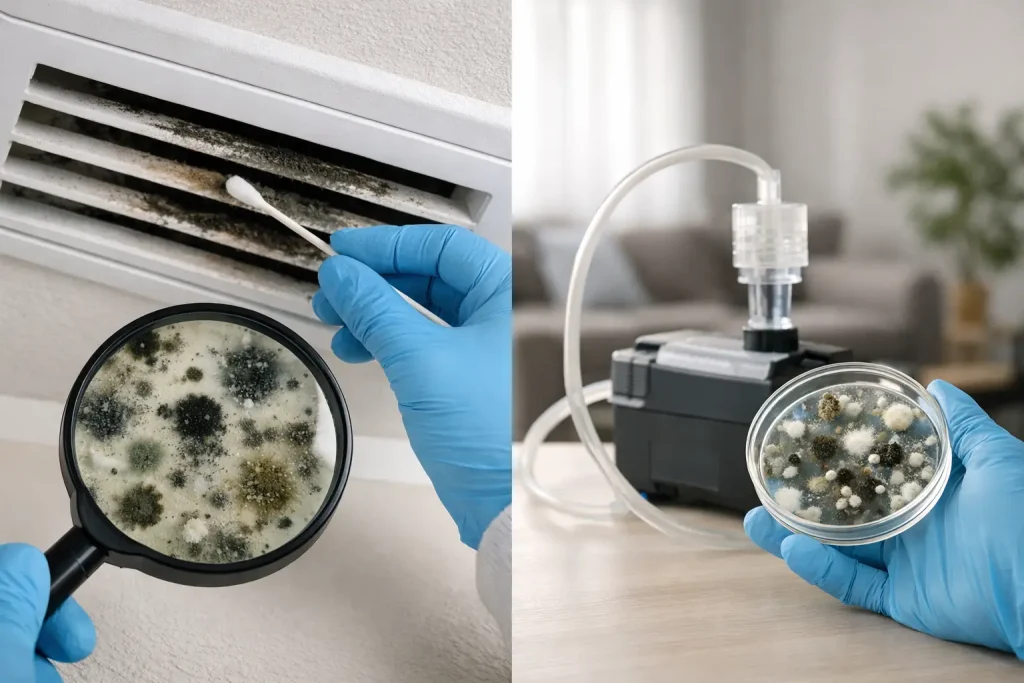
Testing can also help you move from suspicion to an informed request for service. A focused AC mold test can provide an early indication of contamination in the system circulating your air. Clean Vent Air Solutions offers a simple DIY process designed for that first step: clip, combine, and cover, with results in 24 to 48 hours.
A positive test is useful evidence to share with management, but it is not a substitute for identifying and correcting the moisture source. It also does not automatically establish legal liability. The best outcome is a qualified inspection and repair plan that addresses the contaminated component and the reason mold had an opportunity to grow.
How to Request an AC Mold Repair
Send a written request as soon as you identify the concern. Be factual rather than accusatory. State what you observed, when it began, whether the issue affects your health or use of the home, and what you want the landlord to do. Ask for an inspection of the AC system, including the drain pan, drain line, coils, ductwork, filters, and any water-damaged materials near the unit.
You can write: “Since June 8, the AC has produced a strong musty odor when it turns on. I also observed moisture beneath the indoor unit and dark spotting around the return vent. Please arrange a prompt inspection and repair of the AC system, identify the moisture source, and provide the planned remediation steps in writing.”
Use the communication method required by your lease if one is listed. Some leases require written notice by email, mail, or a tenant portal. For serious conditions, send notice in more than one documented way when practical.
Give the landlord access for scheduled repairs, but do not accept a cosmetic fix as the full answer. Spraying fragrance, replacing a vent cover, or wiping visible spots may improve appearances without fixing a wet coil, standing water, contaminated insulation, or a blocked condensate line. Ask what caused the moisture and how the repair will prevent recurrence.
What to Do if Your Landlord Does Not Respond
The next step depends on your state, city, lease, and the severity of the condition. Local housing or code enforcement may inspect conditions involving leaks, unsafe property maintenance, or required cooling systems. A local tenant legal aid organization can explain the notice periods and remedies that apply where you live.
Be careful with rent withholding, repair-and-deduct arrangements, or moving out before your lease ends. Some states allow limited remedies in specific circumstances, but the procedures can be strict. Withholding rent without following the required process can put your tenancy at risk, even if the AC problem is real.
If the condition substantially affects your health or ability to use the home, ask a tenant attorney or legal aid office about options such as formal repair demands, code complaints, lease termination rights, rent escrow, or damages. Keep your evidence organized. A clear timeline, photos, test results, and copies of ignored notices are far more persuasive than a verbal account alone.
Renters with a disability-related medical need may also have additional protections. If mold or poor indoor air quality is worsening a documented condition, speak with a qualified housing advocate about reasonable accommodation requests. The right approach depends on the facts and local law.
Protect Your Air While Repairs Are Pending
Do not try to dismantle a central AC system or disturb large areas of suspected mold yourself. That can spread particles, damage equipment, and create disputes about who caused further harm. Avoid running a system that is actively leaking into walls, ceilings, or floors unless a qualified professional tells you it is safe to operate.
You can reduce exposure by keeping affected areas dry, reporting leaks promptly, using bathroom and kitchen exhaust fans, and replacing filters only when your lease or maintenance instructions allow it. A portable air cleaner may help reduce airborne particles in a room, but it will not remove mold growing inside an HVAC system. The source still needs attention.
Your home should be a place where the air feels safe, not a place where every cooling cycle brings another question mark. Notice the warning signs early, document what is happening, and put your request for a real AC inspection in writing. Fast action can protect your household and make it much harder for a preventable problem to become a larger one.