
How Accurate Are DIY Mold Test Kits?
If your home smells musty every time the AC kicks on, you are not asking a small question. You are asking whether the air moving through your vents could be affecting your health, your family, or your workplace. That is why so many people want to know: how accurate are DIY mold test kits, really?
The short answer is this: a good DIY mold test kit can be very useful for detecting whether mold is present, especially when it is designed for a specific source like an AC vent or HVAC system. But accuracy depends on what the kit is testing, how the sample is collected, and what question you are trying to answer. A DIY kit can be an excellent first step. It is not always the final word.
How accurate are DIY mold test kits for home use?
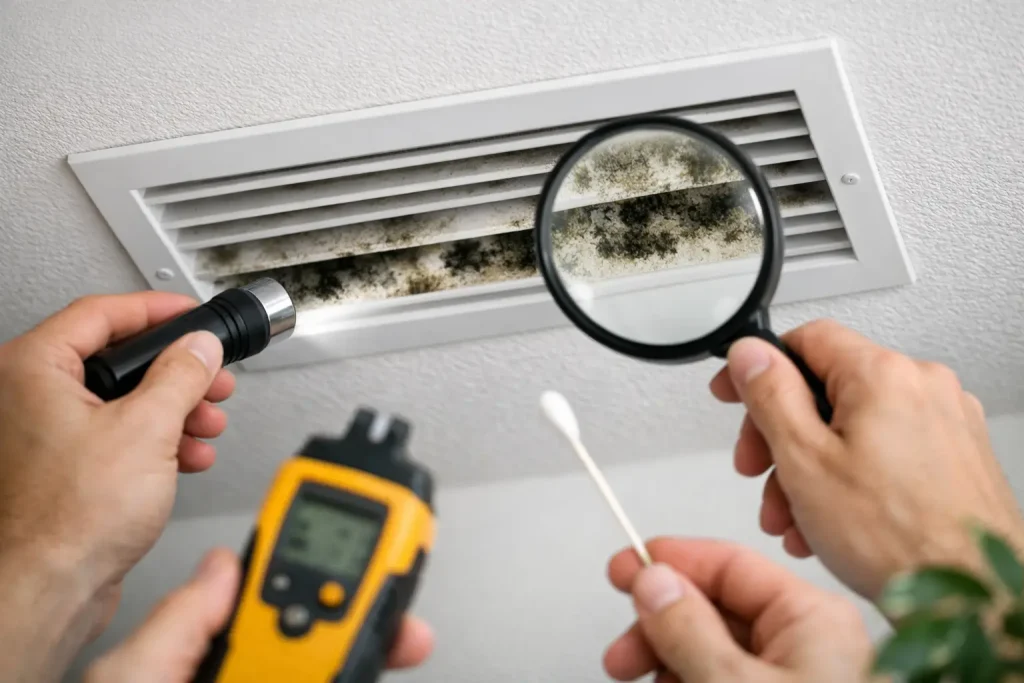
DIY mold test kits vary a lot. Some are broad home testing kits that rely on passive air exposure, where you leave a dish open and wait to see what grows. Others are more targeted and collect a sample from a specific location, such as an air vent, where contamination may be circulating through the building.
That difference matters. Mold spores are common in the environment, so a generic settle-plate test can pick up normal background spores and still leave you wondering what the result actually means. A targeted test is often more helpful because it answers a more practical question: is mold present in the place I am worried about?
For homeowners, renters, and small business owners, that makes DIY testing most accurate when it is used as a screening tool. If your goal is to find out whether your AC system or vents may be carrying mold, a focused sampling method can give you a fast, meaningful answer. If your goal is to measure the exact species count in every room or prove the full extent of a hidden moisture problem inside walls, a simple kit will have limits.
What DIY mold kits can do well
A reliable DIY mold kit can do three valuable things very well. First, it can help confirm whether mold is likely present in a suspect area. Second, it can help you decide whether the problem deserves faster action. Third, it can save you from waiting days or weeks before taking the next step.
That matters because mold problems often start with uncertainty. People notice coughing, congestion, headaches, stale air, or a smell they cannot explain. They may see small spots around vents but are not sure whether it is mold, dust, or staining. In that moment, an affordable test has real value. It turns a vague concern into something more concrete.
This is especially true with HVAC-related mold concerns. If contamination is inside the system, the air conditioner may spread spores from room to room. A simple vent-focused kit can help identify a potential problem early, before you spend money on broad inspections that may not be necessary.
Where DIY mold tests fall short
The biggest limitation is interpretation. A test result may show that mold is present, but it may not tell you how severe the problem is, what is causing it, or how far contamination has spread. That does not make the test inaccurate. It just means the result answers one question, not every question.
Another challenge is user error. Even a solid test can produce less reliable results if the sample is collected incorrectly, contaminated during handling, or taken from the wrong location. If a kit is complicated, people are more likely to make mistakes. That is why simple instructions matter so much.
There is also a difference between presence and risk. Some mold is visible and isolated. Some is hidden in an AC system and continuously pushed through the air. A DIY kit may confirm presence, but it cannot always tell you how much exposure is happening in daily life unless the test is built around the actual source.
The biggest factor in accuracy is the testing method
When people ask how accurate are DIY mold test kits, they are often comparing all kits as if they work the same way. They do not.
Passive air plates are usually the least precise for decision-making because mold spores are always floating in indoor and outdoor air. If you leave a plate open, something may grow even in a relatively normal environment. That can lead to confusion and unnecessary panic.
Surface sampling is better when you already have a suspicious spot. It can help confirm whether visible growth is mold. But it does not tell you much about what is moving through your ventilation system unless you are sampling the vent itself.
Targeted HVAC and vent sampling can be more useful for a very specific concern. If the musty odor gets worse when the AC runs, or if symptoms flare up indoors with the system on, testing the vent area directly makes practical sense. You are checking the source most likely to be affecting the air you breathe.
That is one reason specialized kits stand out. A focused product such as the Clean Vent Air Solutions test is built around a common real-world problem – suspected mold inside AC vents and duct-connected airflow. That narrower purpose can make results easier to interpret because the sample comes from the place people are actually concerned about.
When you can trust the result
You can usually trust a DIY mold test result more when a few conditions are true. The kit has clear instructions. The sample is taken from a specific suspect location. The result matches what you are already observing, such as odor, visible buildup, recurring respiratory irritation, or worsening symptoms when the AC runs.
In other words, context matters. If your vent smells damp, you see discoloration around the register, and a vent-focused test shows mold presence, that is a useful result. It gives you a reason to act. It may not map the entire problem, but it gives you a credible signal.
Optional lab analysis can add confidence when available. For some people, especially landlords, employers, or anyone dealing with recurring issues, extra validation is worth it. It can provide stronger documentation and reduce guesswork before investing in cleaning, repairs, or remediation.
When a DIY kit is not enough
There are situations where skipping straight to professional help makes sense. If you have extensive visible mold, strong ongoing water damage, recent flooding, persistent health symptoms, or signs that contamination may be inside walls, ceilings, or insulation, a DIY kit should not be your only step.
The same is true if someone in the home has asthma, severe allergies, a weakened immune system, or other health concerns that make mold exposure more serious. In those cases, speed matters, but so does a fuller inspection.
A DIY test is also not a substitute for fixing moisture. Mold grows where moisture persists. Even the most accurate test will not solve the underlying issue if condensation, leaks, poor drainage, or HVAC humidity problems are left in place.
How to get the most accurate result from a DIY mold test
Accuracy starts before the sample is ever taken. Read the instructions fully, choose the right sampling point, and avoid touching or contaminating the collection area. If the concern is your AC system, test where the airflow is coming from rather than a random room surface.
It also helps to think about timing. If you notice odors or symptoms most strongly when the system is running, test during that period of concern. Make notes about what you are seeing and smelling. That context helps you make sense of the result.
Most of all, use the kit for the job it was meant to do. A low-cost DIY test is best for fast screening and early detection. It is there to help you move from suspicion to action, not to replace every type of environmental investigation.
So, how accurate are DIY mold test kits?
They are accurate enough to be highly useful when they are specific, easy to use, and matched to the right problem. They are less useful when they are vague, hard to interpret, or expected to answer questions they were never built to answer.
For many households and small businesses, that is exactly the point. You do not always need a long, expensive process just to find out whether mold may be present in the air system you rely on every day. Sometimes you need a fast, affordable first step that tells you whether your concern is real.
If your vents smell off, your indoor air feels suspicious, or your family keeps dealing with symptoms you cannot explain, testing sooner is usually better than waiting. Peace of mind is valuable. Early detection is even more valuable when it helps protect the air you breathe.