Air Quality Warning Signs Inside Your AC
A musty smell that appears when the AC turns on is not just an unpleasant part of summer. It can be a warning that your air quality is being affected by something inside the system that moves air through every room. When mold contamination develops in an AC unit, ductwork, or vents, each cooling cycle can spread mold particles and odors farther through your home or workplace.
For families, renters, property owners, and small business operators, the concern is simple: you want to know what you are breathing before a small problem becomes an expensive cleanup. The good news is that you do not have to wait for visible mold on a wall to take action.
What Air Quality Means Inside Your Home
Indoor air quality describes the condition of the air inside a building and how it may affect the people spending time there. It is influenced by ventilation, humidity, dust, pet dander, cleaning products, outdoor pollutants, and biological contaminants such as mold.
Your central air system plays a major role because it recirculates air. It draws air in, cools or heats it, and pushes it back through supply vents. If moisture and organic buildup create the right conditions for mold inside that system, the AC can become a distribution point rather than a source of relief.
This does not mean every dusty vent or stale-smelling room has a mold problem. Air quality issues have many possible causes. A dirty filter, clogged drain line, high indoor humidity, a wet carpet, or outdoor smoke can all contribute. But recurring odors and symptoms that seem worse when the system is running are reasons to look closer.
Warning Signs of Poor Air Quality From AC Mold
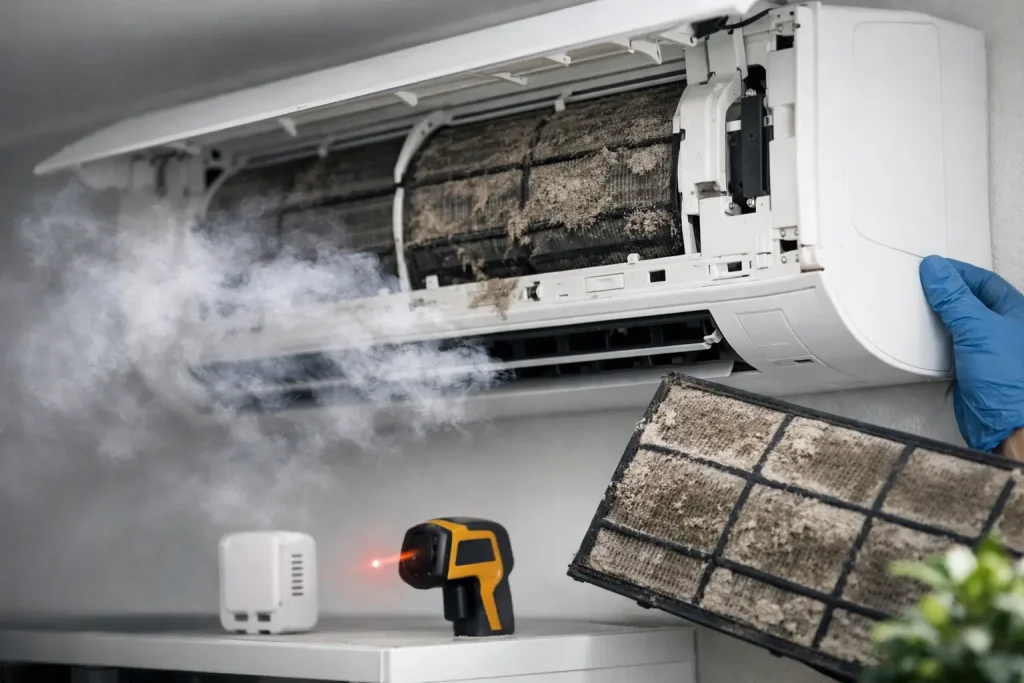
Mold is often hidden. It can develop in areas you cannot easily see, including coils, condensate pans, blower components, insulation, and ductwork. That is why paying attention to patterns matters more than waiting for obvious discoloration.
A persistent musty or earthy odor is one of the most common warning signs. You may notice it most strongly when the AC first turns on or near particular vents. The smell may fade after a few minutes, but that does not automatically mean the source is gone.
People in the space may also experience recurring allergy-like symptoms. Sneezing, coughing, throat irritation, itchy eyes, congestion, headaches, or a feeling of chest tightness can have many explanations, including seasonal allergies or viral illness. Still, if symptoms ease when you leave the building and return when the AC runs, the timing is worth taking seriously.
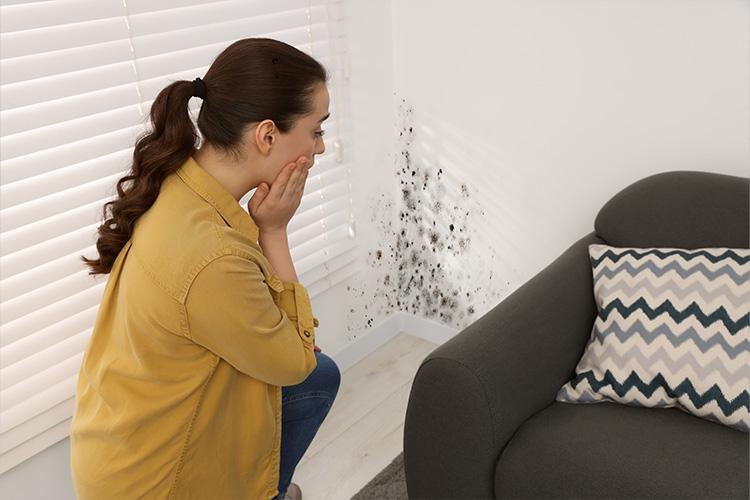
Visible spots around vents, ceiling registers, drain pans, or nearby walls deserve attention as well. So do water stains, condensation around vents, unexplained humidity, and frequent HVAC drainage issues. Mold needs moisture to grow, so signs of water are often part of the larger picture.
For business owners, complaints from staff or customers should not be brushed aside. Even if only one room has an odor or recurring moisture issue, air movement can carry concerns beyond that one area. Early testing helps you make a more informed decision before the issue affects more people or property.
Why Mold Can Develop in an AC System
Air conditioners naturally create condensation as they remove heat and moisture from the air. Under normal conditions, that water drains away safely. Problems begin when moisture lingers because of poor drainage, a clogged condensate line, dirty components, inadequate maintenance, or high humidity inside the building.
Dust and debris can add to the problem. Mold needs a moisture source and material to grow on. Dirt buildup on coils, filters, and other HVAC surfaces can create an environment where contamination is more likely, especially in humid climates or systems that run for long periods.
The trade-off is that AC systems are designed to keep us comfortable, but comfort can make a hidden issue harder to notice. A cool room may feel clean even when a musty odor is beginning to develop. That is why relying on appearance alone is not enough. You may not see what is happening where air is collected and circulated.
When to Test Your Air Vents
Testing makes sense when you have a specific concern, not simply because a filter is due for replacement. If you smell mustiness when the system starts, see suspicious growth near a vent, have recently had a leak or flooding event, or notice recurring respiratory irritation indoors, testing can provide a practical first answer.
It is also useful after water damage, HVAC repairs, or moving into a property with an unknown maintenance history. Renters may be especially concerned when they cannot inspect the full HVAC system themselves. A straightforward test gives them information they can document and discuss with a landlord or property manager.
For homeowners, a positive result can help determine what comes next. You may need HVAC service, a deeper inspection, moisture control, or professional remediation depending on the source and extent of contamination. A negative result can also be helpful because it lets you investigate other likely contributors to poor air quality instead of assuming mold is the cause.
A Simple First Step Before Major HVAC Costs
A full professional inspection can be appropriate, particularly after extensive water damage or when widespread mold is visible. But it is not always the right first move for every concern. Professional evaluations can be costly, scheduling may take time, and you may want evidence of a potential issue before committing to larger services.
That is where a targeted AC mold test can help. Clean Vent Air Solutions offers a low-cost DIY approach designed specifically for testing contamination in the system that circulates your indoor air. The process is simple: clip, combine, and cover. Results are available within 24 to 48 hours, with an optional lab report for additional validation.
The value is not in guessing what is inside your vents. It is in getting a faster signal that helps you decide whether to clean, repair, investigate further, or bring in a qualified professional. Testing is not a substitute for remediation when contamination is confirmed, but it can prevent unnecessary delay when a real issue needs attention.
What to Do If You Suspect an Air Quality Problem
Start by reducing the conditions that allow moisture to stay in the system. Replace dirty HVAC filters according to the manufacturer’s guidance, keep supply and return vents clear, and address visible leaks or drainage problems promptly. If your home feels damp, use ventilation and humidity control to keep moisture from building up.
Avoid treating odor alone as the whole solution. Air fresheners, scented candles, and strong cleaning products can mask a musty smell while adding more irritants to the air. If the odor returns when the AC runs, focus on finding the source rather than covering it up.
If you test and receive a positive result, document your observations. Note where the smell is strongest, when symptoms occur, any visible moisture, and recent HVAC or water events. This information can make conversations with an HVAC technician, landlord, building manager, or remediation professional more productive.
People with asthma, severe allergies, compromised immune systems, or other respiratory conditions may need to act more quickly when mold is suspected. The same is true for homes with infants, older adults, or anyone experiencing persistent breathing symptoms. Seek medical guidance for health concerns, especially if symptoms are severe or ongoing.
Cleaner Air Starts With a Clear Answer
You should not have to wonder whether the air coming from your vents is contributing to a musty home, an uncomfortable office, or recurring irritation. A quick check now can give you the clarity to protect the people in your space and address a hidden problem before it has more time to spread.