
How to Check HVAC Mold Safely Before It Spreads
That musty smell that appears the moment your AC starts is not something to ignore. Because your HVAC system moves air through every room, contamination inside it can spread odors, spores, and irritants far beyond one vent. Knowing how to check HVAC mold safely gives you a practical first step without putting yourself, your family, or your system at unnecessary risk.
Mold can grow where HVAC systems stay dark, damp, and dusty: around evaporator coils, drain pans, insulation, duct surfaces, and supply vents. You do not need to take apart your air handler or disturb suspicious material to recognize a potential problem. In fact, doing too much too soon can send more particles into the air.
Start With the Warning Signs
A visual check is useful, but mold inside an AC system is often hidden. Pay attention to patterns that occur when the heating or cooling system runs.
A persistent musty, earthy, or damp-basement odor from vents is one of the clearest warnings. So are dark, greenish, gray, or fuzzy-looking spots around vent covers, drip pans, or accessible insulation. Dust alone is common. Dust that returns quickly, looks unusually discolored, or has a musty odor deserves a closer look.
Your body may also provide a clue. If people in the home or workplace notice more coughing, sneezing, throat irritation, watery eyes, congestion, headaches, or allergy-like symptoms when the AC is on, treat that pattern seriously. These symptoms can have many causes, so they do not prove mold. They do, however, make testing and inspection a sensible next move.
Water problems raise the odds. Check whether you have had a clogged condensate drain, water pooling near the indoor unit, a past roof or plumbing leak, high indoor humidity, or an AC system that struggles to remove moisture. Mold needs moisture to grow, and HVAC condensation creates it naturally when drainage or airflow is not working as it should.
How to Check HVAC Mold Safely: A Simple Process
The goal is to gather useful information while keeping possible contamination contained. Start by turning off the thermostat before inspecting any accessible vent or indoor AC component. This prevents the system from actively circulating air while you look.
Wear disposable gloves and a well-fitting N95 mask, especially if you already see suspicious growth or smell a strong musty odor. Eye protection is a smart addition when looking near overhead vents or an accessible air handler. Keep children, pets, and anyone with asthma, severe allergies, a weakened immune system, or chronic lung conditions away from the inspection area.
Then follow these safe checks.
Inspect Only What You Can Reach Easily
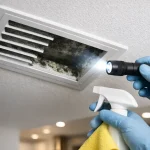
Remove a supply or return vent cover only if it comes off with ordinary hand tools and you can do so without damaging the wall, ceiling, or duct. Use a flashlight to look just inside the opening. Check the vent cover, nearby duct surface, and visible insulation for staining, moisture, or unusual growth.
Do not reach deep into ductwork, scrape material from internal surfaces, or disconnect ducts. Mold can resemble dirt, soot, or residue, and disturbing it can release particles. A quick visual inspection is enough to decide whether you need testing or professional help.
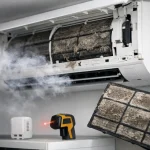
If your indoor unit is easily accessible, look around the exterior of the evaporator-coil compartment, drain line, and drain pan area. You are looking for standing water, rust, wet insulation, staining, or a strong odor. Do not remove sealed panels, touch electrical components, or spray cleaning products into the unit.
Check the Filter, but Do Not Treat It as Proof
A dirty filter does not automatically mean mold, but it can reveal an airflow issue that contributes to moisture and buildup. If the filter is overdue for replacement, replace it with the correct size and type recommended for your system.
Look for dampness or a musty smell around the filter slot. If the filter is wet, heavily stained, or repeatedly gets dirty unusually fast, the system may need service. Take a photo before disposing of it if you plan to speak with an HVAC technician later.
Use a Purpose-Built HVAC Mold Test
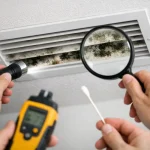
A DIY test designed for AC vents can help you check for contamination without opening up the system. This is especially helpful when there is no visible growth but the odor or symptoms keep returning.
Clean Vent Air Solutions offers a focused AC mold test kit that uses a simple clip, combine, cover process and provides results within 24 to 48 hours. It can offer an affordable first answer before you commit to a larger inspection or remediation project. A test result is not a substitute for correcting moisture problems, but it can help you decide whether to move quickly.
Follow the instructions exactly. Avoid testing immediately after spraying air freshener, disinfectant, or other chemicals near the vent, since those products can interfere with what you are trying to assess. Do not try to collect samples by scraping visible material from duct interiors unless a qualified professional directs you to do so.
What Not to Do When You Suspect HVAC Mold
The wrong cleanup approach can turn a manageable concern into a larger air-quality problem. Avoid these common mistakes:
- Do not run the HVAC system at full blast to “air out” a moldy smell. If contamination is present, airflow may distribute particles through more rooms.
- Do not spray bleach, fragrance, foggers, or harsh chemicals into vents or the air handler. These products can irritate lungs, damage components, and mask odors without fixing the source.
- Do not vacuum suspected mold with a standard household vacuum. Without proper filtration and containment, it can blow fine particles back into the room.
- Do not paint over stains, tape over vents, or assume a new filter solves ongoing moisture problems.
Small, surface-level residue on a removable metal vent cover may be cleaned carefully after the cover is removed, using gloves and a damp cloth. Let it dry completely before reinstalling it. But visible growth inside ducts, on insulation, around coils, or in an area larger than a small isolated spot is a different situation. Those areas may require professional cleaning, repair, or remediation.
When to Call an HVAC or Mold Professional
Testing is a smart first step, but some situations call for a qualified professional right away. Contact an HVAC technician when you find standing water, a clogged or leaking condensate line, frozen coils, damaged insulation, poor airflow, or repeated humidity problems. The moisture source must be fixed or mold can return after cleaning.
Consider a mold remediation professional when there is widespread visible growth, mold after flooding or major water damage, contamination in insulation or building materials, or strong odors that persist after HVAC service. A professional can assess the extent of the issue and use containment methods that protect the rest of the property.
For renters, document what you notice with dates, photos, and a description of odors or water issues. Notify the landlord or property manager in writing. For small business owners, act quickly when employees or customers report recurring odors or symptoms tied to the AC. Protecting indoor air is part of protecting the people who spend time in your space.
Prevent Mold From Returning to Your HVAC System
Once you have checked your system, prevention comes down to controlling moisture and maintaining airflow. Replace filters on schedule, keep supply and return vents open and unobstructed, and have the condensate drain checked if you see dripping or pooling. In humid climates, keep indoor humidity under control, generally around 30% to 50% when possible.
Schedule routine HVAC maintenance before peak cooling season, particularly if your system is older or has had drainage issues. A technician can inspect coils, drain pans, lines, and airflow before a minor moisture problem becomes a contamination concern.
You do not need to panic over every speck of dust or every seasonal allergy flare-up. But when your system smells musty, shows moisture damage, or seems connected to symptoms indoors, take the signal seriously. A careful check today can help you protect the air everyone breathes tomorrow.