Air Duct Mold Signs You Should Not Ignore
A musty smell that returns every time the AC starts is not just an annoyance to cover up with a candle or air freshener. It can be one of the most common air duct mold signs, especially when the odor seems strongest near supply vents or after the system has been off for a while. Because your HVAC system moves air room to room, a problem inside the system can affect far more than one small area.
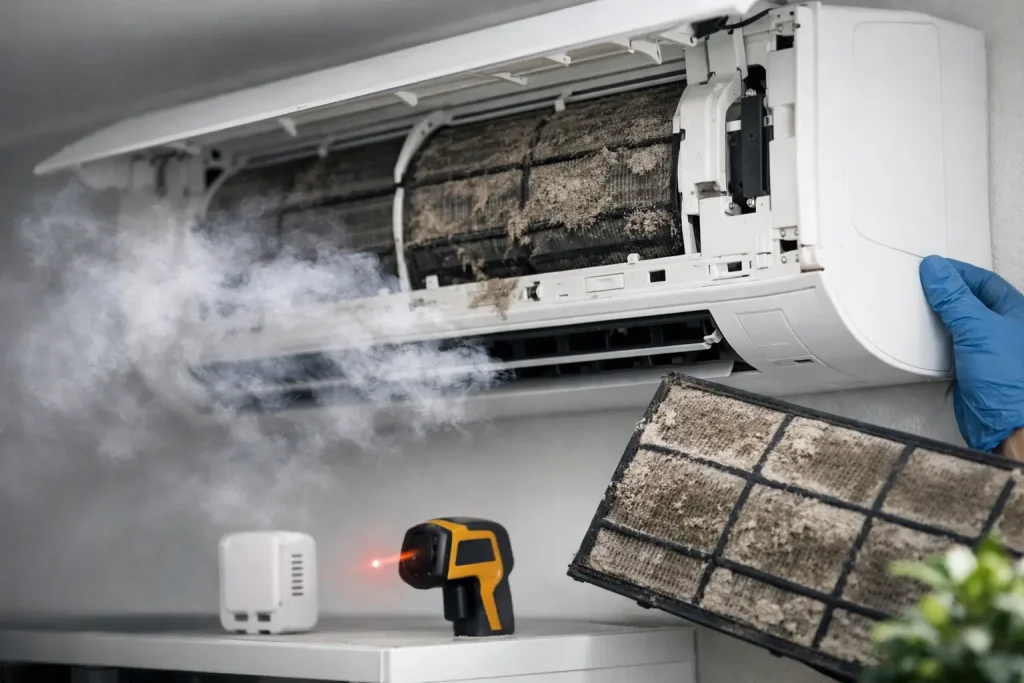
Mold needs moisture, organic material, and the right conditions to grow. Air conditioners naturally create condensation, which makes components such as evaporator coils, drain pans, ducts, and registers worth paying attention to. Not every odor, cough, or dark spot means mold is present. But when warning signs keep repeating, early testing can give you a clearer answer before a minor concern becomes a larger cleanup.
Air Duct Mold Signs to Watch For
Some signs are obvious. Others are easy to dismiss because they look like routine dust, seasonal allergies, or ordinary AC performance issues. The key is to notice patterns: when symptoms occur, where odors are strongest, and whether the problem appears when the HVAC system is running.
A persistent musty or damp odor
A stale, earthy, or wet-basement smell coming from vents deserves attention, particularly if it appears when heating or cooling begins. Dusty HVAC systems can have a dry, dusty odor, but mold-related odors often feel damp and lingering. If cleaning the visible vent cover does not resolve the smell, the source may be farther inside the system.
The odor may be strongest in one room, but that does not always mean the issue is limited to that room. Ductwork connects multiple areas of a home or business, and airflow can carry odors well beyond the original moisture source.
Visible spotting around vents or AC components
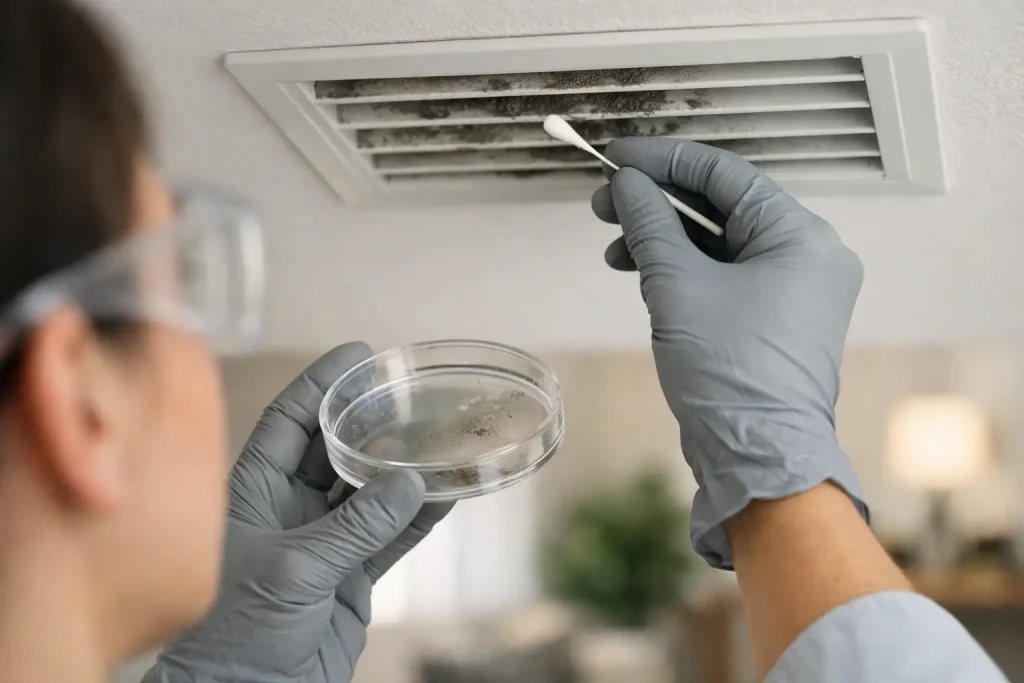
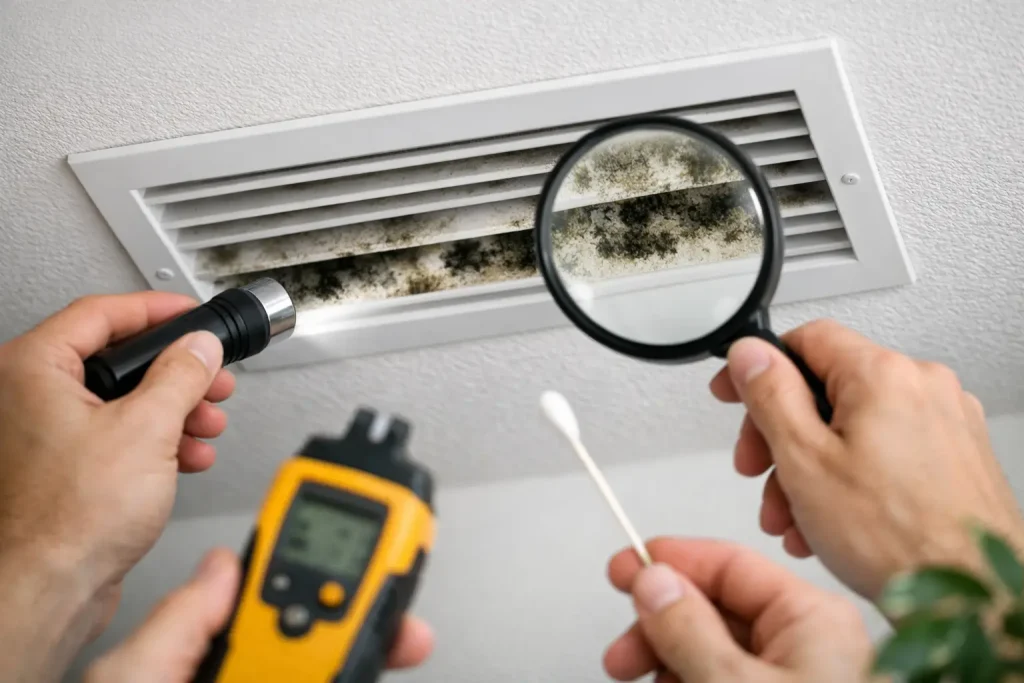
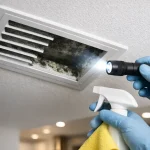
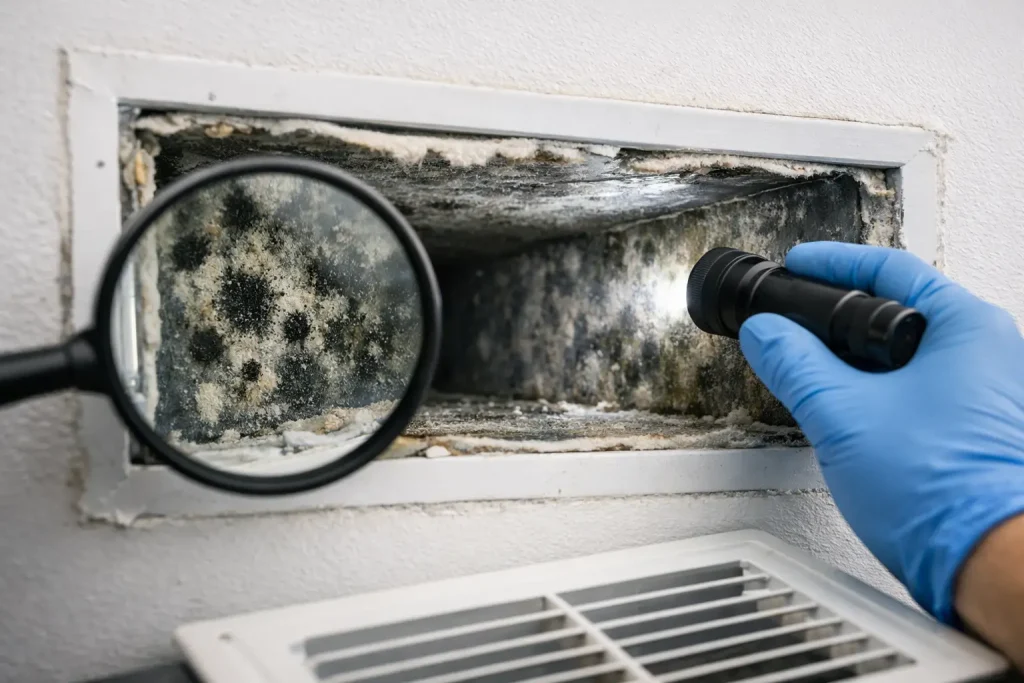
Black, green, gray, white, or brown spotting around a vent cover, inside a register, near an air handler, or around a drip pan can signal a moisture problem. Mold can look fuzzy, speckled, slimy, or like a stain. Still, visible discoloration alone cannot identify the material or prove that contamination is spreading through the HVAC system.
Do not disturb suspected growth by brushing it, scraping it, or blasting it with air. That can spread particles into the room. Take a photo for your records, reduce unnecessary system use if the area is extensive, and focus on confirming what is happening.
Allergy-like symptoms that worsen indoors
Sneezing, coughing, throat irritation, watery eyes, congestion, headaches, or worsening asthma can have many causes. Pollen, pets, dust, dry air, viruses, and cleaning products may all play a role. But if multiple people feel worse at home, at work, or when the AC turns on, indoor air deserves a closer look.
Pay attention to timing. Do symptoms improve after leaving the building, then return after spending time inside? Do they become more noticeable in one room or during cooling cycles? Those details can help you decide whether HVAC testing or a professional evaluation is the appropriate next move.
Moisture, leaks, or condensation near the system
Mold does not grow without moisture. A clogged condensate drain, water in the drain pan, leaking ductwork, a wet filter area, or condensation around vents can create conditions that support growth. High indoor humidity can add to the problem, particularly in humid climates or spaces with poor ventilation.
A water issue should be addressed even if you do not see mold. Fixing the source of moisture matters just as much as identifying contamination. Otherwise, a cleaned or treated area may develop the same problem again.
Dirty vents that quickly look dirty again
Dust gathers on vent covers over time, and that is normal. What is less normal is a recurring buildup that returns quickly, looks unusually dark or damp, or appears alongside odor and moisture concerns. The material may be ordinary dust, but repeated buildup can also point to filtration problems, high humidity, duct leakage, or conditions that deserve testing.
Uneven airflow and an AC system that seems damp
Weak airflow does not automatically mean mold. It may come from a clogged filter, failing blower, blocked register, or duct issue. Yet poor airflow can contribute to uneven temperatures and condensation, especially when cold supply air meets humid indoor air. When airflow trouble appears alongside musty smells or visible moisture, it is time to investigate rather than assume the issue is routine maintenance.
Why Mold Can Develop Inside HVAC Systems
Your air conditioning system removes humidity as it cools the air. Under normal conditions, that moisture drains away properly. When a drain line clogs, a pan overflows, insulation is damaged, filters are neglected, or humidity remains high, moisture can stay where it should not.
Ducts can also collect dust, skin cells, and other particles that provide material for mold to grow on when moisture is present. The problem is not always inside the duct itself. It may begin on a coil, near the air handler, around a vent, or in a nearby wall or ceiling area. That is why a careful first step matters: you want to know whether the AC system is involved before paying for a broad inspection or choosing a cleaning approach that misses the real source.
When to Test Your Air Ducts for Mold
Testing makes sense when you have more than a passing suspicion. A single sneeze after vacuuming is not enough to diagnose an HVAC issue. A recurring odor, unexplained respiratory irritation, visible spotting, recent water damage, or moisture near AC equipment are stronger reasons to check.
Testing can also be useful after a leak, flood, drain-pan overflow, or extended period of high indoor humidity. Renters may want documented information before reporting a concern to a landlord. Homeowners may want an affordable first answer before scheduling a larger HVAC or mold assessment. Small business operators can use results to decide how urgently to protect staff, customers, and the property.
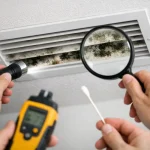
A DIY AC mold test is designed for this early decision point. Clean Vent Air Solutions offers a simple, low-cost process: clip the sample device in place, combine the components, and cover it. Results are available within 24 to 48 hours, with an optional lab report for added validation. It is a practical way to move from uncertainty to informed next steps without starting with a costly inspection.
What to Do If You Suspect Mold in Your Vents
Start by protecting the people who use the space. If anyone has severe respiratory symptoms, asthma that is worsening, or a compromised immune system, speak with a qualified healthcare professional. For large visible growth, major water damage, or contamination that may involve walls, insulation, or ceilings, a qualified mold remediation professional may be necessary.
For smaller concerns, avoid treating the symptom while ignoring the cause. Replacing a dirty filter can improve airflow, but it will not fix a clogged drain line. Wiping a vent cover may improve its appearance, but it will not address moisture deeper in the system. Check for standing water, damaged insulation, drainage issues, and humidity levels. Use the correct filter size and replace it according to the manufacturer’s recommendation.
If a test indicates possible mold, document what you found and arrange for the right type of help based on the extent of the issue. HVAC service may be appropriate for a coil, drain, or equipment problem. Mold remediation may be appropriate where contamination is extensive or building materials are affected. The right response depends on the source, the amount of growth, and whether moisture has reached areas beyond the HVAC equipment.
Preventing Future HVAC Moisture Problems
Prevention is usually less disruptive than remediation. Keep condensate drains maintained, change filters regularly, and have the AC system serviced on schedule. In humid areas, managing indoor humidity can make a meaningful difference. Bathrooms, kitchens, laundry rooms, basements, and poorly ventilated spaces may need extra attention because they add moisture to the air your system circulates.
Do not close off every vent in unused rooms in an attempt to save energy. Depending on your system, that can affect airflow and pressure balance. Instead, ask an HVAC professional about the best settings and maintenance plan for your equipment. A system that drains, filters, and circulates air properly is better positioned to support cleaner indoor air.
If the smell keeps coming back, the spots keep returning, or people feel worse whenever the system runs, trust the pattern. A quick test today can help you make a calmer, more informed decision about the air your family, tenants, employees, or customers breathe tomorrow.