How to Prevent Mold Growth in AC Vents at Home
A musty smell when the air conditioner starts is not something to cover up with candles or air freshener. It can be an early sign that moisture and organic debris have created the conditions mold needs inside your HVAC system. Learning how to prevent mold growth in AC vents helps protect the air moving through every room, before a small issue becomes a larger cleanup.
Mold does not need a dramatic flood to grow. In many homes and small businesses, it starts with ordinary condensation, a clogged drain line, a dirty filter, or humidity that stays high for too long. The good news is that prevention usually comes down to keeping the system clean, dry, and checked often enough to catch trouble early.
Why Mold Can Grow Inside AC Vents
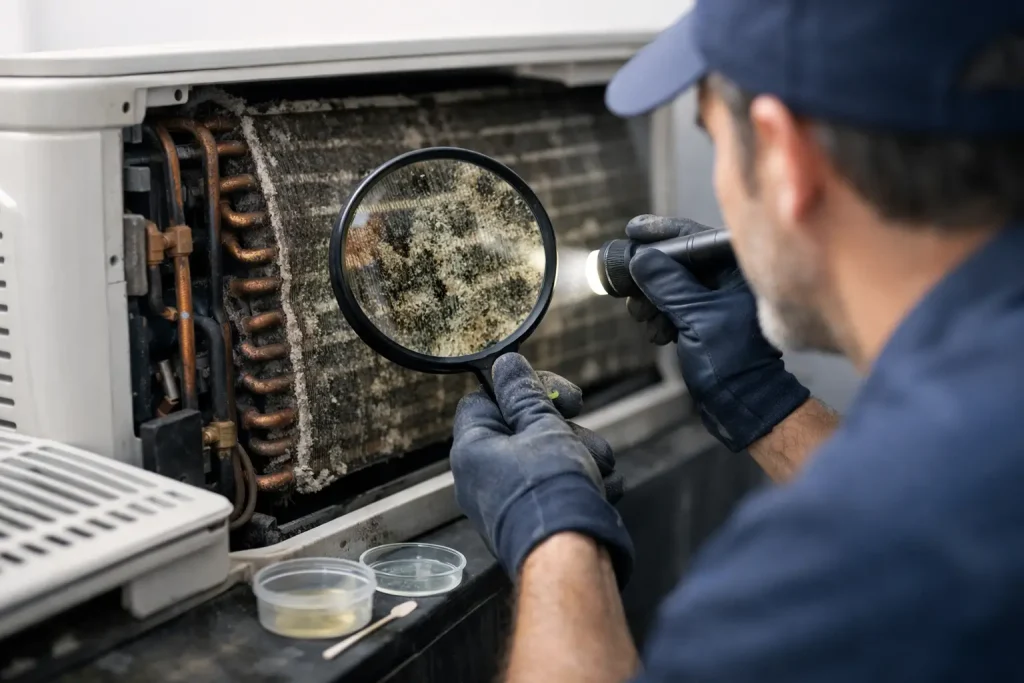
Your air conditioner removes heat from indoor air, but it also removes moisture. That moisture collects on the indoor evaporator coil and should drain safely away through a condensate line. When the system is working properly, this is normal. When water lingers, airflow is restricted, or humidity remains high, mold can find a place to grow.
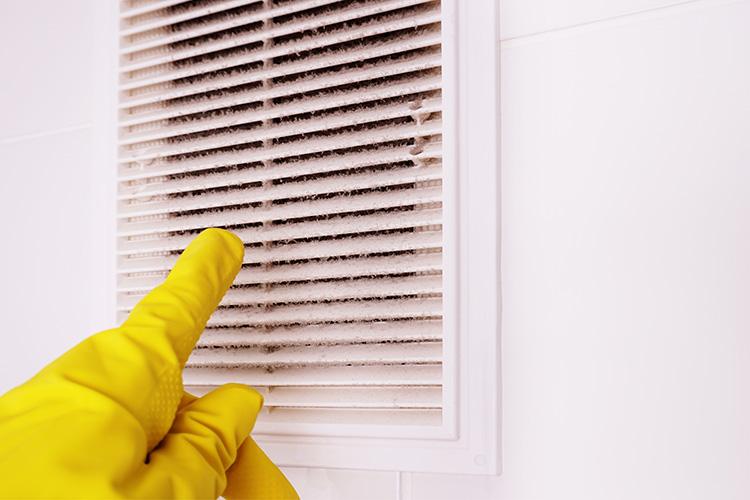
Dust, pet dander, pollen, and other particles can also collect in filters, ducts, and around supply vents. Those materials can become food sources when moisture is present. That is why a vent may look clean from the outside while contamination develops farther inside the system.
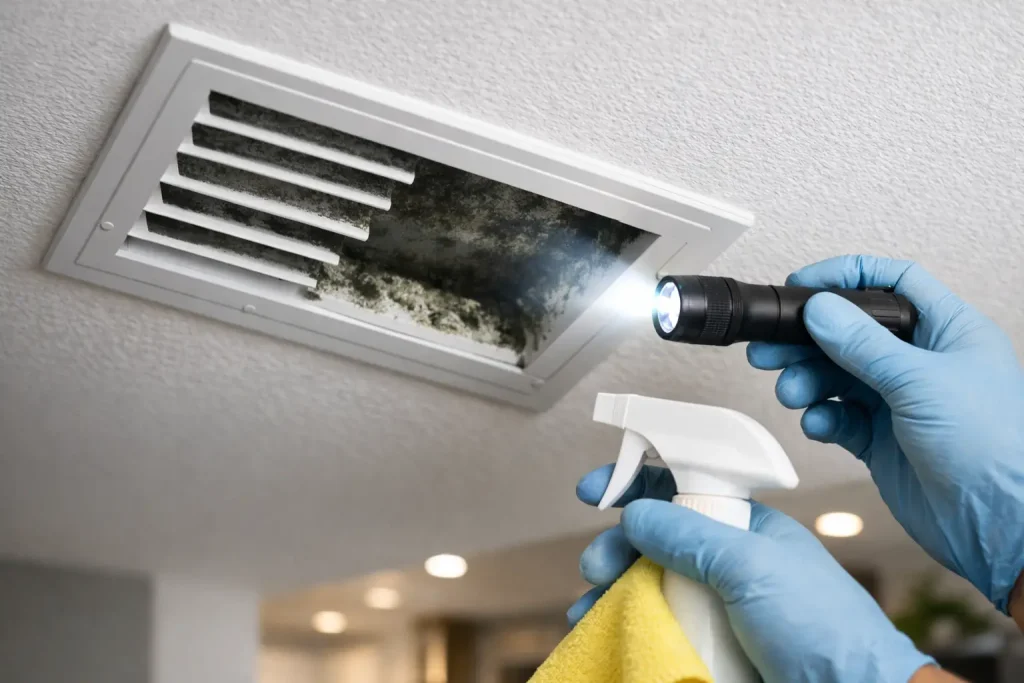
Mold is not always visible. A recurring earthy or musty odor, dark specks around vent covers, unexplained irritation when the AC runs, or water near the indoor unit deserve attention. Allergies, asthma, and other respiratory sensitivities can make certain people more uncomfortable around moldy environments, especially children, older adults, and people with compromised immune systems.
Keep Humidity at a Mold-Resistant Level
Indoor humidity is one of the biggest factors in mold prevention. Aim to keep relative humidity generally between 30% and 50%. Once humidity regularly rises above 60%, surfaces around vents, ductwork, windows, and closets are more likely to stay damp long enough for mold to grow.
A simple indoor hygrometer can help you see whether your home has a humidity problem. If levels are high, run bathroom and kitchen exhaust fans, repair leaks promptly, and consider a dehumidifier in damp areas such as basements or rooms that feel clammy. Make sure the AC system is correctly sized, too. An oversized unit may cool a room quickly but shut off before removing enough moisture from the air.
In humid climates, it may help to keep the thermostat at a consistent setting rather than allowing long periods where the house becomes hot and damp. The right approach depends on your home, climate, insulation, and system condition, but the goal remains the same: do not give moisture time to sit inside the HVAC system.
Change Filters Before Airflow Suffers
A clogged air filter does more than make your system work harder. It limits airflow across the evaporator coil, which can contribute to excess condensation and, in some cases, coil freezing. When that ice melts, the extra water can overwhelm the drainage system and create the damp conditions mold needs.
Check your filter monthly and replace it based on its condition and the manufacturer’s guidance. Many households need a new filter every one to three months. Homes with pets, smokers, construction dust, or family members with allergies may need more frequent changes.
Choose a filter your HVAC system can handle. A very high-rated filter can capture smaller particles, but it may also reduce airflow if the system was not designed for it. If you are unsure which filter rating is appropriate, ask an HVAC technician. Clean airflow is helpful, but restricted airflow is not a trade-off worth making.
Protect the Drain Pan and Condensate Line
The condensate drain system is easy to overlook because it is usually out of sight. It is also one of the most common places where AC moisture problems begin. Algae, sludge, dust, and biological buildup can clog the drain line, causing water to back up into the drain pan or leak around the air handler.
Inspect the area around your indoor unit during cooling season. Look for standing water, rust, staining, wet insulation, or a pan that appears full. A drain line that drips normally outdoors may still have partial blockage, so do not wait for a major overflow to take action.
Routine drain maintenance is often simple, but the best method varies by system. Some homeowners can safely flush an accessible line according to their HVAC manufacturer’s instructions. Others should schedule a technician, especially if the line has repeatedly clogged, the unit is in an attic, or water has reached surrounding building materials. If you see active leaking, turn the system off if it is safe to do so and arrange service promptly.
Clean What You Can See, Without Spreading Contamination
Vent covers collect dust because they are at the end of the airflow path. Remove and wash accessible grilles periodically, then dry them completely before reinstalling them. Vacuum around the vent opening with a brush attachment and wipe nearby surfaces with a damp cloth.
Avoid spraying cleaners deep into ducts or soaking vent openings. Extra moisture can worsen the exact problem you are trying to prevent, and harsh chemicals may leave residues that circulate through the air. If you see widespread visible growth inside ducts, on insulation, or around the air handler, surface cleaning is not enough. The moisture source needs to be corrected, and professional evaluation may be necessary.
Keep furniture, rugs, and storage boxes from blocking return vents. Your system needs steady airflow to manage temperature and humidity. Closing too many supply vents can also create pressure and airflow issues, so use vent closures sparingly unless an HVAC professional has recommended a zoning strategy.
Schedule Maintenance Before Peak Cooling Season
An annual AC tune-up gives a qualified technician the chance to inspect components that homeowners cannot easily reach. The visit should include checking the evaporator coil, blower area, drain pan, condensate line, refrigerant performance, electrical connections, and overall airflow.
Maintenance is especially valuable if you have had past water leaks, recurring musty odors, frozen coils, or frequent drain clogs. These are not always mold problems, but they can create the conditions that allow mold contamination to develop.
For small business owners, preventive maintenance also protects more than comfort. A musty workplace can lead to employee complaints, tenant concerns, and avoidable downtime. Keeping service records and responding quickly to moisture issues is practical property care.
Test When the Warning Signs Do Not Go Away
Prevention is strongest when it includes early detection. You may not be able to see what is inside a vent or air handler, and an odor alone cannot tell you whether mold is present. Testing can provide a practical first answer before you commit to a costly inspection or remediation plan.
A focused AC mold test is particularly useful when a musty smell returns after cleaning, symptoms seem worse when the system runs, or visible spotting appears near vents. Clean Vent Air Solutions offers a simple DIY process: clip, combine, and cover. Results are available within 24 to 48 hours, with an optional lab report when additional validation is needed.
A positive result is a signal to investigate the source, not a reason to panic. Check for drainage issues, humidity problems, dirty components, or water-damaged materials. If contamination is extensive, if people in the building have serious health concerns, or if mold may be inside walls or insulation, bring in a qualified HVAC or mold remediation professional. Testing helps you move from uncertainty to a more informed next step.
A Simple Prevention Routine That Works
The most effective plan is consistent rather than complicated. Check filters monthly, watch indoor humidity, keep the condensate drain system clear, and inspect vents for odor, moisture, or discoloration. Schedule professional maintenance once a year, preferably before heavy AC use begins.
If your home has experienced flooding, a roof leak, plumbing damage, or an AC overflow, move faster. Dry affected areas promptly and do not assume the HVAC system is unaffected just because it still cools the room. Mold prevention is less about perfection and more about responding early when moisture appears.
Clean, dry airflow is one of the quiet protections your home provides every day. When something smells off or looks unusual around your AC vents, trust that signal and get a clear answer while the problem is still manageable.