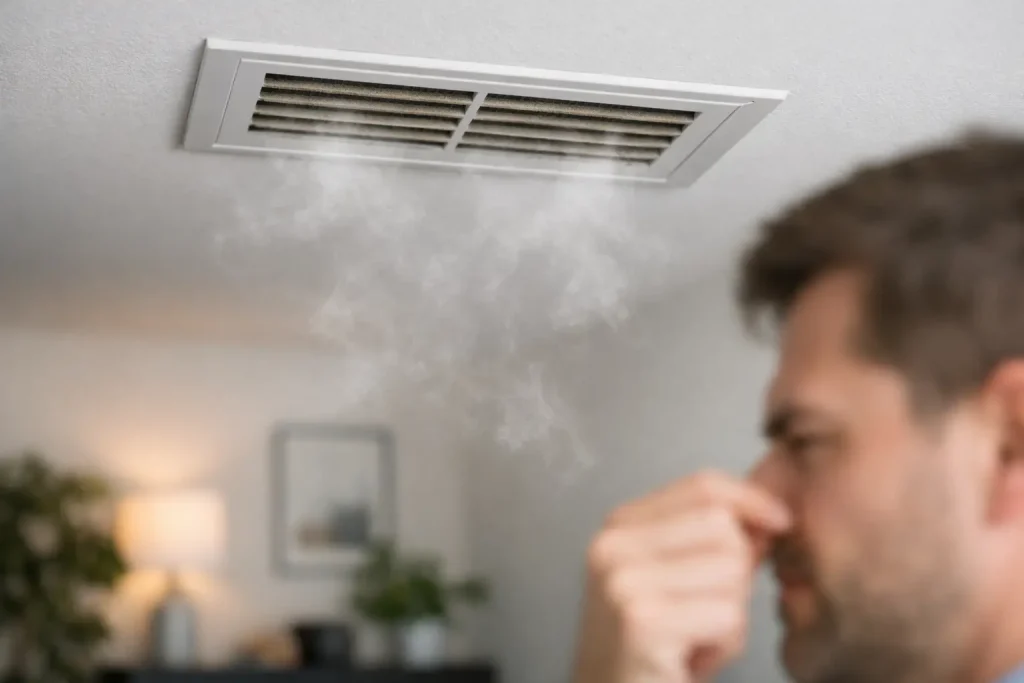
Musty Air Vents Causes You Should Not Ignore
That damp, stale smell when your AC turns on is more than an annoyance. Musty air vents causes often point to moisture where it does not belong – inside the ductwork, around the evaporator coil, in the drain system, or on a dirty filter. Because your HVAC system circulates air through every occupied room, the source deserves attention before a small problem becomes a larger indoor air concern.
A musty odor does not automatically confirm mold. Dust, standing water, dirty components, and even a forgotten item near a return vent can create unpleasant smells. Still, persistent odors, especially those that return whenever heating or cooling runs, are a clear reason to investigate.
What Causes Musty Air Vents?
Moisture is usually the starting point. Mold and mildew need moisture, a surface to grow on, and time. Air conditioning naturally creates condensation as warm indoor air passes over a cold evaporator coil. Under normal conditions, that water drains away. When airflow, drainage, cleaning, or humidity control falls short, dampness can remain in the system and produce the familiar musty smell.
A dirty or wet HVAC filter
Your air filter catches dust, pet dander, and other particles before they reach sensitive HVAC components. When it becomes heavily loaded, airflow drops. Reduced airflow can allow moisture to linger on the coil and may leave the filter itself damp, particularly in humid climates or systems with condensation problems.
A filter should not smell earthy, sour, or damp. If it does, replace it with the correct size and type recommended for your system. Check the filter housing too. If the new filter quickly becomes wet or the odor returns, the issue is likely deeper in the unit.
Condensation on the evaporator coil
The indoor evaporator coil is a common place for musty odors to begin. It is cold during the cooling cycle, so moisture condenses on it by design. Dust buildup gives that moisture something to cling to. Over time, microbial growth can develop on the coil, nearby insulation, or the condensate pan.
This often explains an odor that is strongest right when the system starts, then fades as the air moves. It can also happen after the AC has been off for several days, when moisture and debris have had time to sit.
A clogged condensate drain line or pan
The condensate drain line carries water away from the air handler. Algae, sludge, dust, or microbial buildup can clog the line. Water may then back up into the pan, overflow near the equipment, or remain stagnant long enough to smell.
Look for water around the indoor air handler, a full drain pan, ceiling stains beneath attic equipment, or a safety switch that repeatedly shuts off the AC. These signs call for prompt HVAC service. Ignoring a drainage issue can lead to water damage as well as odor problems.
Mold or mildew in ducts, vents, or insulation
Ductwork does not usually grow mold without a moisture event. A roof leak, plumbing leak, poor attic insulation, flooded crawl space, or condensation on uninsulated ducts can create the right conditions. Flexible ducts and internal duct insulation can be especially difficult to assess because contamination may be hidden from view.
Visible spots around a supply register are a warning sign, but a clean-looking vent cover does not rule out contamination farther inside. If the smell is strongest from one or two vents, note those locations. A localized pattern can help identify a leak, wet duct section, or affected room.
High indoor humidity
Indoor humidity changes the picture. In many homes, humidity that stays above about 60% creates a more mold-friendly environment. This is common in basements, bathrooms, coastal areas, and homes where the AC is oversized and cools the house too quickly to remove enough moisture.
You may notice clammy rooms, condensation on windows, peeling paint, or a musty odor that gets worse after rain. A hygrometer can provide a quick reading, but the long-term solution may involve repairing air leaks, improving ventilation, adjusting HVAC settings, or using a properly sized dehumidifier.
Dust, pests, or odors near the return vent
Not every musty smell comes from inside the duct system. Return vents pull room air back to the HVAC equipment, so they can draw in odors from damp carpet, a wet wall, pet accidents, stored boxes, pest activity, or a nearby trash area. A dead animal or pest nesting in a duct can also create a strong stale odor, though the smell is often more pungent than musty.
Check the area around returns before assuming the entire system is contaminated. Move damp items, inspect for leaks, and clean visible dust from registers without pushing debris into the ducts.
When a Musty Vent Smell Needs Fast Action
Do not wait if the odor is persistent, intensifies when the AC runs, or appears after water damage. The same is true if you see moisture around HVAC equipment, staining near vents, or visible mold-like growth.
Pay attention to people in the building as well. Sneezing, coughing, throat irritation, watery eyes, congestion, and worsening allergy-like symptoms can have many causes, so they cannot diagnose mold exposure. But when those symptoms repeatedly occur in a particular building or improve away from it, treat the pattern seriously and investigate the air system.
For children, older adults, people with asthma, and anyone with respiratory conditions, reducing exposure to damp, contaminated air is especially important. If someone has severe or ongoing symptoms, contact a qualified medical professional.
A burning odor, a chemical smell, a gas odor, or signs of electrical trouble are different problems and may be urgent. Turn off the system if it is safe to do so and contact the appropriate HVAC, utility, or emergency professional.
What to Do Before the Problem Spreads
Start with the easy checks: replace a dirty filter, inspect accessible vents, and look around the indoor unit for standing water or drainage problems. Keep supply and return vents open and unobstructed so the system can maintain proper airflow. Avoid masking the smell with air fresheners. Fragrance can cover the warning sign without correcting the moisture source.
Next, identify the pattern. Does the odor happen only during cooling, only after rain, or in one room? Is it worse after the system has been off overnight? These details are useful whether you handle a simple maintenance task or call an HVAC technician.
If mold is a concern, testing the air pathway can provide a practical first answer before committing to costly cleaning or remediation. Clean Vent Air Solutions offers a simple DIY AC mold test kit that uses a clip, combine, cover process and provides results in 24 to 48 hours. A positive result is a reason to address the moisture source and discuss next steps with a qualified professional. A negative result does not eliminate the need to repair leaks, drainage issues, or high humidity.
Preventing Musty Odors From Returning
Prevention comes down to keeping the system clean, dry, and able to move air as designed. Change filters on schedule, using a more frequent schedule if you have pets, renovations, high dust, or heavy system use. Have the coil, drain pan, and drain line inspected during regular HVAC maintenance, especially before peak cooling season.
Keep humidity under control and address water leaks quickly, whether they come from plumbing, roofs, windows, or the HVAC system itself. If ducts run through an unconditioned attic or crawl space, ask a professional to check insulation, connections, and signs of condensation. Duct cleaning can be useful when contamination or heavy debris is confirmed, but it is not a substitute for fixing the water problem that caused the odor.
Your vents should deliver clean, neutral-smelling air, not leave you wondering what you are breathing. Trust a recurring musty smell as the signal it is: a reason to check the system now, protect the people inside, and stop moisture from gaining a foothold.