7 Best Ways to Detect Vent Mold Fast at Home
A musty smell that returns every time the AC turns on is not something to cover up with an air freshener. Your HVAC system moves air through every room, so contamination inside a vent, air handler, or drain area can keep circulating. The best ways to detect vent mold start with the warning signs you can notice right now, then move to a test that can give you a clearer answer.
Mold is not always obvious. It can grow in dark, damp areas of an air conditioning system long before you see a spot on a vent cover. Catching the problem early can help you protect your indoor air, avoid a larger cleanup, and make a more informed decision about HVAC service.
1. Pay Attention to Musty or Damp Odors
A persistent musty odor is one of the most common signs of possible mold in air vents. The smell may become stronger when your cooling system starts, when air blows from a certain register, or after the AC has been off for a while.
This happens because moisture can collect around cooling coils, condensate pans, drain lines, insulation, and duct surfaces. If mold grows in one of these areas, the system may distribute that odor throughout the home or workplace.
An odor alone does not prove mold. Dust, a dirty filter, standing water, a dead pest, or a plumbing issue can also create unpleasant smells. Still, a recurring damp or earthy smell tied to AC operation is a reason to investigate instead of waiting it out.
2. Look Closely at Vent Covers and Nearby Surfaces
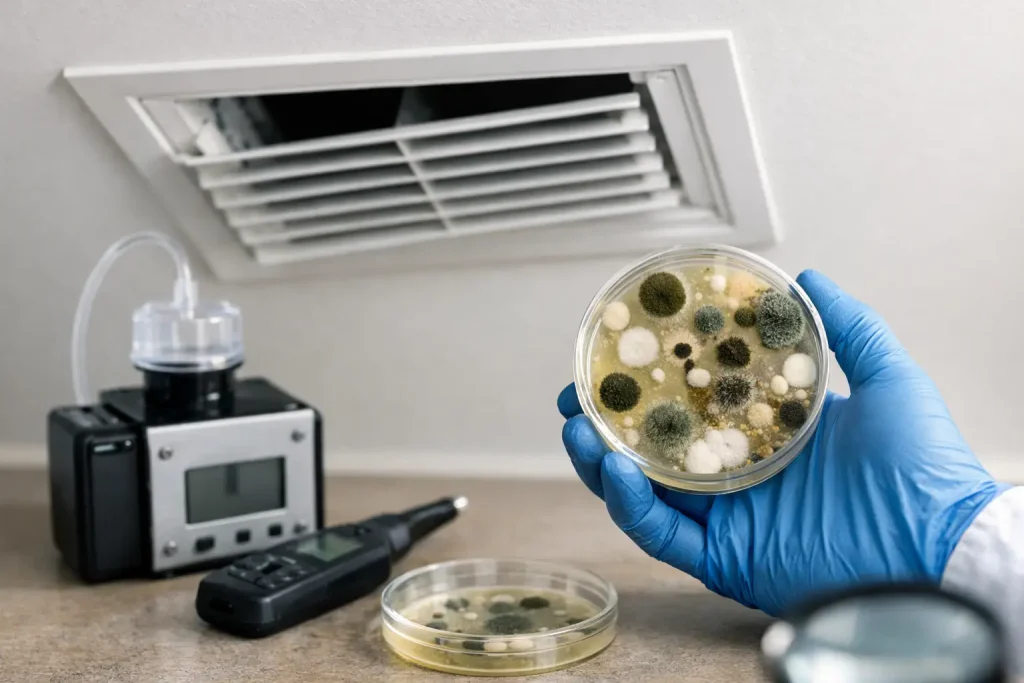
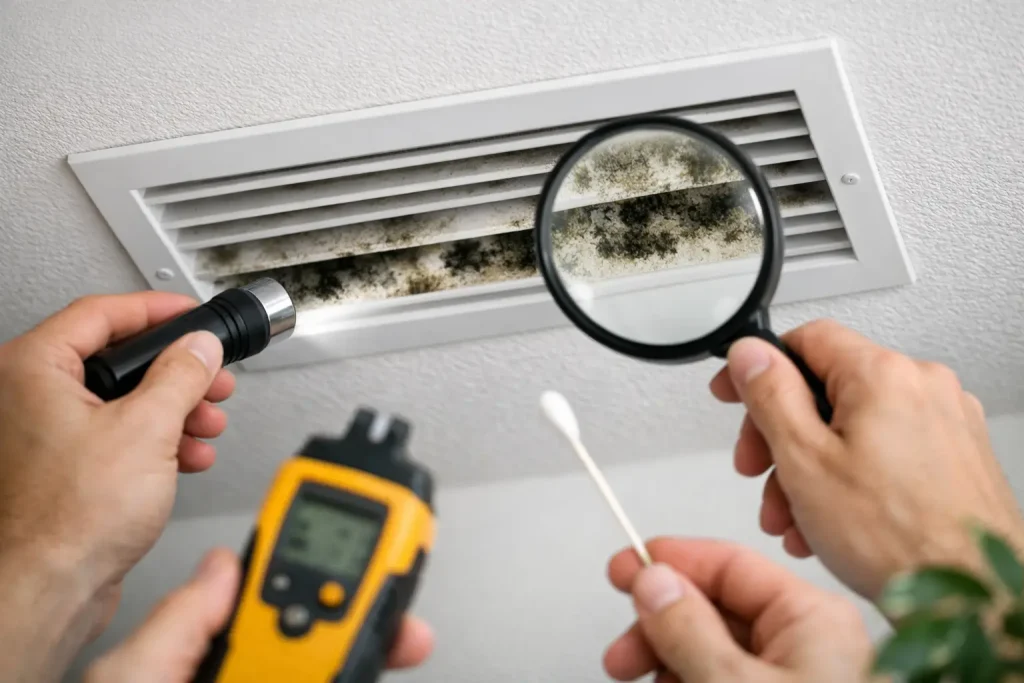
Remove a vent cover only if you can do so safely, then inspect both sides under good lighting. Look for dark specks, fuzzy patches, greenish growth, or irregular staining around the louvers and just inside the opening. Also check the ceiling, wall, carpet, or furniture near supply vents for discoloration.
Visible marks can be a useful warning sign, but they require some caution. Black dust is not automatically black mold. It may be ordinary household dust, soot from candles, or residue from a dirty system. Mold often looks spotty or clustered and may appear with moisture staining or a musty odor, but appearance cannot identify the exact cause by itself.
Avoid scraping, brushing, or blowing material from a suspicious vent. Disturbing it can send particles into the air. Take a clear photo for documentation, keep the area dry, and use a test or qualified professional assessment to determine the next step.
3. Watch for Moisture Problems Around Your HVAC System
Mold needs moisture. That makes water-related HVAC issues one of the strongest reasons to check your vents and AC system. Inspect the area around your indoor unit for puddles, rust, wet insulation, a clogged condensate drain, or water marks near ducts.
Pay close attention after heavy humidity, storms, plumbing leaks, or an AC breakdown. A system that is not draining properly can create the damp conditions mold needs, especially in attics, closets, basements, garages, and utility rooms.
Other clues include vents that sweat, unusually humid rooms, or insulation that feels damp. Fixing the source of moisture matters as much as detecting contamination. Cleaning a vent without correcting a leak, drainage problem, or humidity issue can allow the problem to return.
4. Notice Symptoms That Improve Away From the Building
Indoor air concerns often show up as patterns, not one isolated symptom. If people in the home or office experience more coughing, sneezing, throat irritation, congestion, watery eyes, headaches, or allergy-like discomfort while the AC runs, it is worth taking seriously.
Children, older adults, people with asthma, and people with respiratory sensitivities may notice poor air conditions sooner. Pets can also seem more irritated by dust or odors. Symptoms do not diagnose mold, since pollen, pet dander, viruses, dust mites, and many other triggers can cause similar problems. But when symptoms line up with a musty smell, moisture, or visible vent staining, testing becomes a practical next move.
If anyone has severe breathing trouble or a serious medical concern, seek medical care promptly. An HVAC test can help identify a building issue, but it is not a substitute for medical advice.
5. Check Filters, Returns, and High-Use Areas
A dirty filter is not proof of mold, but it can reveal how much debris the system is collecting and may point to poor maintenance. Check whether the filter is overdue for replacement, damp, warped, or carrying an unusual smell. Replace it with the correct size and rating recommended for your system.
Then inspect return vents, which pull room air back into the HVAC system. Returns near kitchens, bathrooms, basements, pet areas, or rooms with past water damage may collect more dust and moisture-related residue. Supply vents in bathrooms, laundry rooms, and rooms that stay humid deserve extra attention too.
Keep in mind that surface checks have limits. A clean-looking vent cover does not guarantee a clean duct or air handler. Mold can be located deeper in the system, where you cannot see it from the room.
6. Use a Vent-Specific Mold Test for a Clearer Answer
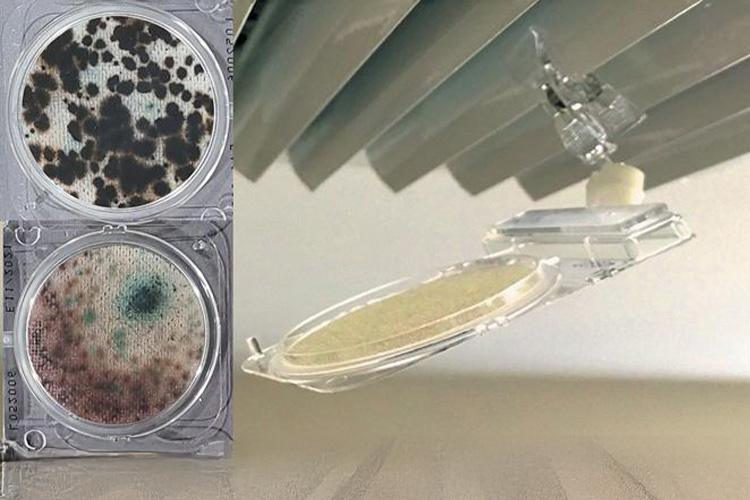
When warning signs keep adding up, a targeted test is often the fastest way to move beyond guesswork. A vent-specific DIY test is designed to check the area where conditioned air enters your space, making it a useful first step before committing to a costly inspection or remediation project.
Clean Vent Air Solutions offers a low-cost AC mold test built for this exact concern. The process is simple: clip the collection device to the vent, combine the materials as directed, and cover it. Results are available within 24 to 48 hours, with an optional lab report for additional validation.
Testing is especially helpful when mold is not visible, when an odor is intermittent, or when you need information to share with a landlord, property manager, HVAC contractor, or remediation company. It gives you a more concrete starting point than relying on smell or appearance alone.
A positive result does not automatically tell you how widespread the issue is or what repair is needed. It does tell you that the concern deserves attention. A negative result can also be valuable, helping you look at other likely causes such as dirty filters, drain problems, dust buildup, or plumbing moisture.
7. Know When to Bring in an HVAC or Mold Professional
DIY detection is a smart first step, but some situations call for experienced help. Contact an HVAC professional or qualified mold specialist if you have repeated water intrusion, visible growth across a large area, damaged duct insulation, a flooded air handler, or a strong odor that continues after basic maintenance.
Professional help is also appropriate when a system has been shut down after water damage, when occupants have significant respiratory sensitivities, or when a business owner needs detailed documentation. Ask the provider to identify the moisture source, inspect the relevant HVAC components, and explain the scope of any recommended work. A vague recommendation to clean everything without finding the cause should raise questions.
What Not to Do When You Suspect Vent Mold
Do not spray bleach, fragrance, or household disinfectant deep into your vents. These products may mask odors, damage components, or create fumes without solving a moisture problem. Do not run the system continuously if you suspect an active leak or standing water near electrical equipment.
It is also wise not to assume every dark mark is dangerous mold or every cough comes from the AC. The goal is not panic. The goal is getting a reliable answer quickly enough to protect the people who live, work, and breathe in the space.
Your vents are part of the air your family or customers breathe every day. If something smells off, looks suspicious, or keeps coming back when the AC runs, treat that signal as a reason to check rather than a reason to wait.