Best Mold Tests for Air Vents That Actually Work
A musty smell that returns every time the AC turns on is not a problem to ignore. The best mold tests for air vents help you check the part of your HVAC system that may be carrying contaminated air from room to room – before you spend hundreds or thousands of dollars on cleaning, repairs, or remediation.
Not every mold test answers the same question. Some look for mold on a visible surface. Others measure particles in the air. A few are designed specifically to test inside an air vent, where moisture, dust, and darkness can create conditions mold needs to grow. Choosing the right one comes down to where the warning signs are coming from and how quickly you need an answer.
What Makes an Air Vent Mold Test Worth Using?
A useful air vent mold test should be simple enough to use correctly, targeted enough to sample the suspected area, and clear enough to help you decide what to do next. If your concern is the central air system, a general room test may miss the source entirely.
The best option is often one that samples directly from the vent or AC pathway. That matters because HVAC systems can hide contamination inside ducts, near coils, around drain pans, or behind registers long before obvious mold appears on a wall or ceiling.
Look for a test that gives you a practical first answer: Is mold likely present in the system that is circulating your air? That information can help you decide whether to call an HVAC technician, arrange professional remediation, inspect for moisture problems, or continue monitoring the area.
The Best Mold Tests for Air Vents, Compared
There is no single test that is right for every situation. Here is how the most common options compare.
1. HVAC-Specific DIY Vent Tests
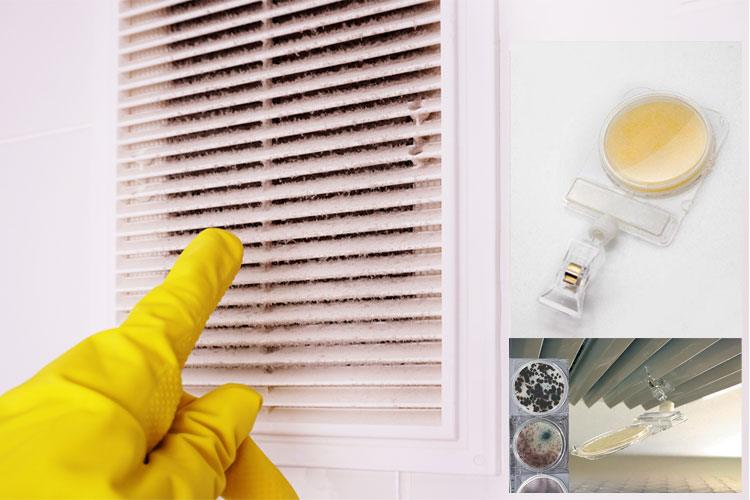
For homeowners and renters concerned about their AC system, an HVAC-specific DIY test is usually the most direct place to start. These kits are made to collect a sample from inside or near an air vent rather than from a random surface elsewhere in the home.
A vent-focused kit is especially helpful when you notice a musty odor when the system runs, dark spotting around registers, unexplained allergy-like symptoms indoors, or recurring moisture near the AC equipment. It can provide a fast, low-cost screening step before you commit to a full inspection.
Clean Vent Air Solutions offers a DIY AC mold test built around a straightforward process: clip, combine, and cover. Results are available within 24 to 48 hours, with an optional lab report for people who want additional validation. This type of targeted test is not a replacement for remediation when there is confirmed widespread growth, but it can help you act early instead of guessing.
2. Surface Swab Tests
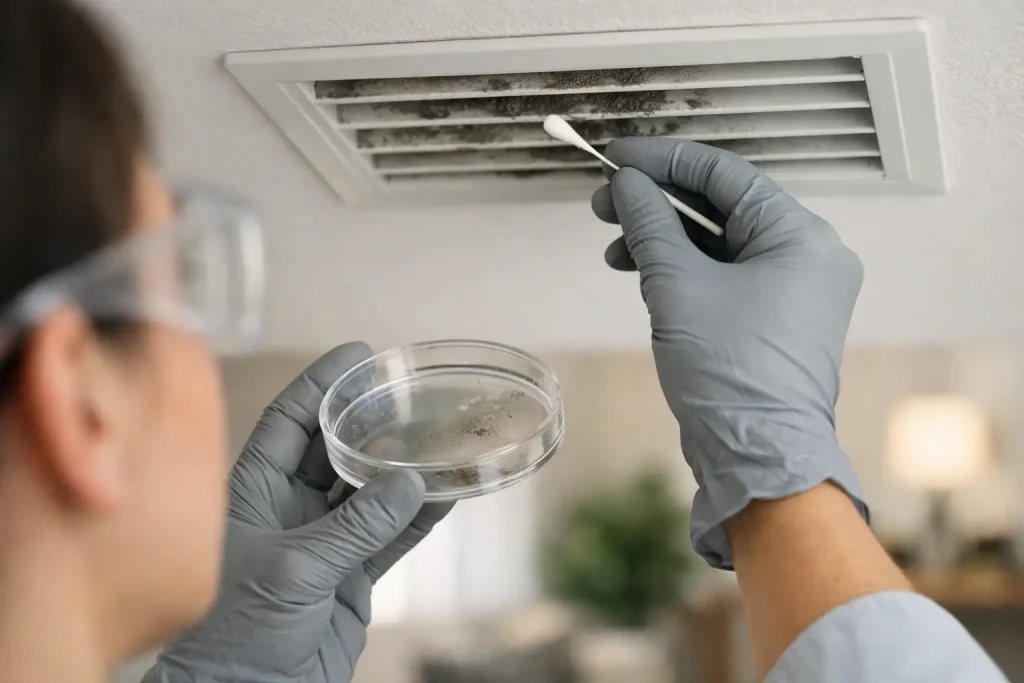
Surface swab tests collect material from visible spots on vent covers, walls, ceilings, or HVAC components. They are useful when you can see suspicious discoloration and want to check whether the material may be mold.
The limitation is location. A clean vent cover does not prove the ductwork or air handler is clean. On the other hand, a positive swab from a dusty register may only tell you that mold spores or growth are present at that one sampled spot. It does not automatically measure how much contamination is moving through your home.
Use a swab when there is a specific visible area you want to investigate. Use a vent-specific test when the concern is deeper in the system.
3. Settle Plates and Petri Dish Tests
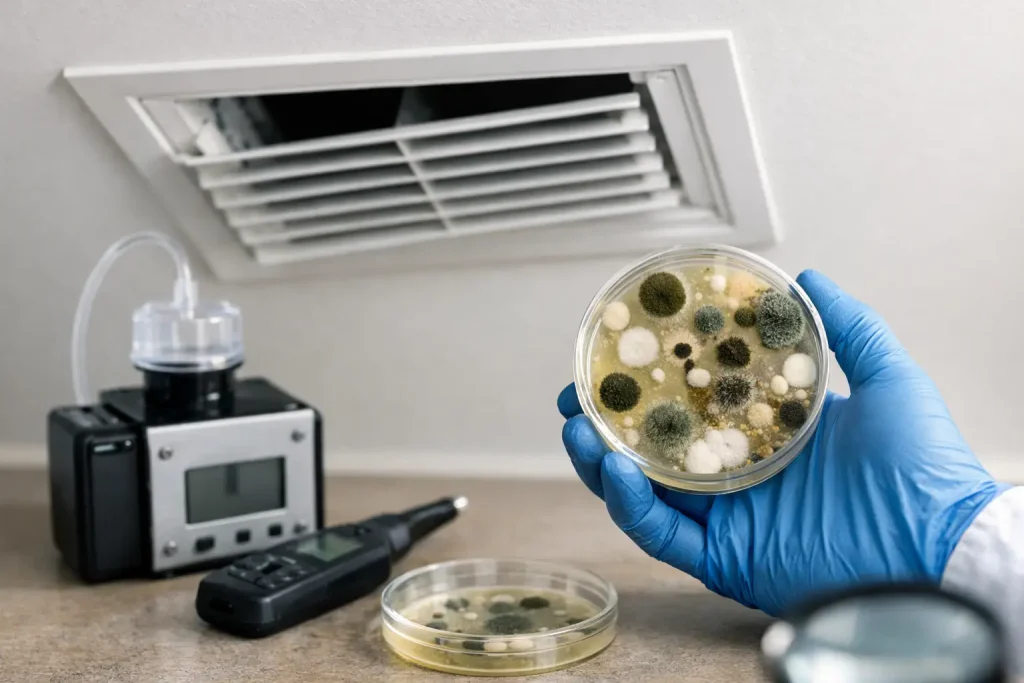
Settle plates are opened in a room and left exposed so particles can land on the growing medium. They are inexpensive and easy to find, which makes them appealing. However, they are often misunderstood.
Mold spores exist in many indoor and outdoor environments. A plate that grows something does not necessarily show an active mold problem in your vents, and a plate with little growth does not rule one out. Air movement, where the plate was placed, how long it was exposed, and normal background spores can all affect the result.
These tests may be interesting for general observation, but they are not the strongest choice when your concern is specifically the AC system.
4. Professional Air Sampling and Inspection
A professional mold inspection may include air samples, moisture readings, thermal imaging, and visual checks of the HVAC system and surrounding building materials. This is the most comprehensive route, particularly after flooding, a long-term leak, visible widespread growth, or a serious health concern.
It is also the most expensive and can take longer to schedule. Professional testing makes sense when there is evidence of a larger moisture issue, when multiple rooms are affected, or when you need detailed documentation for a landlord, insurance claim, real estate transaction, or commercial property decision.
For a single musty vent or an early concern, a DIY vent test can be a sensible first step. If that result suggests a problem or the symptoms continue, bring in a qualified professional.
Warning Signs That Point to Your AC System
Your vents deserve attention when the signs appear or worsen while heating or cooling is running. The clearest signal is a persistent earthy or musty odor that blows from registers. You may also see black, green, gray, or white spotting around vent covers, though dust and other residue can look similar.
Pay attention to how people feel in the building, too. Sneezing, coughing, throat irritation, watery eyes, congestion, headaches, or worsening allergy symptoms can have many causes. Mold is only one possibility, and a home test cannot diagnose a medical condition. Still, if these symptoms improve away from the building or become more noticeable when the AC starts, checking the system is a reasonable protective step.
Water is the bigger clue. Condensation, clogged drain lines, a leaking air handler, wet insulation, and humidity that stays high indoors can all support mold growth. Testing tells you whether there may be contamination. Finding and fixing the moisture source is what helps stop it from returning.
How to Get a More Useful Test Result
Follow the kit instructions exactly, especially where and how you collect the sample. Sampling the inside edge of a supply vent, where air enters the room, is generally more relevant than swabbing a dusty floor nearby. Avoid cleaning or spraying the test area immediately before sampling, since that can interfere with what is collected.
If your system has several zones or you notice odors in only one part of the home, test the vent closest to the concern first. If the problem appears throughout the building, inspect the air handler area, condensate drain, filter condition, and any rooms with known leaks or humidity issues.
A result is a decision tool, not a reason to panic. If mold is indicated, do not simply cover the smell with fragrance or paint over visible staining. Have the HVAC system and moisture conditions evaluated. Replace contaminated filters, correct drainage or humidity problems, and use qualified help when contamination is extensive or materials need removal.
When DIY Testing Is Not Enough
Move straight to professional help if you see large areas of visible mold, have had sewage backup or major water damage, suspect mold inside walls or insulation, or notice ongoing respiratory symptoms that concern you. The same applies to workplaces, rental properties, and homes with infants, older adults, or people with significant respiratory conditions.
A qualified professional can identify hidden moisture, inspect components that are not safe or practical to access yourself, and recommend an appropriate cleanup plan. Avoid disturbing large contaminated areas, since aggressive brushing, cutting, or blowing air across them can spread particles further.
The right test gives you a clearer next move. When your air vents smell wrong, look wrong, or seem tied to how your family feels indoors, testing the system early can replace uncertainty with a practical plan to protect the air you breathe.