Why Does My AC Smell Musty? What to Check
A musty smell that starts the moment your air conditioner runs is more than an annoyance. If you are asking, why does my AC smell musty, your system may be moving moisture, bacteria, or mold-related contamination through the same vents your family, customers, or employees breathe from. The odor does not automatically mean you have a serious mold problem, but it is a warning sign worth checking promptly.
A clean, properly draining AC system should not make your indoor air smell damp, stale, or earthy. The faster you identify where that smell is coming from, the sooner you can protect your air quality and avoid a smaller moisture issue turning into a larger cleanup.
Why Does My AC Smell Musty When It Turns On?
Central air conditioning removes humidity from indoor air as it cools. That moisture has to drain away. When it does not, damp surfaces inside the system can collect dust, organic debris, and microbial growth. Once the blower starts, it can carry that odor into every connected room.
The source may be minor, such as a neglected filter or a short period of standing water in the drain pan. In other cases, it may point to moisture and contamination on the evaporator coil, in the air handler, or inside ductwork. The smell alone cannot tell you exactly what is growing or how extensive the issue is. It can tell you that your AC deserves attention.
A musty odor is especially concerning when it is persistent, gets stronger during cooling cycles, or returns soon after you change the filter or clean visible areas. Those patterns suggest the source may be inside the equipment rather than out in the room.
A dirty or damp air filter
Your filter captures dust, pet dander, pollen, and other particles before they reach the equipment. Over time, a clogged filter can hold moisture and develop a stale smell. High indoor humidity, a filter that has been left in too long, or a system that cycles poorly can make this more likely.
Replacing a dirty filter is one of the simplest first checks. Use the size and filter rating recommended by your HVAC manufacturer. A higher-rated filter is not always better if your system is not designed for it, because restricted airflow can create other performance problems.
Moisture on the evaporator coil
The evaporator coil sits inside the indoor portion of your AC system. It becomes cold while the unit runs, causing moisture in the air to condense on its surface. Under normal conditions, that water flows into a pan and exits through the condensate drain line.
Dust buildup, poor airflow, or ongoing humidity can leave the coil damp longer than it should be. That creates a favorable environment for musty odors. Coil cleaning is often best handled by a qualified HVAC professional, especially when the coil is enclosed or difficult to reach.
A clogged condensate drain or drain pan
A blocked drain line can cause water to back up into the drain pan. That standing water may smell musty, sour, or dirty. You may also notice water near the indoor unit, a wet ceiling below an attic air handler, or a shutoff switch that keeps the system from operating.
Do not ignore water around HVAC equipment. Turn the system off if you see active leaking, and arrange for service. Water damage can affect surrounding insulation, drywall, flooring, and framing in addition to the AC system itself.
Contamination in ductwork or insulation
Ducts can develop odors when they collect dust and moisture or when there has been a leak, flood, pest issue, or long-term humidity problem. Duct insulation, flex ducts, and materials around the air handler can also hold moisture. In some situations, cleaning is appropriate. In others, damaged or contaminated insulation or duct materials may need replacement.
This is why a quick spray of fragrance or disinfectant into a vent is not a real solution. It may mask the odor while leaving the moisture source untouched. Some products can also add irritating chemicals to the air you are trying to improve.
When a Musty AC Smell Could Be Mold
Mold needs moisture and a food source to grow. Dust, skin cells, paper backing, insulation, and organic debris can provide that food source inside or around an HVAC system. A musty smell may be consistent with mold, but odor is not proof. Other microbial growth and damp materials can create similar smells.
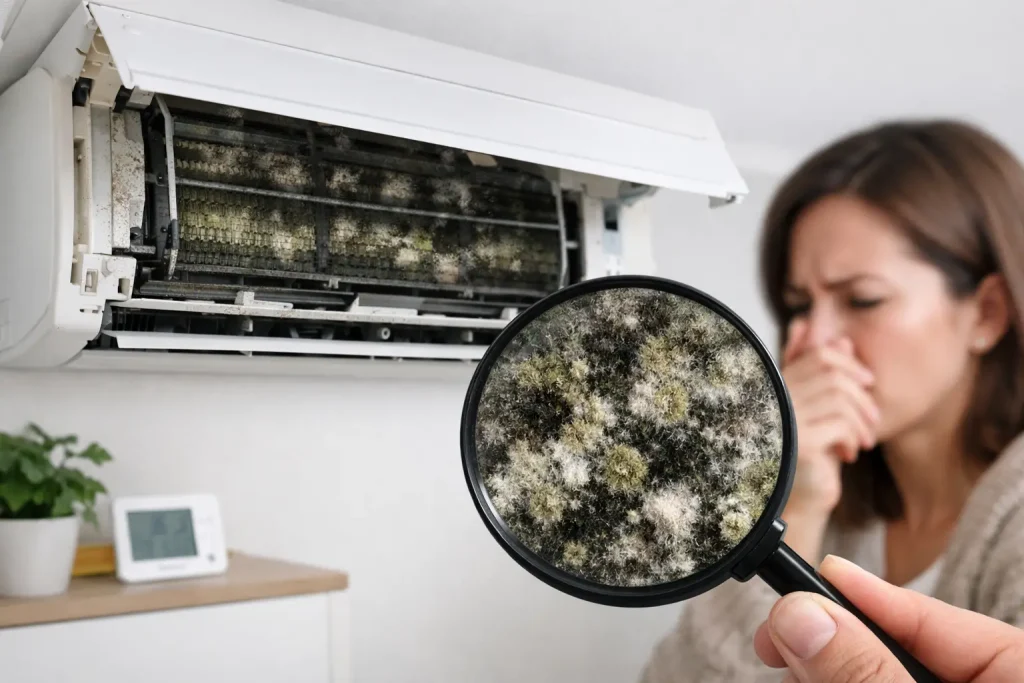
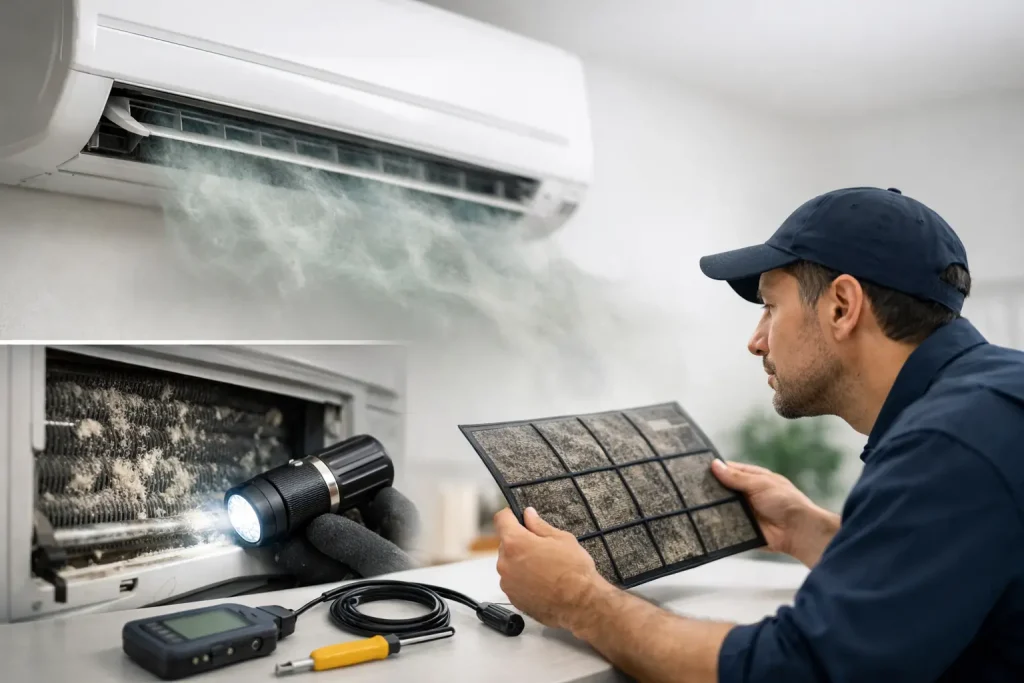
Pay closer attention if the odor comes with visible dark, green, white, or fuzzy spots near supply vents, around the air handler, or on nearby walls and ceilings. Recurring condensation, water stains, elevated indoor humidity, and a recent plumbing or roof leak are also meaningful clues.
Health symptoms deserve attention too. Some people notice more sneezing, coughing, throat irritation, itchy eyes, headaches, or asthma flare-ups when the AC runs. These symptoms can have many causes, including pollen, dust, pet dander, viruses, and outdoor pollution. Still, if symptoms repeatedly improve when you leave the building and return when the system operates, it makes sense to investigate the indoor air.
Children, older adults, people with asthma or allergies, and those with compromised immune systems may be more sensitive to damp or contaminated indoor environments. If anyone is having severe breathing symptoms, seek medical care rather than relying on home troubleshooting.
What to Do When Your AC Smells Musty
Start with a few safe observations. Notice whether the smell occurs only at startup, only in cooling mode, or throughout the entire cycle. Check whether it is strongest at one vent, in one room, or throughout the building. Those details can help narrow down the source.
Next, inspect the accessible basics. Replace a dirty filter, look for water around the indoor unit, and check visible vents for dust buildup, staining, or signs of moisture. If your thermostat has a fan setting, avoid leaving it set to “on” continuously while you are trying to pinpoint an odor. Running the fan nonstop can circulate odors even when the system is not actively cooling and drying the air.
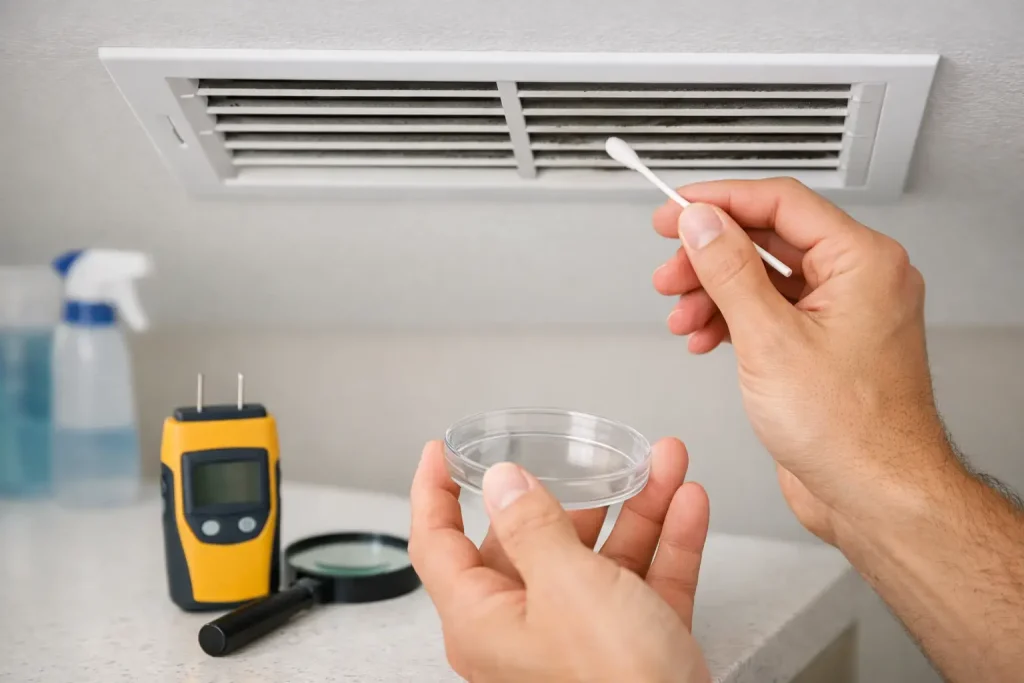
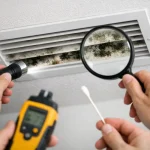
Then focus on the cause, not the scent. If the musty odor continues after a filter change, if there is visible moisture, or if you suspect contamination inside the AC system, testing can provide a useful next step before you commit to costly work. Clean Vent Air Solutions offers a simple AC mold test designed to help you check the system that circulates air through your home or business. The process is straightforward: clip, combine, cover, then review results within 24 to 48 hours.
A positive result or visible mold growth does not mean every part of the home is contaminated. It does mean you should identify and correct the moisture source, then discuss appropriate cleaning or remediation with a qualified HVAC or mold professional. Simply killing or covering surface growth without fixing the water issue can lead to the same problem returning.
When to Call an HVAC Professional Right Away
Some situations should not wait for a routine maintenance visit. Contact a qualified professional promptly if you have an active water leak, repeated drain pan overflow, ice on the indoor coil or refrigerant lines, a burning smell, electrical issues, or a strong odor that spreads through the property.
You should also seek professional evaluation when there has been significant water damage, when insulation or ducts are visibly wet, or when the smell remains after basic maintenance. HVAC professionals can inspect drainage, airflow, coils, blower components, duct conditions, and system operation. If mold contamination is confirmed or suspected to be widespread, a mold remediation specialist may be needed as well.
Renters should document the odor, water damage, and any visible signs with dates and photos, then notify the landlord or property manager in writing. Small business owners should take persistent indoor air complaints seriously, particularly if multiple people report irritation or the odor is present in customer-facing areas.
How to Help Prevent Musty AC Odors
Prevention comes down to keeping the system clean, dry, and able to drain. Change filters on the schedule that fits your household, pets, allergies, and system use. Many homes need a new filter every one to three months, while some filters are designed for longer intervals. Check it regularly instead of relying only on the date printed on the box.
Keep indoor humidity under control, particularly in humid climates or during rainy periods. A home that regularly stays above about 60% relative humidity is more likely to develop moisture-related problems. Use bathroom and kitchen exhaust fans, repair leaks quickly, and consider a properly sized dehumidifier when needed.
Annual AC maintenance can catch drainage issues, dirty coils, and airflow problems before they create an odor. It is also wise to keep supply and return vents open and unobstructed. Closing too many vents or blocking returns with furniture can reduce airflow and place extra strain on the system.
A musty AC smell is your cue to look beyond the fragrance of the air and focus on what may be happening inside the system. A fast check today can give you clearer answers, protect the people in your space, and help keep a moisture problem from becoming a much bigger one tomorrow.