10 Top Signs of AC Mold Contamination at Home
That stale, earthy smell that appears the moment your AC starts is not something to cover with an air freshener. Your air conditioning system moves air through every room, so contamination inside the system can spread far beyond one vent. Knowing the top signs of AC mold contamination gives you a chance to act before a small hidden problem becomes a bigger health or property concern.
Mold thrives where moisture and organic material meet. Inside an HVAC system, that can mean a damp evaporator coil, clogged condensate drain, dirty filter, wet insulation, or dust buildup around registers. Not every unusual smell or sneeze means mold is present, but recurring warning signs deserve a clear answer.
Top Signs of AC Mold Contamination to Watch For
1. A musty odor when the AC turns on
A musty, damp-basement smell coming from supply vents is one of the most common warning signs. You may notice it most strongly when the system first cycles on, after it has been off for several hours, or when humidity is high.
This odor can come from mold growth on internal components, but it can also be caused by standing water, a dirty drain pan, or microbial buildup. Either way, the smell points to a moisture issue inside or near the system. If it keeps returning after you replace the filter or clean the visible vent cover, do not ignore it.
2. Dark, fuzzy, or discolored spots around vents
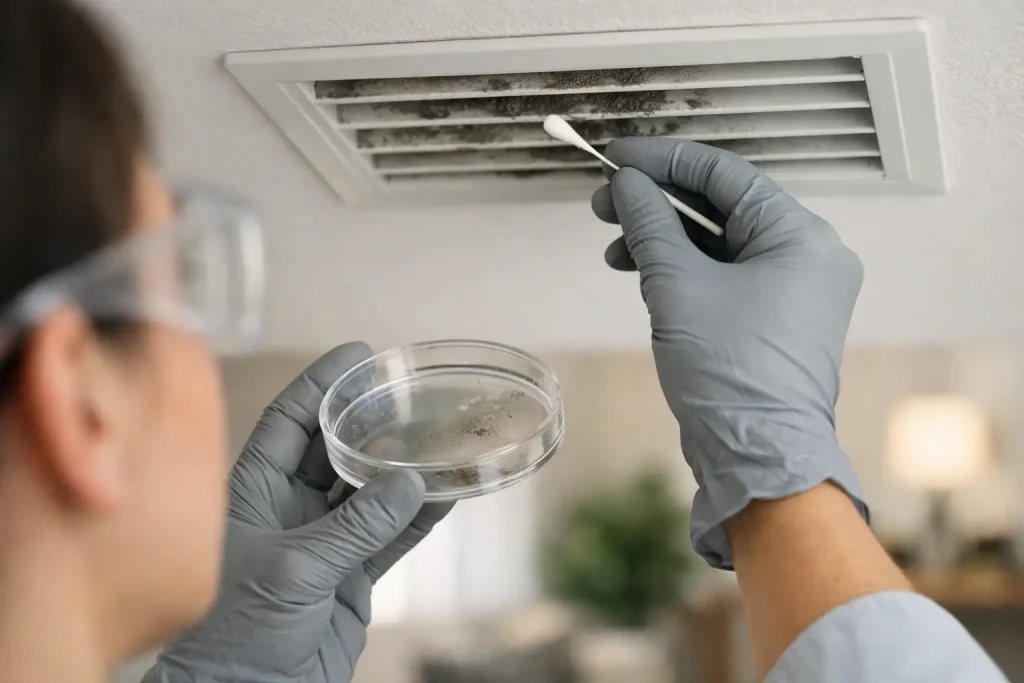
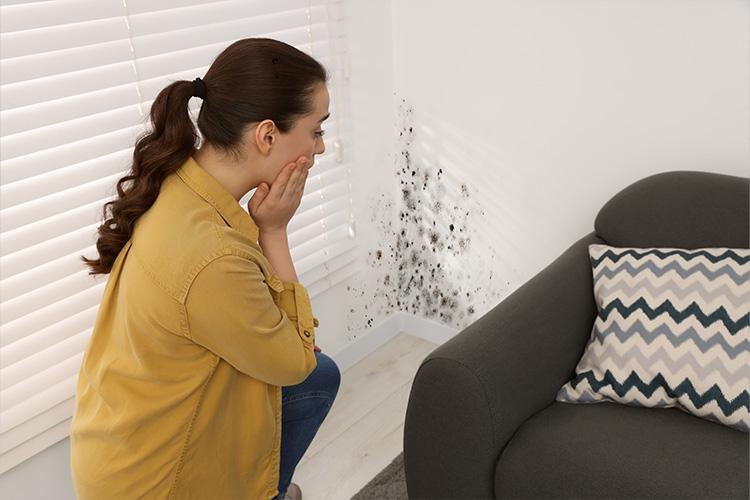
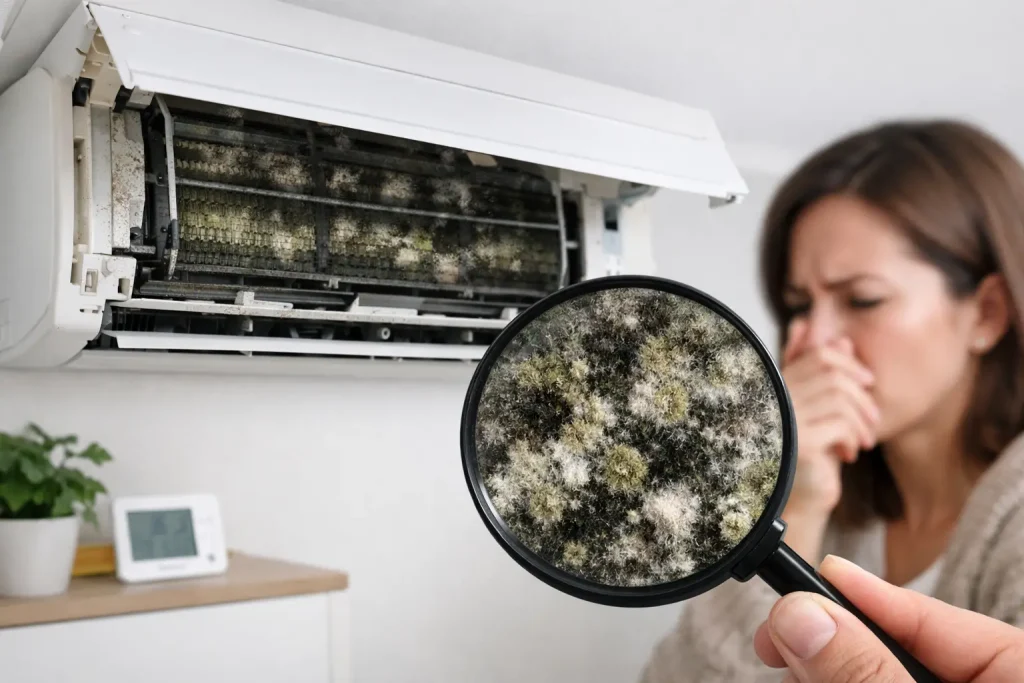
Look closely at vent covers, registers, nearby drywall, and ceiling tiles. Black, green, gray, white, or brown spotting may indicate mold, especially if it looks fuzzy, spreads, or returns after cleaning.
Visible growth around a vent does not automatically prove the entire system is contaminated. Sometimes it forms from condensation on a cold register. Still, the location matters. Repeated spotting near active vents can signal that moisture or contaminated dust is moving through the airflow path.
3. Allergy-like symptoms that improve away from the building
Sneezing, a runny nose, itchy eyes, coughing, throat irritation, and congestion can have many causes, including seasonal allergies, pets, dust, and dry indoor air. The pattern is what matters. If symptoms get worse at home, in a particular office, or when the AC runs, then ease when you leave, the indoor air deserves attention.
Children, older adults, people with asthma, and anyone with respiratory sensitivities may react more noticeably. Mold exposure affects people differently, so one family member may feel fine while another struggles with recurring irritation.
4. Symptoms that flare in certain rooms
Does one bedroom always seem to trigger coughing at night? Does a back office smell stale or leave employees with irritated eyes by the afternoon? Localized symptoms can point to a vent, duct branch, air handler, or moisture issue serving that area.
Pay attention to timing and location for a few days. A simple note of when symptoms occur, which rooms are affected, and whether the AC was running can make the next step much clearer.
5. Excess humidity or frequent condensation
Your AC should remove moisture as it cools. If indoor air feels clammy, windows sweat, vent covers drip, or moisture gathers around ducts, mold-friendly conditions may be developing.
High humidity does not confirm mold, but it is one of the conditions that allows it to grow. A system that is too large, poorly maintained, incorrectly drained, or not running long enough to dehumidify may leave moisture behind. Addressing humidity helps protect both your air and your property.
6. Water around the air handler or drain pan
A puddle near the indoor unit, a rusty drain pan, water stains below the system, or a repeatedly clogged condensate line should be handled promptly. HVAC systems naturally produce condensation, but that water needs to drain correctly.
When it does not, moisture can support mold growth on coils, insulation, surrounding building materials, and dust trapped inside the unit. Even if the odor has not started yet, water near an AC component is a reason to inspect further.
7. Weak airflow combined with a dirty or damp smell
Weak airflow alone often points to a clogged filter, blower issue, closed register, or duct problem. But when reduced airflow comes with a musty odor, visible dust buildup, or recurring respiratory irritation, contamination becomes more plausible.
Restricted airflow can allow moisture and debris to linger where they should not. Replace filters on schedule, make sure vents are open, and avoid treating a persistent odor as a normal part of an aging system.
8. Dust that returns quickly around registers
A thin layer of household dust is normal. Heavy, fast-returning debris around vents is not always mold, but it can indicate that the system is carrying more particles than it should. If that dust looks clumped, damp, unusually dark, or paired with a musty smell, it is worth investigating.
Do not scrape material from inside ducts or disturb suspected growth without protection. Aggressive cleaning can send particles into the air and make the situation harder to assess.
9. Stains or peeling paint near vents and ducts
Water stains, bubbling paint, warped drywall, and peeling finishes near ceiling vents or duct runs are often moisture clues. The source might be a roof leak, plumbing issue, poorly insulated ductwork, or AC condensation. Whatever the cause, damaged materials can become a place for mold to grow.
This is one of the signs where the answer may not be inside the AC itself. The system may be moving air past a moisture-damaged area, or the moisture source may be affecting nearby ductwork. Testing and finding the source work together.
10. The smell returns after cleaning or servicing
A clean vent cover can look reassuring, but it cannot clean an evaporator coil, drain pan, duct interior, or insulation behind the wall. If a musty smell disappears briefly after cleaning and then returns when cooling begins, the source may be deeper in the system.
The same is true after a basic tune-up. Routine HVAC service is valuable, but it may not include mold-specific testing or an inspection of every area where contamination can develop. Recurring odors are a signal to get more specific rather than repeatedly masking the problem.
What to Do When You Notice AC Mold Warning Signs
Start with the basics: replace a dirty filter, look for visible leaks or condensation, and keep indoor humidity under control. Do not use bleach, fragrance sprays, or foggers as a substitute for identifying the source. Those approaches may hide an odor temporarily while moisture and contamination continue.
The next practical step is testing. Clean Vent Air Solutions offers a focused DIY AC mold test kit that helps you check your system using a simple clip, combine, cover process, with results in 24 to 48 hours and an optional lab report for added validation. It is a fast, affordable way to move from suspicion to useful information before deciding whether professional HVAC service or remediation is needed.
A positive result does not mean every surface in your home is contaminated, and a negative result does not eliminate every possible moisture problem. Context matters. Visible growth, ongoing leaks, widespread staining, strong odors, or health concerns may call for a qualified HVAC professional or mold remediation specialist to locate and correct the source.
When to Act Right Away
Do not wait if you see extensive visible growth, have active water damage, smell strong musty odors throughout the building, or notice symptoms worsening quickly when the system runs. People with asthma, compromised immune systems, severe allergies, or unexplained breathing trouble should be especially cautious. Seek medical care for serious symptoms such as difficulty breathing, chest tightness, or severe asthma attacks.
Your AC is supposed to make your home or workplace more comfortable, not leave you questioning the air you breathe. A quick check at the first sign of trouble can bring peace of mind and help you protect the people who count on that air every day.