
DIY Mold Test Kits for Home: Are They Worth It?
If your home smells musty every time the AC kicks on, waiting weeks for answers is hard to justify. DIY mold test kits for home can be a smart first step when you want to know whether mold may be circulating through your air, especially if your family is dealing with coughing, sneezing, headaches, or allergy-like symptoms that keep coming back indoors.
The key is knowing what a kit can actually tell you. Some tests are useful for early screening. Others create more confusion than clarity. And if your concern is mold inside your air vents or AC system, the type of kit you choose matters a lot more than most people realize.
What DIY mold test kits for home really do
Most at-home mold kits are screening tools, not full investigations. They are designed to help you detect signs of mold presence without paying for a full inspection right away. That makes them appealing for homeowners, renters, and small business owners who want a fast, affordable answer before taking the next step.
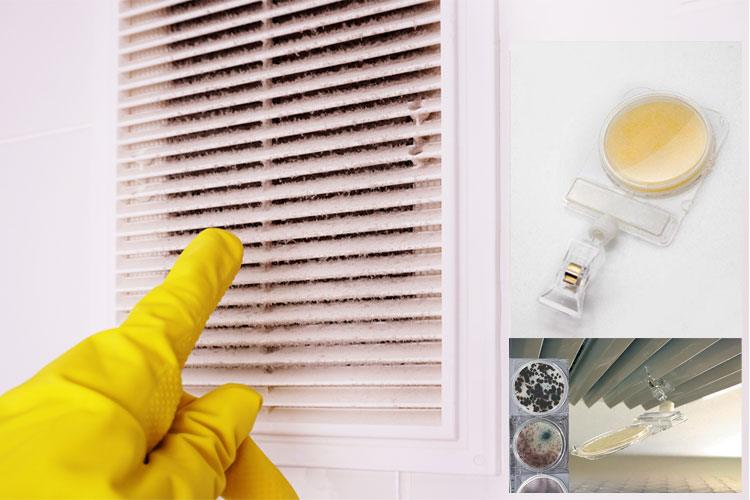
But not every kit tests the same thing. Some collect particles from the air. Some use a surface sample from a visible area. Some rely on a settling plate that captures whatever lands on it over time. Others are designed for a very specific problem area, such as an AC vent where contaminated air may be moving through the property.
That difference is important. A general home mold kit may tell you that mold spores exist somewhere in the environment, but it may not tell you whether your HVAC system is the source. If the concern is what you are breathing when the system turns on, you need a test that gets closer to that source.
Why homeowners often test too late
Mold problems rarely announce themselves with a dramatic warning. More often, they show up as small signals people try to explain away. A stale odor in one room. A child waking up congested. Employees complaining that the office feels stuffy. Dust around a vent that seems darker than normal. Symptoms that improve when you leave the building.
By the time visible growth appears, contamination may already be established behind vents, inside ductwork, near coils, or in moisture-prone sections of the system. That is why early testing matters. It gives you a chance to confirm whether mold is part of the problem before exposure continues and before cleanup becomes more expensive.
There is also a financial angle. Many people jump straight to a professional inspection that can cost far more than a screening kit, only to find out they could have ruled in or ruled out one likely source much sooner. A DIY test is not a replacement for professional help when the issue is serious, but it can be a practical first move.
The biggest difference between test kit types
If you are comparing kits, focus less on packaging claims and more on where the sample comes from.
Air-settle plates are common because they are simple. You open the plate, leave it exposed, and wait to see what grows. The problem is that mold spores are present in many indoor and outdoor environments. A result from a passive plate does not always tell you whether there is an active problem in your AC system, behind a wall, or simply normal background exposure.
Surface tests are more targeted. If you see suspicious spotting on a vent cover, near a return, or around an air handler, a swab or tape sample can be more useful than a passive air plate. Still, surface growth on a visible area does not always reveal what is happening deeper inside the system.
Specialized vent or AC-focused kits are often the most practical option when your concern is airborne exposure coming through the HVAC system. They are designed around the reality that mold in an air system does not stay politely hidden. It moves. That means the best first test is often the one that samples from the path of circulation rather than a random room location.
Are DIY mold test kits accurate?
They can be accurate for what they are intended to do, but accuracy depends on matching the test to the problem. A good kit can help confirm whether mold is likely present in the area being tested. A poor match can give you a result that sounds useful but does not answer your real question.
This is where people get frustrated. They buy a broad home kit, get a vague result, and still do not know whether the AC is contaminated, whether remediation is needed, or whether another moisture issue is driving the problem. The kit did not necessarily fail. It just was not specific enough.
Sampling also matters. If instructions are confusing or the test takes too many steps, user error becomes more likely. That is one reason simple testing systems matter so much. The easier the process, the better the chance of collecting a usable sample quickly and correctly.
For many households, speed matters too. Waiting a long time for direction can mean more exposure, more uncertainty, and more stress. A test that provides a clear result window within 24 to 48 hours can help people make decisions sooner, especially when children, older adults, or people with asthma are in the home.
When a home mold kit makes sense
A DIY kit is often a good fit when you have warning signs but are not yet ready for a full inspection. That includes recurring musty smells, ongoing respiratory irritation indoors, visible buildup around vents, a history of humidity or condensation, or concern after water damage.
It is also a strong option when you want to narrow the problem before spending more money. If the AC system is the likely source, a focused test can help you decide whether to bring in an HVAC professional, a mold remediation company, or both.
For renters, a test can also help document a concern before approaching a landlord or property manager. For small business owners, it can provide an early signal before indoor air complaints turn into a bigger workplace issue.
When a DIY kit is not enough
There are times when you should skip the wait-and-see approach. If you have extensive visible mold, recent flooding, major water intrusion, strong ongoing odors, or severe health symptoms linked to a building, professional inspection and remediation should move to the front of the line.
The same is true if you test positive and the contamination appears widespread. A home kit can help identify a likely issue, but it cannot replace a full remediation plan. Mold is not just a nuisance. If it is active inside the HVAC system, every cycle of air can spread particles through the space.
What to look for in the best DIY mold test kits for home
The best kits are easy to use, fast, and specific to the source you are worried about. If your concern is the air coming from vents, look for a test built for that purpose rather than a generic room kit.
Clear instructions matter. So does affordability. A low-cost first step makes sense because testing should feel accessible, not like a major project. You also want a result you can act on. Optional lab confirmation can be helpful if you want additional validation, but the first screen should still give you useful direction without making the process feel complicated.
A product built around a simple process is often the better choice for busy households. That is part of why specialized AC testing has become more appealing. A focused kit such as the one offered by Clean Vent Air Solutions is designed around a specific question: is mold present in the air system that is blowing through your home or business? That is a more actionable question than simply asking whether mold exists somewhere indoors.
The real value is clarity, not just convenience
People often think of DIY testing as the cheap alternative. The better way to see it is as an early decision tool. You are not just saving money. You are reducing uncertainty.
That matters when your family is breathing the same circulated air every day. It matters when you are trying to decide whether to clean a vent cover, service the AC, investigate moisture, or escalate to remediation. And it matters when the symptoms are real but the source is still a guess.
Not every mold concern needs a full inspection on day one. But ignoring warning signs can become expensive fast. A smart first test gives you a clearer path forward without overcomplicating the process.
If the problem may be in your AC system, test where the air is coming from. That one choice can save time, reduce confusion, and help you protect the people who count on that air every day.