HVAC Mold Signs Your AC Needs Testing Now
A musty smell that appears when the air conditioner starts is not something to mask with candles, sprays, or a new air freshener. It can be a warning that HVAC mold is growing where you cannot see it – inside the system responsible for moving air through every room.
Your AC system creates the damp, dark conditions mold needs to grow. If moisture lingers in the air handler, evaporator coil, drain pan, ductwork, or vents, spores may build up and circulate whenever the system runs. For families, renters, property owners, and small businesses, finding out early can mean addressing a manageable problem before it becomes a larger air-quality and property concern.
What Is HVAC Mold?
HVAC mold is mold contamination located in or around an air conditioning, heating, or ventilation system. It may grow on dust, insulation, condensation, debris, or other organic material inside components that stay damp. It is not always visible at the register. In fact, visible spots on a vent cover may be only the part of the problem you can see.
Mold needs moisture to take hold. Central air systems naturally remove humidity from the air, which is useful when everything is draining and operating correctly. But a clogged condensate line, dirty coil, overflowing drain pan, duct leak, or consistently high indoor humidity can leave moisture behind. That creates a favorable environment for mold growth.
Not every dark mark is mold, and not every musty odor comes from the HVAC system. Dust, mildew, pet debris, and outdoor odors can all play a role. That is why testing is a smart first step. It gives you information before you spend money on a major repair, duct cleaning, or remediation service that may not address the actual source.
HVAC Mold Warning Signs to Watch For
The most common clue is an odor that turns on with the AC or heat and becomes less noticeable when the system is off. People often describe it as musty, earthy, damp, or similar to a wet basement. If the smell returns after you clean the room or replace a filter, the system deserves closer attention.
Other warning signs can include recurring allergy-like symptoms indoors, such as sneezing, coughing, throat irritation, watery eyes, or a stuffy nose. Symptoms alone do not prove mold exposure. Seasonal allergies, dust, pets, and other irritants can cause similar reactions. Still, if several people feel worse in one building or symptoms improve when they leave, do not ignore the pattern.
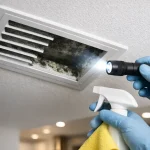
Pay attention to visible discoloration around vents, ceiling registers, supply grilles, or the air handler. Green, black, gray, white, or brown spotting can be a sign of mold, though staining can have other causes. Condensation on vents, water near the indoor AC unit, repeated drain backups, and unusually high humidity are also signals that moisture may be feeding contamination.
For business owners, the concern is not only comfort. A persistent odor or repeated indoor-air complaints can affect employees, customers, and the condition of the property. For landlords and renters, documenting warning signs early can help start a productive conversation about maintenance before conditions worsen.
Why Mold Can Grow Inside an AC System
Your HVAC system does not need a major flood to develop a moisture problem. Small, repeated issues are often enough. A drain line can partially clog. A filter can become loaded with dust and restrict airflow. An oversized AC unit can cool the space quickly without removing enough humidity. A duct leak in a humid attic, crawl space, or basement can pull damp air into the system.
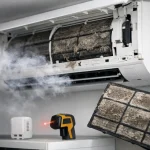
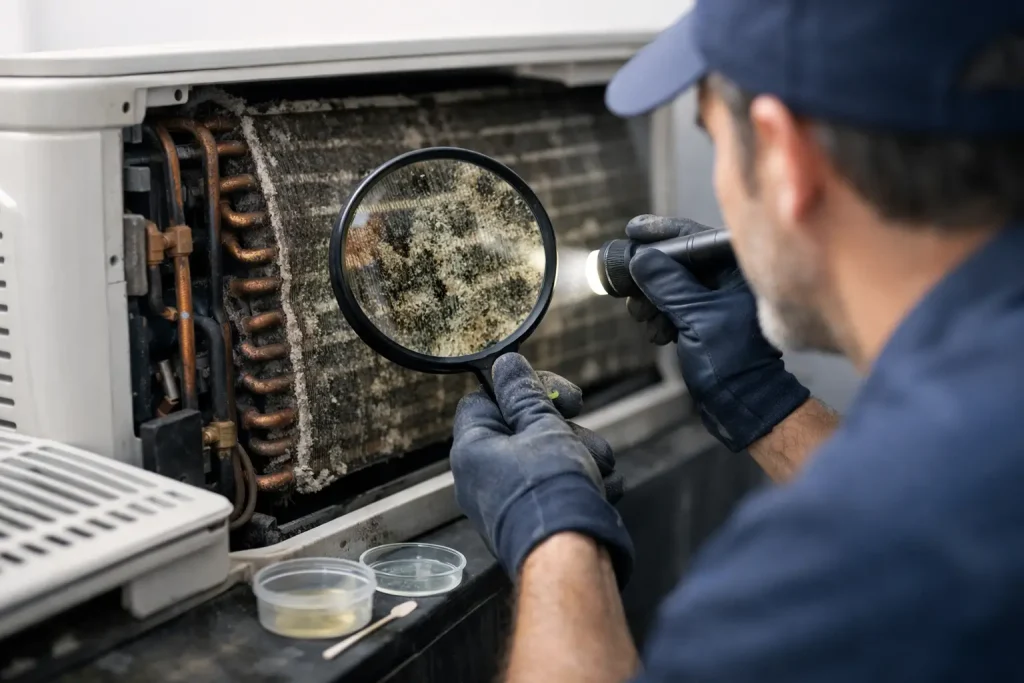
The evaporator coil is a common trouble spot because it regularly collects condensation as warm indoor air passes over it. If the coil, pan, or drain system is dirty or not draining properly, moisture and debris can remain together. That combination deserves attention.
Running the fan continuously can also be a factor in humid climates. When the cooling cycle ends, moisture on the coil may evaporate back into the air stream if the fan keeps moving air. This does not mean every home should avoid using the fan setting. It depends on the system, local climate, humidity level, and guidance from a qualified HVAC professional. But it is one reason recurring humidity problems should be investigated instead of guessed at.
What to Do If You Suspect Mold in Your HVAC System
Start by protecting the people in the space. If there is a strong odor, visible growth near accessible components, a water leak, or symptoms that seem connected to the building, avoid treating the issue as routine dust. Replace a heavily soiled filter with the correct size and rating for your system, but do not assume a filter change alone solves the problem.
Next, look for obvious moisture clues you can safely see without taking equipment apart. Check for standing water around the indoor unit, a dripping condensate line, wet insulation, and condensation near registers. Do not disturb suspected growth inside ducts or on HVAC components. Scrubbing, blowing, or vacuuming without the right containment can spread particles rather than remove them.
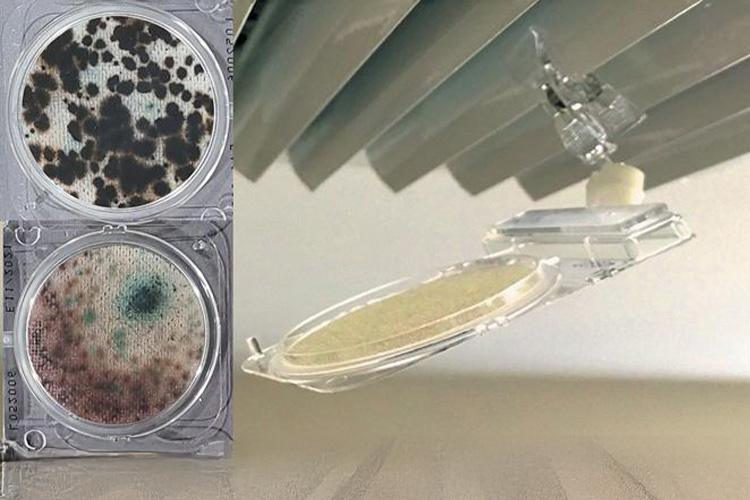
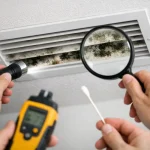
Then test. A targeted HVAC mold test can provide a fast, affordable indication of whether contamination is present in the AC system. Clean Vent Air Solutions offers a simple DIY approach: clip, combine, and cover. Results are available in 24 to 48 hours, with an optional lab report for added validation when you need more documentation.
A positive result does not automatically tell you the full extent of a problem or identify every moisture source. It does tell you that the next step should be more deliberate. Depending on what you find, that may include an HVAC technician to correct drainage or airflow issues, a qualified mold professional for broader contamination concerns, or both.
When Professional Help Makes Sense
DIY testing is a practical first step when you want a quick answer before committing to a larger service. Professional evaluation becomes especially worthwhile when there has been water damage, visible growth covers a large area, the system has recurring leaks, odors are severe, or people in the building have significant health concerns.
People with asthma, severe allergies, weakened immune systems, or ongoing respiratory conditions may need to be more cautious around suspected mold. If anyone is experiencing serious or persistent symptoms, contact a medical professional. An HVAC or mold inspection can help identify environmental conditions, but it cannot diagnose the cause of a health issue.
Be cautious about anyone who promises to solve a mold problem with a fragrance treatment, a quick spray into the vents, or a generic duct cleaning alone. Cleaning can be part of the solution, but the moisture source must be corrected. Otherwise, mold may return and the same musty smell can come back weeks later.
Preventing HVAC Mold After Testing
Prevention comes down to moisture control and regular system care. Keep indoor humidity in a reasonable range, usually around 30% to 50% when practical for your climate and home. Use bathroom and kitchen exhaust fans, repair leaks promptly, and make sure the condensate drain is maintained according to your HVAC provider’s recommendations.
Replace filters on schedule, especially during periods of heavy AC use. A clean filter supports airflow, although it is not a cure for mold already growing inside the system. Schedule seasonal HVAC maintenance so a technician can inspect the coil, drain pan, drain line, and overall performance.
If you have had a past leak or mold issue, do not wait for a smell to return. Test again when conditions change, after repairs, or before moving into a property that has been closed up for a long time. Early awareness gives you more options and can help you make decisions based on evidence rather than worry.
Clean air should not be a mystery hidden behind your vents. When an odor, moisture problem, or recurring irritation raises a question, a simple HVAC mold test can help you take the next right step with more confidence.