Mold in Vents Symptoms You Should Not Ignore
That musty smell that appears the moment your AC turns on is not something to cover up with a candle or air freshener. When your heating and cooling system circulates air, it can also circulate dust, moisture, and potentially mold particles throughout the rooms where your family sleeps, works, and relaxes.
Mold in vents symptoms are often easy to mistake for seasonal allergies, a lingering cold, or dry indoor air. The pattern matters. If symptoms begin or worsen when the AC runs, improve when you leave the building, or return every time the system cycles on, your vents and HVAC components deserve a closer look.
Common Mold in Vents Symptoms
People react to mold exposure differently. Some may notice no immediate symptoms, while others, especially those with allergies, asthma, or respiratory conditions, can be more sensitive. Symptoms alone cannot confirm mold in an air conditioning system, but they can be a clear reason to test rather than wait.
The most common complaints are nasal congestion, sneezing, a runny nose, itchy or watery eyes, and throat irritation. You may also experience a persistent cough, headaches, fatigue, or a dry, scratchy feeling in your throat. These issues can feel minor at first, which is one reason HVAC mold can go unnoticed for so long.
For someone with asthma or mold allergies, exposure may trigger more noticeable breathing changes. Wheezing, chest tightness, shortness of breath, or more frequent use of a rescue inhaler should be taken seriously. If you have difficulty breathing, severe symptoms, or an asthma flare-up, seek prompt medical care. Do not rely on a home inspection or test as a substitute for medical attention.
The timing can be a major clue
A key question is not just what you feel, but when you feel it. Do symptoms start after the thermostat kicks on? Does your child cough more in one particular room? Do employees report headaches or congestion during the workday but feel better at home?
Those patterns do not prove that mold is the cause. Pollen, pet dander, dust, cleaning products, and other indoor air irritants can cause similar reactions. Still, symptoms that track closely with AC use are worth investigating because the system is designed to move air through the entire property.
Signs in Your Home or Business That Support the Concern
Your body may provide the first warning, but your HVAC system can leave physical clues too. A damp, earthy, or musty odor from supply vents is one of the most recognizable signs. The odor may be strongest when the air first starts flowing, then seem to fade as you get used to it.
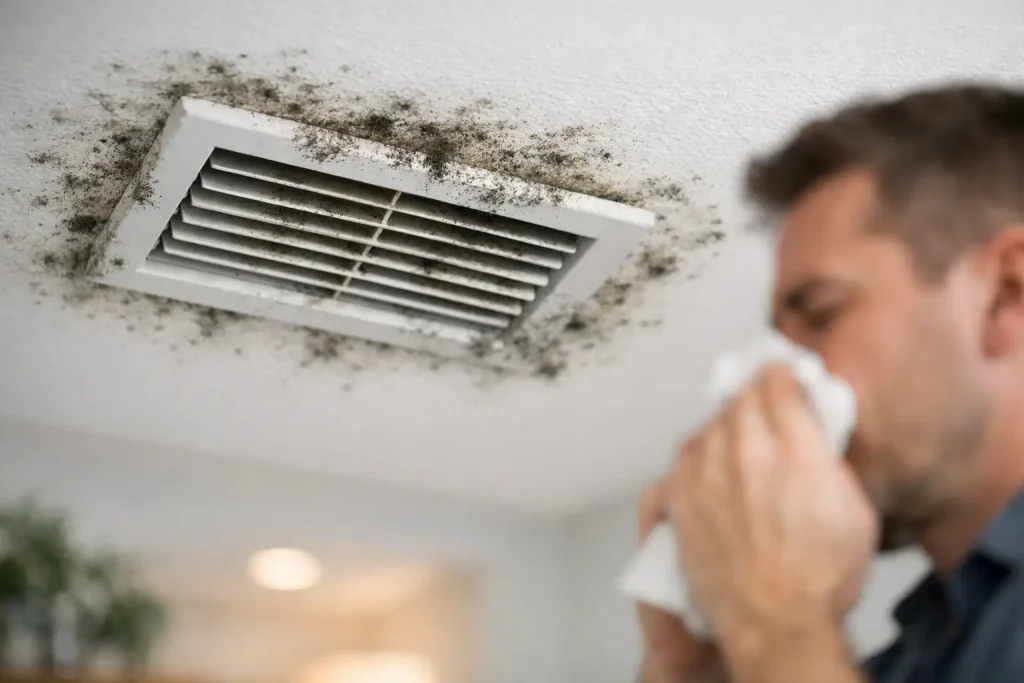
Visible dark, green, gray, or white spotting around a vent cover may also raise concern. However, visible material is not always mold. It can be ordinary dust, soot, or residue created by condensation. Likewise, mold growth can exist in areas you cannot see, such as inside ductwork, around evaporator coils, drain pans, insulation, or air handlers.
Pay attention to moisture problems. A leaking AC unit, clogged condensate drain, high indoor humidity, water damage near vents, or condensation on registers can create the damp conditions mold needs to grow. A dirty filter does not automatically mean mold is present, but it can reduce airflow and allow dust and moisture to build up in the system.
In a business, reports from several people can be especially useful. If multiple employees notice a musty smell, irritated eyes, or allergy-like symptoms in the same area, document when it happens and whether the HVAC system was operating. Early action can help protect occupants and prevent a smaller maintenance problem from becoming a larger property issue.
Why Mold in an AC System Can Be Hard to Spot
A central air system is not one open space. It is a network of vents, returns, ducts, coils, filters, and drain components. Some parts are easy to inspect, while others are hidden behind grilles, panels, ceilings, or walls.
That is why a quick visual check has limits. You might see a clean vent cover while contamination is developing farther inside the system. On the other hand, a dusty vent cover can look alarming without indicating a mold problem. Guessing from appearance alone can lead to unnecessary expense or, worse, a missed problem.
Testing offers a more practical first step. It helps move the conversation from “I think something is wrong” to “Here is what the system may be carrying.” Clean Vent Air Solutions makes that step simple with a DIY AC mold test kit built specifically for air vents and AC systems. The process is clip, combine, cover, with results available in 24 to 48 hours and an optional lab report when additional validation is needed.
What to Do When You Notice Symptoms
Start with the basics, but do not dismiss repeated warning signs. Replace your HVAC filter according to the manufacturer’s recommendations, especially if it is visibly dirty or overdue. Check accessible areas around vents and the indoor AC unit for moisture, standing water, or obvious leaks. Keep indoor humidity under control, since high humidity makes mold growth more likely.
Avoid spraying bleach, fragrance products, or random cleaners into the vents. These products can irritate the airways, leave residues, and fail to address growth deeper in the system. Bleach is also not appropriate for every material found in HVAC equipment. If you see extensive visible growth, have had significant water damage, or suspect contamination in a large commercial system, a qualified HVAC or mold remediation professional may be the right next call.
For a smaller or uncertain concern, test first. A low-cost HVAC mold test can help you decide whether you are dealing with a possible contamination issue that needs professional attention or a different indoor air problem. This approach can save time and help you avoid paying for broad inspections before you have a clear reason.
Protect people who may be more sensitive
Children, older adults, people with asthma, people with allergies, and individuals with weakened immune systems may be more affected by poor indoor air quality. If someone in your home or workplace falls into one of these groups, recurring symptoms should not be ignored.
While you investigate, reduce exposure where practical. Keep affected rooms well ventilated when outdoor conditions allow, avoid running a system that produces a strong musty odor until it is checked, and consider moving a sensitive person away from the area if symptoms are active. These are temporary precautions, not a replacement for finding and correcting the moisture source.
When Professional Help Makes Sense
A positive test, visible growth inside HVAC equipment, recurring water leaks, or a persistent musty smell after filter changes are all reasons to bring in an experienced professional. Ask whether they will inspect the evaporator coil, drain pan, air handler, ductwork, and moisture sources, not just wipe down vent covers.
The right solution depends on what is found. Sometimes the fix is a clogged drain line or a cleaning of contaminated components. In other cases, damaged insulation, ductwork, or building materials may need repair or replacement. The goal is not simply to make the odor disappear. It is to correct the moisture conditions that allowed the problem to develop.
Your symptoms deserve attention, but they also deserve a clear answer. When the air from your vents seems connected to how your household or team feels, testing early can turn uncertainty into a practical next step toward cleaner, safer air.