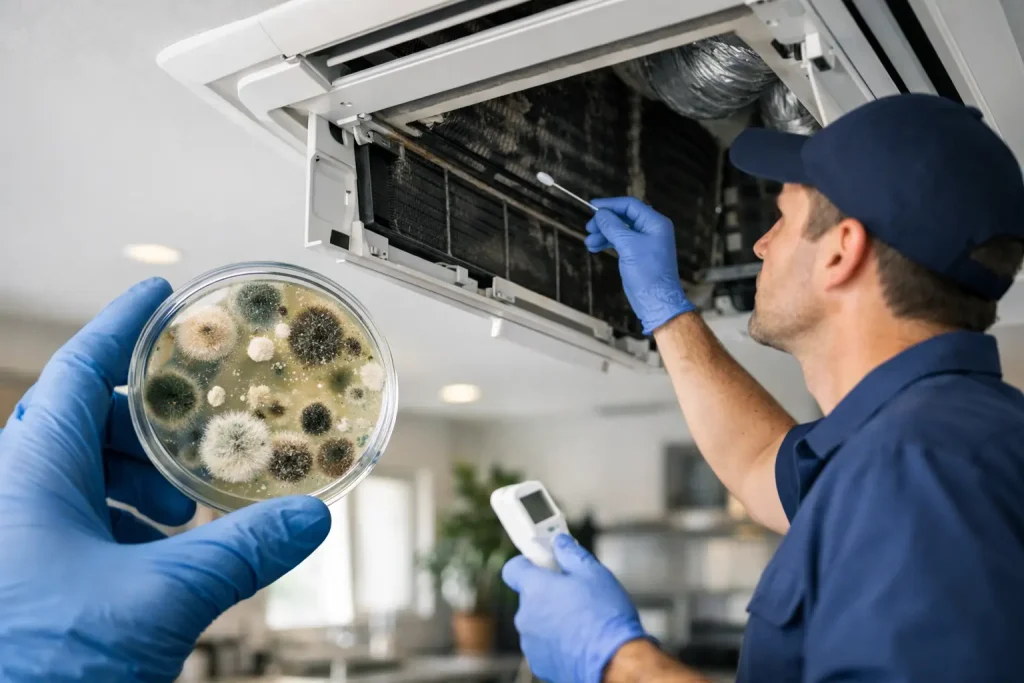
Mold Testing for Your AC System Before It Spreads
A musty smell that returns every time the air conditioner turns on is not something to cover up with a candle or air freshener. Your HVAC system moves air through every occupied room, so contamination inside the system can travel with it. Mold testing gives you a fast first answer when you notice odors, visible spots near vents, or unexplained allergy-like irritation that seems worse indoors.
The goal is not to panic over every speck of dust. It is to find out whether your AC system may be contributing to an indoor air problem before moisture, mold growth, and expensive cleanup have more time to spread.
Why Your AC System Can Become a Mold Source
Air conditioners remove humidity from the air as they cool it. That moisture is supposed to drain away safely, but condensation, clogged drain lines, dirty coils, wet insulation, and poor airflow can leave damp areas inside the equipment or ductwork. Mold needs moisture and a food source such as dust or organic debris. HVAC systems can unfortunately provide both.
The concern is not limited to an old, neglected system. A newer unit can develop moisture issues after a drainage problem, a refrigerant-related performance issue, flooding, a roof leak, or long periods of high humidity. Systems that run constantly in hot, humid climates may also accumulate moisture if maintenance is delayed.
Because much of the system is hidden, you may not see mold immediately. Instead, the first sign may be a stale or earthy odor when cooling starts. Some people notice symptoms that resemble seasonal allergies, including sneezing, coughing, watery eyes, congestion, throat irritation, or headaches. These symptoms can have many causes, so they do not prove mold exposure. But when they repeatedly improve away from the building and return when the AC runs, testing is a sensible next step.
Signs It Is Time for Mold Testing
Visible growth around a vent is an obvious reason to investigate, but waiting for visible growth can mean missing contamination deeper in the system. Pay attention to patterns. If your home or business has a persistent musty odor, recurring moisture near air vents, black or green spotting, or a history of water damage, the air conditioning system deserves attention.
Mold testing is also useful after an event that changes your indoor environment: a flooded utility area, an overflowing condensate pan, a leaking ceiling near ductwork, or a long vacancy with the AC shut off. Small business owners should be especially alert when staff or customers complain that one room smells damp or feels stuffy. A concern confined to a single area may point to a localized vent, duct, or moisture issue rather than the entire building.
Testing early is often less stressful and less expensive than guessing. It can help you decide whether you need routine HVAC cleaning, a drainage repair, a targeted inspection, or professional remediation. Just as importantly, a negative result can help you stop chasing the wrong problem.
What a DIY AC Mold Test Can Tell You
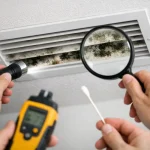
A DIY test designed for AC vents or systems is a practical screening tool. It can help detect whether mold is present in the area sampled, giving you a reason to act or a reason to investigate further. It is particularly useful for homeowners and renters who want an answer before committing to a costly full-property inspection.
Clean Vent Air Solutions keeps that first step simple with a low-cost AC mold test kit that uses a three-step process: clip, combine, and cover. Results are available within 24 to 48 hours, and an optional lab report is available when you need added validation for a property manager, contractor, or your own records.
Still, a test result has limits. A positive result does not automatically tell you the full extent of contamination, the precise source of moisture, or whether mold exists in every duct. A negative result does not guarantee that every hidden surface in a large HVAC system is clear, especially if the sample was taken from only one location. That is why the test should guide your next decision, not replace common sense or a qualified assessment when the situation is serious.
How to Get a More Useful Result
The quality of a test starts with choosing the right place to sample. Focus on vents with a musty odor, visible spotting, moisture staining, weak airflow, or a history of nearby leaks. If several areas concern you, test the most suspicious location first or use separate tests to compare distinct zones.
Avoid sampling immediately after aggressively cleaning the vent cover, spraying chemicals, or running a strong air freshener. Those actions can interfere with what you are trying to understand. Follow the kit directions carefully, keep the sample area as undisturbed as possible, and record where the sample came from. A simple note such as “upstairs bedroom supply vent” can be valuable if you later speak with an HVAC technician.
It also helps to look beyond the vent itself. Check for standing water around the indoor unit, a clogged condensate drain, damaged insulation, wet ceiling material, or signs that the system is not cooling evenly. Mold cannot continue to grow without moisture. Finding and fixing that moisture source is the step that protects your air over the long term.
What to Do After a Positive Result
A positive result is a signal to move quickly, not to tear apart your home without a plan. Start by reducing the conditions that support growth. Address leaks, drainage problems, excess humidity, and wet materials as soon as possible. If you can safely do so, replace a dirty HVAC filter with the correct size and rating for your system, but do not assume a new filter solves contamination inside the equipment or ducts.
Next, consider the scope of the problem. If there is a small, isolated issue around one accessible vent and no ongoing moisture source, an HVAC professional may be able to inspect and clean the affected area. If you see widespread growth, smell mold throughout the building, have repeated water intrusion, or suspect contamination in insulation or walls, a qualified mold remediation or HVAC professional is the safer next call.
People with asthma, severe allergies, compromised immune systems, or other respiratory concerns should take indoor mold concerns especially seriously. Avoid disturbing visible growth or attempting major cleanup yourself, since that can spread particles into the air. If anyone is experiencing severe or persistent health symptoms, seek medical advice from a licensed healthcare professional.
When Professional Inspection Makes More Sense
DIY mold testing is ideal when you need a quick, affordable starting point. But some situations call for a more comprehensive inspection from the beginning. That includes large visible areas of mold, extensive water damage, sewage contamination, repeated flooding, or odors that remain after the HVAC system has been checked and cleaned.
Professional help may also be necessary for landlords, commercial properties, real estate transactions, insurance documentation, or disputes where formal sampling procedures and detailed reporting matter. In those cases, a lab-validated result or an on-site inspection can provide the documentation and scope needed to make repair decisions.
There is a trade-off. Professional inspections can offer broader assessment and expert interpretation, but they generally cost more and may take longer to schedule. A focused AC test is faster and easier, but it is limited to the area you sample. Choosing the right path depends on the size of the concern, the history of moisture, and who needs to rely on the results.
Protect the Air You Live and Work In
Clean indoor air is not a luxury when your family, tenants, employees, or customers are breathing it every day. If your AC system smells musty, shows signs of moisture, or seems connected to recurring discomfort indoors, testing now can replace uncertainty with a clear next step. Catching a problem early gives you more options, more control, and a better chance to keep a small issue from becoming a building-wide one.