
What Is Indoor Air Quality Testing?
That musty smell when the AC kicks on is easy to ignore at first. So are the scratchy throat, the lingering allergy symptoms, or the small dark spots near a vent. But when the air moving through your home or business may be carrying contaminants, waiting usually does not make the situation better. What is indoor air quality testing? It is the process of checking the air in an indoor space – and often the systems that move that air – for pollutants that can affect health, comfort, and property.
For many people, indoor air quality testing is less about chasing perfect air and more about getting a clear answer. If you suspect mold in your AC system, if your space smells damp, or if people inside are dealing with recurring irritation, testing helps you move from guesswork to action.
What Is Indoor Air Quality Testing and What Does It Check For?
Indoor air quality testing looks for substances or conditions that may be making indoor air unhealthy. Depending on the method, that can include mold, dust, allergens, volatile organic compounds, humidity-related issues, and sometimes combustion byproducts. In homes and small businesses, one of the most urgent concerns is mold growth tied to moisture and HVAC systems.
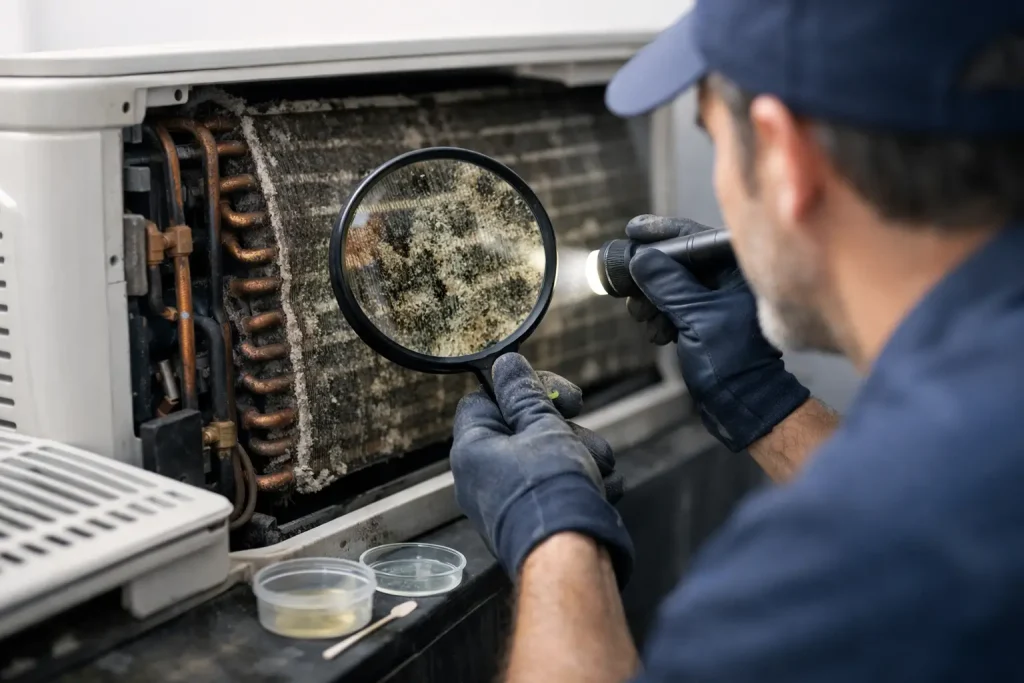
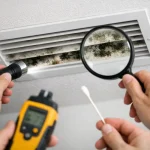
That matters because your air conditioning system does not just cool air. It circulates it. If mold is growing inside vents, on coils, or in other AC components, spores can travel through the system and spread through multiple rooms. A problem hidden inside the HVAC system can affect far more than the one spot where it started.
Not every test checks for every possible contaminant. That is where people often get confused. Some tests are broad screenings, while others are targeted. A targeted mold test, especially one focused on an AC vent or system, is often the most practical first step when the warning signs point in that direction.
Why People Test Indoor Air in the First Place
Most customers do not wake up wanting an air quality report. They test because something feels off.
Sometimes it is a persistent musty odor that gets stronger when the air starts running. Sometimes it is visible spotting around vents, unexplained respiratory irritation, headaches, watery eyes, or allergy-like symptoms that seem worse indoors. Families with children, older adults, or anyone with asthma often want answers quickly because even mild contamination can feel more urgent when health is already a concern.
Business owners have their own reasons. Employees notice odor. Customers comment on the smell. A back room feels damp. A rooftop unit has a history of leaks. In those cases, indoor air quality testing becomes part of protecting both people and the space itself.
Testing can also help with timing. If the issue is real, you can address it earlier. If it is not mold in the AC system, that information still saves time and helps you decide what to check next.
How Indoor Air Quality Testing Works
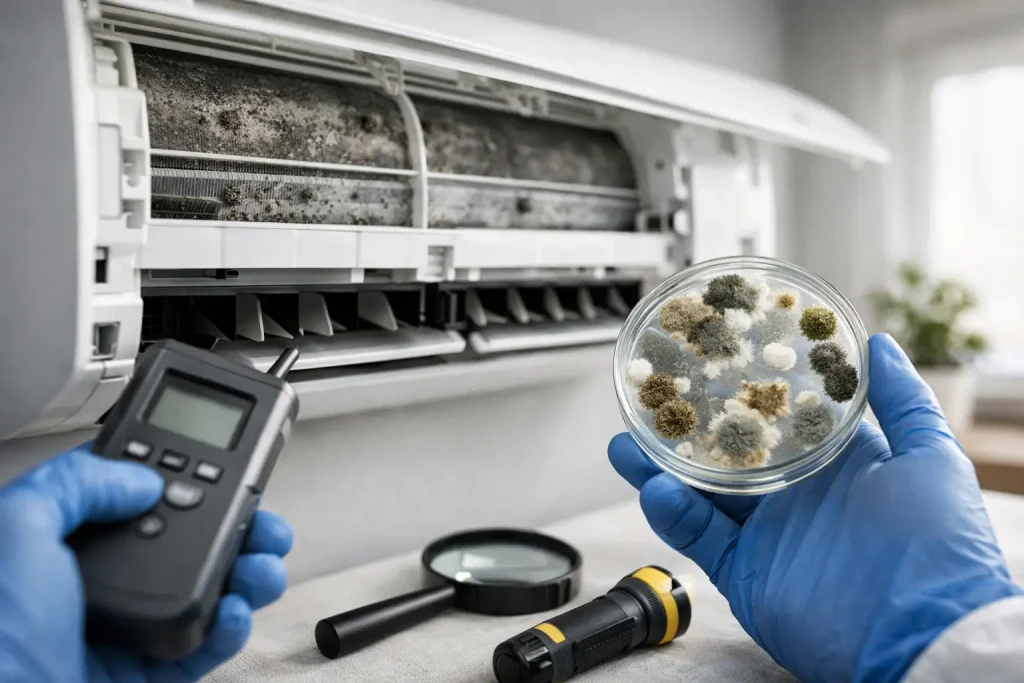
The process depends on what you are testing for, but most indoor air quality testing falls into a few categories. Some methods collect samples from the air. Others collect material from a surface or from inside a vent or HVAC component. Some rely on sensors that measure particle levels, humidity, or chemical compounds.
When mold is the main concern, the goal is usually to find out whether mold is present and whether the HVAC system may be the source or a contributor. That is important because a general room reading does not always tell you where contamination is coming from. If your AC is spreading the problem, you want to know that as early as possible.
This is why DIY testing has become a practical first step for many households and small businesses. Instead of waiting days to schedule a full inspection or paying for broad testing you may not need, a simple test can help confirm whether mold is present in the air system you rely on every day. Clean Vent Air Solutions focuses on that exact need with a low-cost AC mold test kit designed to give people a fast answer without making the process complicated.
What Indoor Air Quality Testing Can Tell You – and What It Cannot
A good test can do something very valuable: it can confirm whether there is a problem worth acting on. That alone can bring clarity and peace of mind.
If mold is detected, you now have evidence that the issue deserves attention. If mold is not detected in the area tested, you may be able to rule out one likely source and investigate something else, such as excess dust, poor filtration, humidity imbalance, or a separate moisture issue.
Still, testing has limits. It may not tell you the full extent of contamination behind walls or inside every section of ductwork. It may not identify every air quality issue in a building. And it does not replace remediation if a serious problem is found.
That is why the best way to think about indoor air quality testing is as a decision tool. It helps you decide whether you need remediation, HVAC service, moisture control, deeper inspection, or simply reassurance that the suspected issue is not showing up in the sample tested.
When You Should Test Your Indoor Air
You do not need to test every building on a routine schedule just because indoor air can contain pollutants. But there are moments when testing makes strong sense.
Test when you notice musty or dirty-sock smells coming from vents. Test when allergy symptoms seem worse indoors than outside. Test after water leaks, high humidity, AC condensation issues, or any situation where moisture may have collected near the HVAC system. Test when you see discoloration around vent covers or inside supply registers. Test before spending large amounts on cleaning or repairs if you still are not sure what the real problem is.
For renters, testing can also help document concerns before they are dismissed as minor odor issues. For homeowners, it offers a practical starting point before moving to more expensive professional services. For contractors, it can help show a customer that the concern is real and connected to the system being serviced.
DIY Testing vs. Professional Inspection
This is where it depends.
A professional inspection may be the right call if you have severe symptoms, major water damage, visible widespread mold, or reason to believe the contamination extends beyond the HVAC system. Professionals can inspect more areas, use multiple tools, and build a broader picture of what is happening.
But that does not mean every situation needs to start there. Many people just need a fast, affordable first step. A DIY test makes sense when the goal is to check for likely mold contamination in the AC system before committing to larger costs. It is especially useful when the signs are clear but the source is not.
The key is choosing the right type of test for the problem you are actually seeing. If your concern centers on air vents, AC airflow, and recurring musty odors, an HVAC-focused mold test is more useful than a random general-purpose product that does not target the system moving air through the building.
Why HVAC Mold Gets Missed
One reason people delay testing is that mold inside an AC system is often out of sight. You may not see growth on coils, in drain areas, or deeper in the vent path. Yet you still notice the signs every day because the system keeps pushing air through the space.
That hidden nature is what makes indoor air quality testing so valuable. It gives you a way to check for contamination before the problem grows into something larger, more expensive, or more disruptive. Early detection matters. It can protect your health, help preserve your property, and prevent weeks of uncertainty.
What to Do After You Get Results
If your results suggest mold is present, do not panic – but do act. The next step may involve confirming the extent of the issue, having the HVAC system inspected, addressing moisture sources, or scheduling professional cleaning or remediation depending on severity. The point is to respond before continued circulation spreads contamination further.
If your results are clear, that is useful too. You can shift your attention to other causes such as filter problems, dust buildup, humidity, poor ventilation, or unrelated maintenance issues. Either way, you are no longer stuck guessing.
Indoor air affects how a place feels every hour of the day. When the air smells wrong or leaves people feeling worse, getting a quick answer is not overreacting. It is a smart way to protect the space and the people inside it before a hidden problem has more time to spread.