AC Vent Mold Test vs Air Sampling Compared
A musty smell starts when the AC turns on. Your child’s coughing seems worse indoors. Or you notice dark spotting near a supply vent. In moments like these, the question is not whether to wait and hope it goes away. It is whether an AC vent mold test vs air sampling will give you the answer you need.
Both methods can play a role in investigating mold concerns, but they do not look for the same thing. One checks the part of your HVAC system that may be contaminated. The other measures what happens to be floating in the room air at one point in time. Knowing that difference can save you money, confusion, and valuable time.
What an AC Vent Mold Test Checks
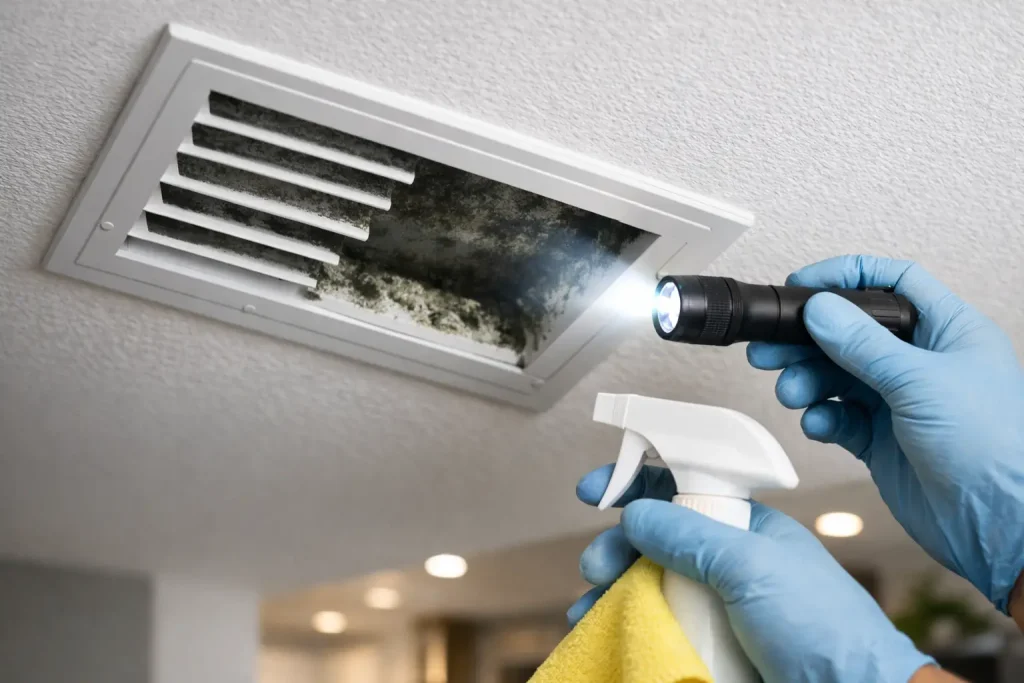
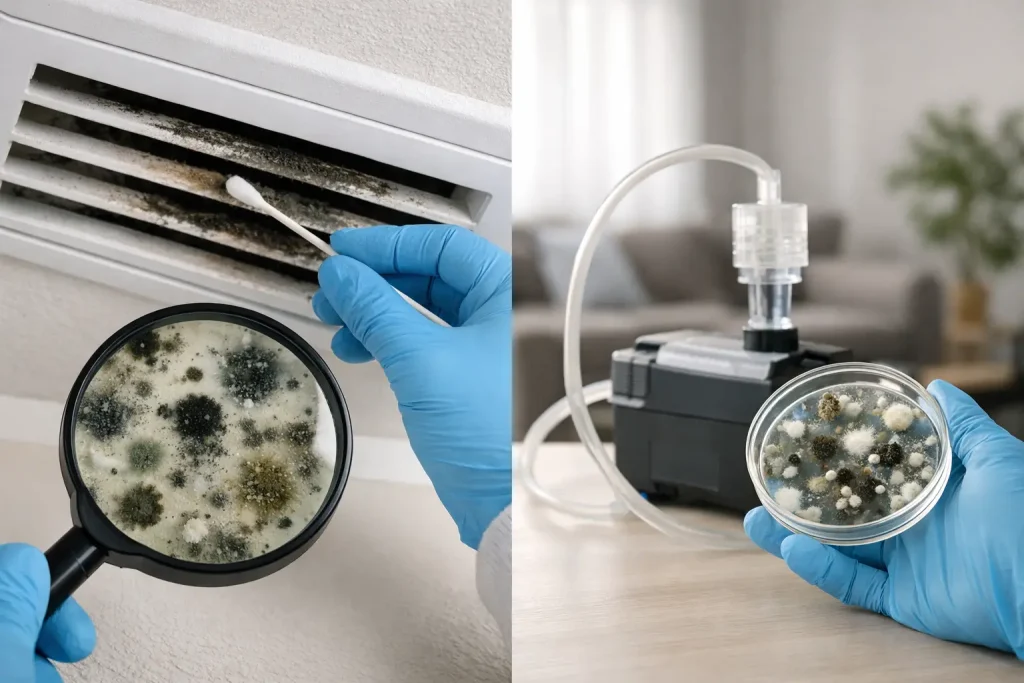
An AC vent mold test is designed to look for mold contamination at or inside the air vent and HVAC pathway. This matters because your heating and cooling system moves air through the entire home or business. If mold is growing in or around ducts, coils, drain pans, or vent openings, the system can circulate mold particles and musty odors each time it runs.
For someone concerned specifically about their AC, the vent is a logical place to test. It is where the system’s air enters your living space, and it may collect evidence of what is inside the system.
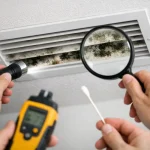
A DIY vent test is also a practical first step when you need answers quickly. Clean Vent Air Solutions uses a simple clip, combine, cover process that can be completed without HVAC training. Results are available within 24 to 48 hours, helping you decide whether it is time to call an HVAC technician, mold remediation professional, landlord, or property manager.
When a vent test makes the most sense
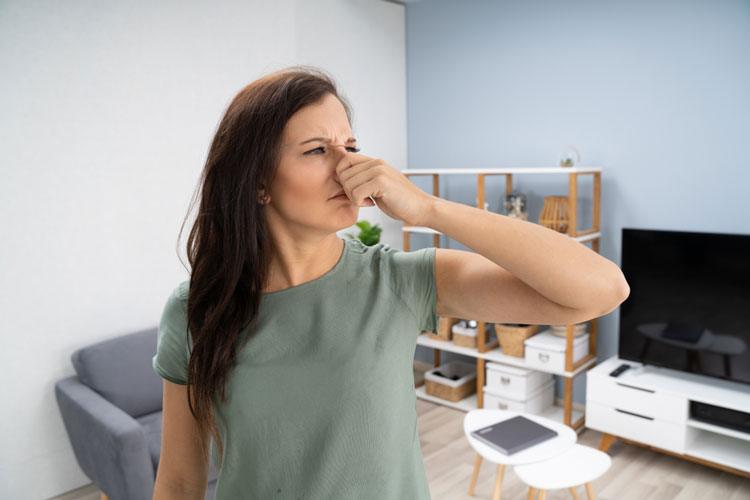
Choose a targeted vent test when the warning signs point toward the AC system. Common examples include a smell that appears only when heating or cooling runs, visible spots around registers, recurring moisture near vents, or allergy-like symptoms that worsen in certain rooms.
It is also useful after water damage, a condensate drain backup, a long period of high indoor humidity, or an HVAC repair that revealed dirt or moisture. Testing the vent does not diagnose every possible mold issue in a building. It helps answer a more focused question: Is there evidence that mold may be present in the system delivering air through this space?
What Air Sampling Measures
Air sampling collects a measured volume of air and analyzes the particles captured in that sample. This can identify and count certain types of airborne mold spores, usually with results interpreted against an outdoor control sample or samples from other indoor areas.
Professional air sampling can be helpful in a broader mold investigation, especially when a qualified inspector is trying to understand conditions across multiple rooms or document a property issue. It may be used before or after remediation, during a real estate dispute, or when an inspector needs data alongside a visual moisture assessment.
But air sampling has an important limitation: airborne mold levels change constantly. Opening a door, running the AC, vacuuming, changing weather conditions, or simply waiting an hour can affect what is captured. A normal-looking air sample does not always rule out mold hidden in a duct, wall cavity, or drain pan.
Why a clear air result can still miss HVAC mold
Mold does not release spores at the same rate every minute of every day. Some growth stays relatively undisturbed until airflow, vibration, or humidity changes. If the AC was off before the test, or if the sampling device was placed far from the affected vent, the air sample may not reflect what happens when the system operates normally.
That does not make air sampling useless. It means the results need context. A single air test is a snapshot, while a vent test targets a suspected source directly.
AC Vent Mold Test vs Air Sampling: Key Differences
The biggest difference is location. An AC vent mold test looks for contamination where conditioned air exits the HVAC system. Air sampling looks for spores suspended in the room at the time of collection.
The second difference is purpose. A vent test is typically the faster, more affordable screening option when you suspect the AC itself. Air sampling is often part of a larger professional investigation and may be more useful when the source is unclear, when multiple areas are involved, or when formal documentation is needed.
Cost and timing matter, too. Professional inspections with air samples can become expensive, particularly when several rooms and outdoor controls are tested. Scheduling and laboratory turnaround can add days. A low-cost DIY vent test gives homeowners, renters, and small business operators an accessible way to gather early evidence before committing to a larger service call.
Neither method should be treated as a substitute for correcting a moisture problem. Mold needs moisture to grow. If a drain line is clogged, insulation is wet, ducts are sweating, or indoor humidity remains high, testing alone will not protect your air for long.
Which Test Should You Choose First?
Start with the symptoms and the location of the concern.
If the problem feels connected to your HVAC system, a vent mold test is usually the better first move. Think musty air from registers, odor after the AC starts, staining around vents, or symptoms tied to time spent in air-conditioned rooms. It gives you a direct, practical screen without paying for a broad inspection before you know whether the vents are involved.
If you have widespread concerns with no obvious HVAC connection, professional air sampling may have a place. For example, a building with repeated leaks, visible mold in several rooms, a history of flooding, or a workplace complaint may need a more comprehensive assessment. A qualified professional can combine air samples with moisture readings, visual inspection, and source investigation.
In many cases, the smartest path is not choosing one method forever. It is starting with the most relevant test, then escalating if results or conditions call for it. A positive vent result can give you a strong reason to have the HVAC system inspected and cleaned. Persistent symptoms, repeated odors, or signs of broader water damage may justify professional air sampling and a full moisture investigation.
Do Not Let Testing Delay Action on Serious Warning Signs
Testing provides information, but some situations need immediate attention. If you see significant visible mold, have active water damage, smell strong persistent mildew, or experience serious respiratory symptoms indoors, act promptly. Keep children, older adults, people with asthma, and anyone with a weakened immune system away from the affected area when possible.
Do not spray fragrance products into vents to cover an odor. Do not run the system continuously if it is clearly spreading a strong musty smell. And do not assume a fresh filter solves mold inside an AC system. Filters can capture some particles, but they do not remove existing growth or fix the moisture that allowed it to develop.
For renters, document odors, visible staining, leaks, and test results with dates. Notify the landlord or property manager in writing. For business owners, address employee or customer concerns quickly and keep records of inspections, repairs, and cleaning.
What to Do After Your Results
A negative vent test can be reassuring, especially if there are no visible signs of moisture or mold. Still, keep an eye on the conditions that caused concern. Replace filters on schedule, keep indoor humidity under control, and have the condensate system serviced if you notice leaks or drainage problems.
A positive result is a signal to investigate the HVAC system and the moisture source. Ask an experienced HVAC or mold professional to inspect components that commonly stay damp, including the evaporator coil, drain pan, drain line, blower area, and nearby ductwork. The right next step depends on what they find. Some systems need targeted cleaning and drainage repair; others may need damaged insulation or ducts addressed.
The goal is not to panic over a test result. It is to stop guessing. When your AC may be moving contaminated air, early detection gives you the chance to protect the people who live, work, and breathe in the space before a small moisture issue becomes a larger one.