
Is Indoor Air Quality Testing Worth It?
That musty smell that shows up when the AC kicks on is easy to ignore for a while. So are the headaches, the irritated throat, or the constant feeling that your allergies are worse indoors than outside. But when the air moving through your home or business may be carrying mold or other contaminants, the real question becomes simple: is indoor air quality testing worth it?
For many people, yes – especially when there are warning signs. Testing is often the fastest way to stop guessing and start making informed decisions. It can help you confirm whether you may be dealing with a real air problem, where it may be coming from, and whether the next step should be cleaning, HVAC service, remediation, or simply peace of mind.
When is indoor air quality testing worth it?
Indoor air quality testing is worth it when you have a reason to suspect that the air inside your space is affecting health, comfort, or property. That includes obvious signs like musty odors, visible mold near vents, recent water damage, or AC systems that seem to spread unpleasant smells from room to room. It also includes less obvious signs, such as ongoing congestion, coughing, sinus irritation, watery eyes, or symptoms that improve when you leave the building.
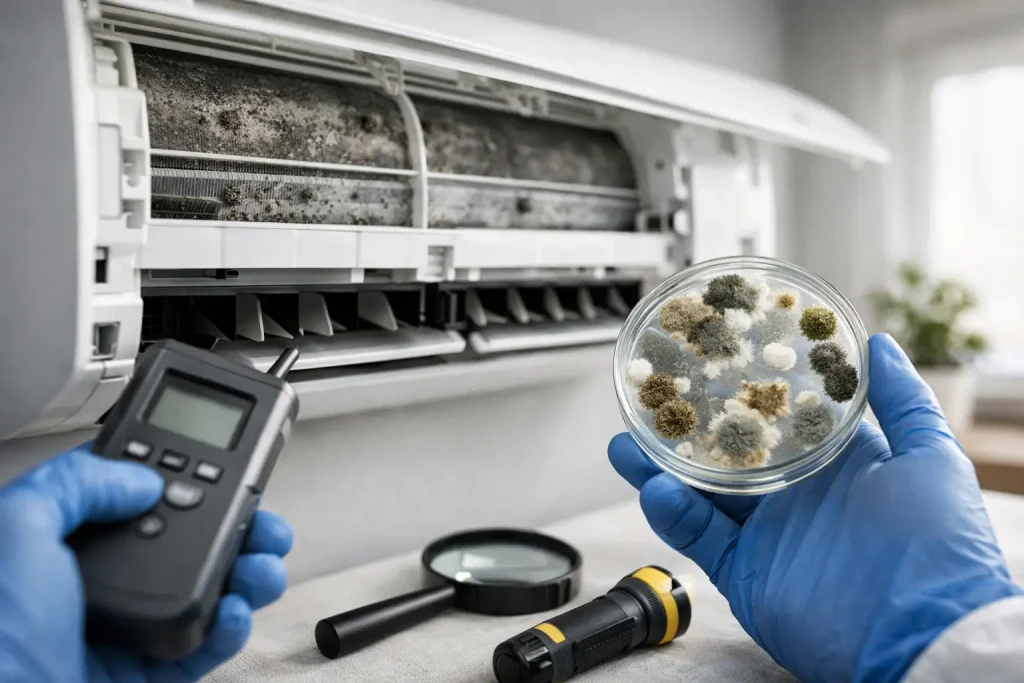
A lot of indoor air concerns start in places people do not inspect regularly. Your AC system is one of the biggest examples. If mold is growing inside the system or around vents, it may be circulated through the air every time cooling runs. That means the source is not always on a wall or ceiling where you can spot it quickly. Testing helps narrow the problem before it gets bigger.
If you have no symptoms, no odors, no moisture issues, and no reason to suspect contamination, broad testing may not feel urgent. But if you are already noticing signs, waiting usually does not make the problem cheaper or easier.
What indoor air quality testing can actually tell you
The value of testing depends on the type of test. This matters more than most people realize.
Some tests are broad and look at multiple indoor air concerns, such as particulate matter, humidity, volatile compounds, or allergens. Others are more targeted and focus on likely sources, including mold contamination in HVAC systems. A targeted test is often more useful when you already have a specific concern, like a musty AC odor or visible buildup around vents.
Testing can help answer questions such as whether mold may be present in the air system, whether a suspicious smell has a likely contamination source, and whether your next move should be a simple service call or a more serious inspection. It can also help prevent overreacting. Not every odor means major remediation. Not every health symptom means hidden mold. Good testing gives you direction.
That said, no test should be treated like magic. One result does not explain every indoor issue. If your problem is caused by humidity, poor filtration, leaks, dirty ductwork, or a combination of factors, you may need follow-up action to fully solve it.
Why people hesitate to test
Most hesitation comes down to cost, confusion, and fear of what the results might show.
Professional indoor air quality investigations can be expensive. In some cases, that level of inspection makes sense, especially after severe water damage or when a property has ongoing health complaints affecting multiple occupants. But many people are not at that stage. They just want a quick, affordable way to check whether their AC system may be part of the problem.
That is where simpler first-step testing becomes valuable. A low-cost DIY option can help you confirm whether mold is likely present before you invest in larger services. For a family trying to protect children, a renter trying to document a concern, or a small business owner trying to avoid exposing staff and customers to unhealthy air, getting a fast answer can be worth much more than the price of the test.
Is indoor air quality testing worth it compared to waiting?
Waiting can seem cheaper at first. It rarely stays that way.
If mold is active inside an HVAC system, the problem may continue spreading each time the system runs. That can lead to more contamination, more cleaning, and more strain on people who are already sensitive to indoor air. What starts as an occasional odor can turn into recurring symptoms, customer complaints, or a larger remediation bill.
Testing does not fix the issue on its own, but it helps you avoid losing time. It moves you from uncertainty to evidence. That shift matters because people often spend weeks doing the wrong things first – replacing filters, spraying fragrances, deep cleaning rooms, or blaming outdoor pollen – when the AC system is the real source.
If you suspect something is wrong, testing is usually more cost-effective than guesswork.
The trade-off: DIY testing versus professional inspection
This is where the answer depends on your situation.
DIY testing is usually worth it when you want a fast, affordable first step. It works well for people who have warning signs and need to know whether mold in the AC system is a likely issue. It is especially practical when the goal is early detection. You get useful information quickly without committing to a full inspection right away.
Professional testing is often worth it when there is extensive water damage, a real estate transaction, legal documentation needs, severe health reactions, or clear signs that contamination goes beyond vents and the HVAC system. In those cases, you may need a broader property assessment and formal recommendations.
For many households and small businesses, the smartest path is not choosing one or the other from the start. It is starting with a simple targeted test, then escalating only if results or conditions call for it. That approach protects your health and your budget.
What makes testing worth the money
Indoor air quality testing is worth it when it helps you make a clearer, faster decision.
That may mean confirming mold concerns before calling an HVAC company. It may mean having evidence to show a landlord or property manager. It may mean learning that your AC system needs attention before your family keeps breathing contaminated air. In some cases, the biggest value is peace of mind. If the result does not suggest mold, that can save you from expensive assumptions.
The key is choosing a test that matches the problem you are trying to solve. If your main concern is mold circulating through air vents, a specialized AC mold test is far more useful than a vague general approach. Clean Vent Air Solutions focuses on that exact issue with a quick, simple process designed to help people get answers in 24 to 48 hours.
That kind of speed matters because indoor air concerns are not abstract. They affect sleep, comfort, productivity, and daily health. When people put off testing, it is often because they hope the issue will disappear on its own. Mold in an active AC system usually does not work that way.
Who should seriously consider testing now
If you smell something musty when the air turns on, testing deserves your attention. The same goes for anyone noticing black or green spotting near vents, repeated allergy-like symptoms indoors, or a recent leak or humidity problem. Families with children, older adults, or anyone with asthma should be especially cautious. Small business owners should think the same way. If indoor air may be affecting employees or customers, waiting carries both health and business risk.
Renters should not assume they have to live with suspicious air conditions just because they do not own the system. Testing can provide useful documentation and help support a conversation with management. Homeowners should think of it as an early warning tool. Catching a problem early is almost always easier than dealing with widespread contamination later.
So, is indoor air quality testing worth it?
If you are dealing with signs of a possible indoor air problem, the answer is usually yes. Not because testing solves everything, but because it gives you something more useful than worry – a real starting point.
The best time to check your air is when you first notice that something feels off, not after months of exposure and escalating costs. Clean air should not be a guessing game, and when a simple test can help protect your home, your health, or your workplace, taking that first step is often the smartest move you can make.