How to Reduce AC Humidity and Protect Your Air
Your air conditioner should make your home feel cooler and drier. If rooms still feel sticky, windows sweat, or a musty smell appears when the system turns on, excess moisture may be building where you cannot see it. Knowing how to reduce AC humidity helps protect comfort, indoor air quality, and your home from the conditions mold needs to grow.
Air conditioning removes humidity as it cools the air, but only when the system is sized, maintained, and operated correctly. A humid house is not always a sign that the AC has failed. It can also mean moisture is entering faster than your system can remove it.
Why AC Humidity Matters
Indoor humidity affects far more than how warm you feel. When humidity stays high, your body cannot cool itself as efficiently through perspiration, so even a reasonable thermostat setting can feel uncomfortable. High moisture can also cause condensation on vents, windows, pipes, and walls.
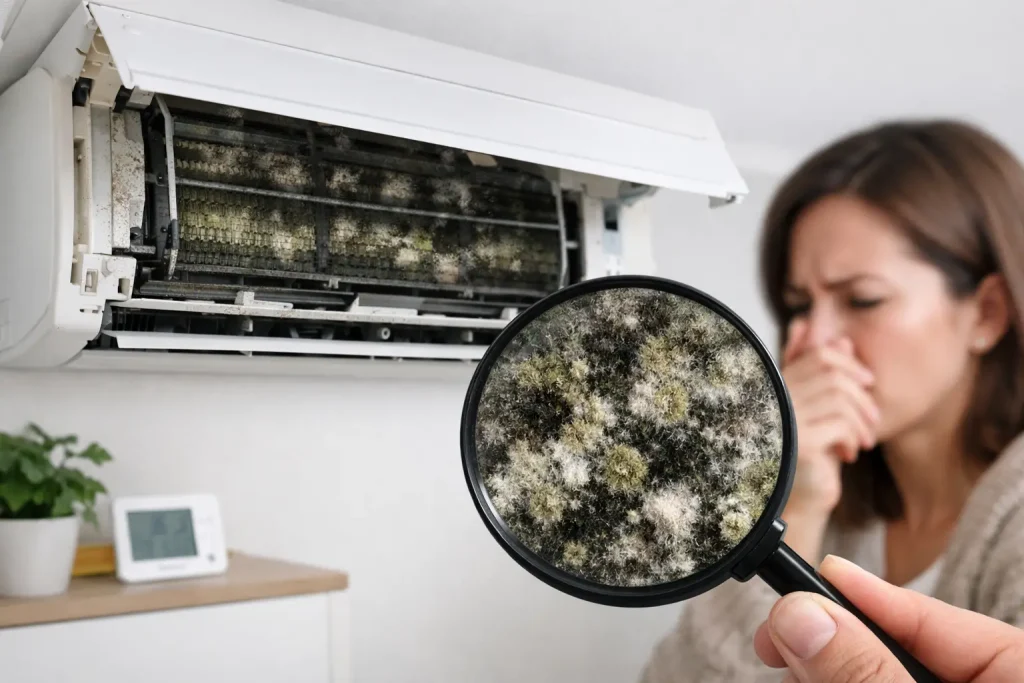
That damp environment can support mold growth in dust, insulation, drywall, and inside parts of the HVAC system. Mold may create a musty odor and can be especially concerning for people with allergies, asthma, or respiratory sensitivities. You do not need to wait for visible mold to take humidity seriously.
For most homes, a relative humidity level between 30% and 50% is a practical target. Levels that regularly rise above 60% deserve attention, particularly in humid climates or rooms with poor airflow.
How to Reduce AC Humidity at Home
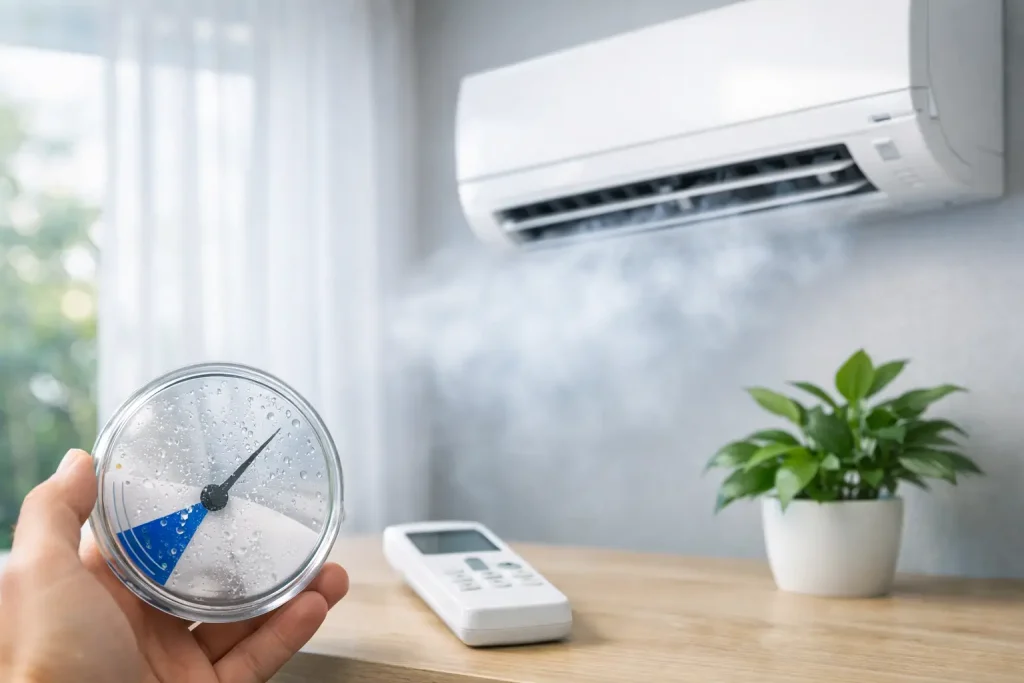
Start with the easiest changes, then look for mechanical issues if humidity remains high. A small, inexpensive hygrometer can give you a clearer picture than relying on how the room feels. Check different rooms at different times of day, especially after showers, cooking, rain, or long AC cycles.
Set the thermostat fan to Auto
On many thermostats, the fan can be set to either On or Auto. Choose Auto for everyday cooling. When the fan is set to On, it may continue blowing after the cooling cycle ends. That airflow can pick up moisture sitting on the evaporator coil and send it back into your home.
With the Auto setting, the blower stops when the compressor stops, giving collected moisture time to drain away. This simple adjustment can make a noticeable difference in homes that feel clammy even while the AC is running.
Avoid setting the thermostat too low
Turning the thermostat down dramatically does not make an AC remove humidity faster. It can cause the system to cool the house quickly and shut off before completing a long enough cycle to pull out much moisture. This is particularly common with oversized systems.
Try a steady setting that keeps the system running in normal cycles. Many households find 72 to 76 degrees comfortable, but the right setting depends on your home, climate, insulation, and personal needs. The goal is consistent comfort, not the coldest possible temperature.
Replace a dirty air filter
A clogged filter restricts airflow across the evaporator coil. Restricted airflow can reduce cooling performance, interfere with moisture removal, and in some cases contribute to a frozen coil. Check your filter monthly during heavy-use periods and replace it according to the manufacturer’s recommendation.
Use the filter type your HVAC system is designed to handle. A very dense filter may sound like the healthier choice, but if it restricts airflow too much for your equipment, it can create a different problem. When in doubt, ask an HVAC professional which filter rating is appropriate for your system.
Keep moisture-producing activities under control
Your AC cannot keep up if large amounts of moisture are constantly being added indoors. Use bathroom exhaust fans during showers and leave them running for roughly 15 to 20 minutes afterward. Run the kitchen exhaust fan when boiling water or cooking foods that produce steam.
Dryers should vent outdoors, never into a garage, attic, crawl space, or laundry room. If you have a gas dryer, proper venting also matters for safety. Repair plumbing leaks promptly, and do not overlook slow leaks under sinks, around water heaters, or behind refrigerators.
Close gaps that let humid outdoor air inside
Warm, humid outside air can enter through worn weatherstripping, gaps around doors and windows, unsealed attic penetrations, and poorly sealed ductwork. In humid regions, even small leaks can place a significant moisture load on your air conditioner.
Start with obvious drafts near exterior doors and windows. If one room is consistently more humid than the rest of the home, leaky ducts, inadequate insulation, or a disconnected duct may be part of the problem. An HVAC technician can evaluate duct leakage and airflow if basic sealing does not help.
Use a dehumidifier when the climate demands it
A portable dehumidifier can help in a damp basement, laundry room, bathroom, or one problem area. A whole-home dehumidifier may be worth considering if your AC runs properly but indoor humidity remains high throughout the house.
A dehumidifier is not a substitute for fixing a leak, drainage issue, or malfunctioning AC. Think of it as added moisture control when outdoor conditions are extreme or when certain parts of the home naturally hold more damp air.
AC Problems That Can Keep Humidity High
If the humidity problem continues after changing the fan setting, filter, and household habits, your equipment may need service. Do not ignore signs that your AC is struggling. A system that cools but does not dehumidify can still create unhealthy conditions over time.
Common HVAC-related causes include an oversized air conditioner, low refrigerant, a dirty evaporator coil, a blocked condensate drain, poor duct design, or a blower speed that is set too high. Each issue affects how long air spends across the cold coil, where moisture should condense and drain.
A clogged condensate drain deserves quick attention. If water cannot drain properly, it can overflow, damage surrounding materials, and create a persistent moisture source near the air handler. Look for water around indoor equipment, a full drain pan, or a safety switch that repeatedly shuts the system down.
Oversizing is another issue that surprises homeowners. Bigger is not always better. An oversized AC can short-cycle, cooling a space fast but failing to run long enough to remove adequate humidity. Correcting it may require a professional load calculation rather than a simple repair.
When Humidity May Point to Mold in the AC System
High humidity does not automatically mean there is mold in your vents or air conditioner. But moisture, dust, and dark HVAC components can create conditions where contamination becomes possible. Take warning signs seriously if you notice a musty odor when the AC starts, dark spotting near vents, recurring condensation, unexplained respiratory irritation, or symptoms that improve when you leave the building.
Do not rely on scent or visible spots alone. Mold can be hidden inside ductwork, around coils, or near the drain pan. Clean Vent Air Solutions offers a simple DIY AC mold test that can help you check for potential contamination before deciding whether professional inspection or remediation is needed.
If you see widespread mold, have water damage, or experience significant health symptoms, contact a qualified HVAC or mold remediation professional. Avoid disturbing large moldy areas yourself, since that can spread particles through the air.
Keep Humidity From Returning
Humidity control works best as a routine, not a one-time fix. Check your indoor humidity through the seasons, change filters on schedule, keep drain lines clear, and schedule regular AC maintenance before peak cooling weather. During maintenance, ask the technician to inspect the evaporator coil, condensate system, refrigerant performance, and duct condition.
Pay attention to changes in your home. A new musty smell, damp carpeting, peeling paint, sweating vents, or rooms that suddenly feel sticky are early warnings worth investigating. Addressing moisture while it is still a small problem can spare you from costly repairs and bigger air-quality concerns later.
A dry, comfortable home should not feel like a mystery. Start with the settings and maintenance you can control, then act quickly when moisture or musty odors persist. The sooner you identify the source, the sooner you can protect the air your family or employees breathe every day.