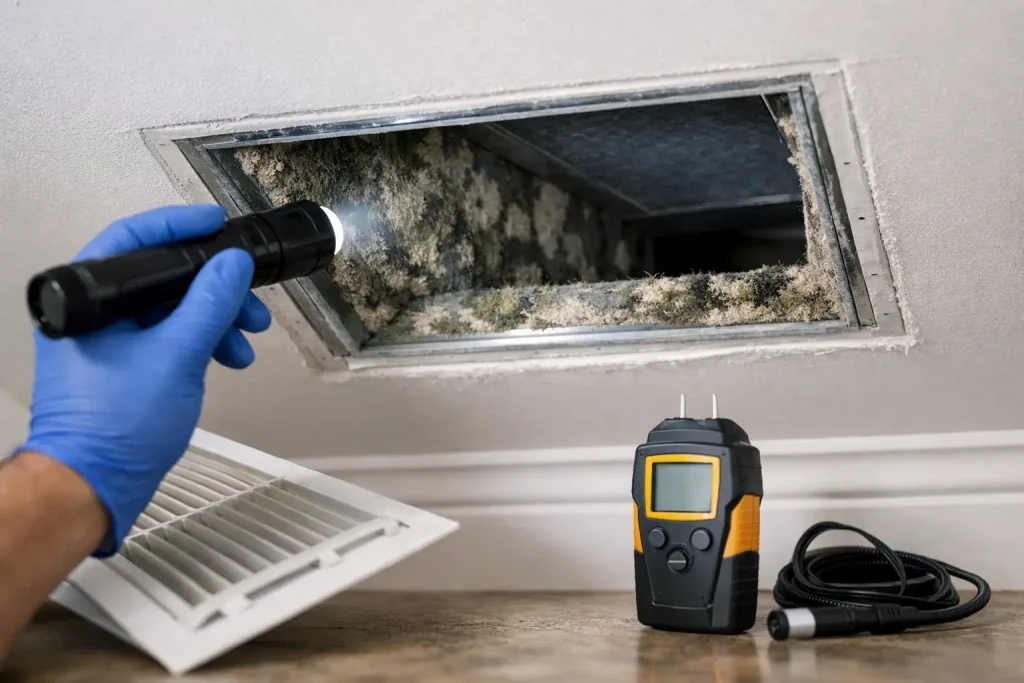
How to Identify Mold in Air Ducts at Home
A musty smell that returns every time the AC kicks on is more than an annoyance. When air moves through your vents, it can carry odors, spores, and particles from inside the HVAC system into the rooms where your family sleeps, works, and spends time.
Knowing how to identify mold in air ducts can help you act before a small moisture problem becomes a larger air-quality and property issue. You do not need to take apart your entire system to spot warning signs. You do need to pay attention to what you see, smell, and feel – then confirm your concerns with the right type of test.
Start With the Signs You Can Notice Every Day
Mold needs moisture and a surface to grow. Air ducts, evaporator coils, drain pans, filters, and supply vents can provide the right conditions when condensation, humidity, leaks, or poor drainage are present. The mold itself may be hidden deep in the system, but the clues often show up in plain sight.
The most common warning sign is a persistent earthy or musty odor. If the smell is strongest when your air conditioner or furnace turns on, or it becomes worse after the system has been off for a while, contamination inside the HVAC system is possible. A room with a damp carpet, wet wall, or bathroom moisture can also create a musty odor, so follow the smell carefully before assuming the ducts are the source.
Visible spotting near vents is another reason to investigate. Look at the supply registers, return vents, ceiling grilles, and the area immediately around them. Mold can appear as black, green, gray, brown, or white spots. It may look fuzzy, powdery, speckled, or smeared. Dark material alone does not prove mold, however. Dust, soot, and oily residue can collect around registers too.
Pay attention to patterns. A small amount of ordinary dust may return after cleaning, especially in a busy home with pets. A recurring stain, fuzzy-looking growth, moisture ring, or dark buildup that comes back quickly deserves more attention.
Watch for Moisture Problems Around Your HVAC System
Mold in ducts is usually a moisture story first. Finding and correcting the water source matters just as much as confirming contamination. Otherwise, mold can return after cleaning.
Check the areas you can safely access around the indoor unit. A full drain pan, water beneath the air handler, a clogged condensate line, wet insulation, or rust around the equipment can all point to excess moisture. High indoor humidity can contribute as well, particularly in basements, coastal areas, and homes where the AC is oversized or does not run long enough to remove humidity effectively.
A dirty filter does not automatically mean mold is present, but it can restrict airflow and allow more dust and moisture to settle where they should not. Replace filters on schedule and make sure they fit correctly. If you see dampness on or behind a return grille, do not ignore it. That area may have a leak, insulation issue, or condensation problem that needs repair.
Notice Health Clues Without Jumping to Conclusions
Some people notice symptoms before they ever notice a smell or a spot near a vent. Mold exposure can irritate the eyes, nose, throat, and lungs, especially for people with allergies, asthma, chronic respiratory conditions, or weakened immune systems.
Possible clues include repeated sneezing, coughing, a stuffy nose, itchy or watery eyes, throat irritation, headaches, or breathing discomfort that seems worse indoors. You might also notice that symptoms improve after leaving the building for several hours or days, then return at home or at work.
These symptoms are not a diagnosis of mold exposure. Seasonal allergies, pet dander, dust, viruses, cleaning products, and many other issues can cause similar reactions. Still, if symptoms occur alongside a musty odor, water damage, or suspicious buildup near vents, testing the system is a practical next step. Anyone with severe breathing trouble should seek medical care promptly rather than trying to solve the source alone.
How to Identify Mold in Air Ducts With a Targeted Test
A visual inspection can reveal surface growth near a register, but it cannot reliably show what is deeper inside the ductwork or around the AC components. This is where a targeted HVAC mold test can provide a clearer answer.
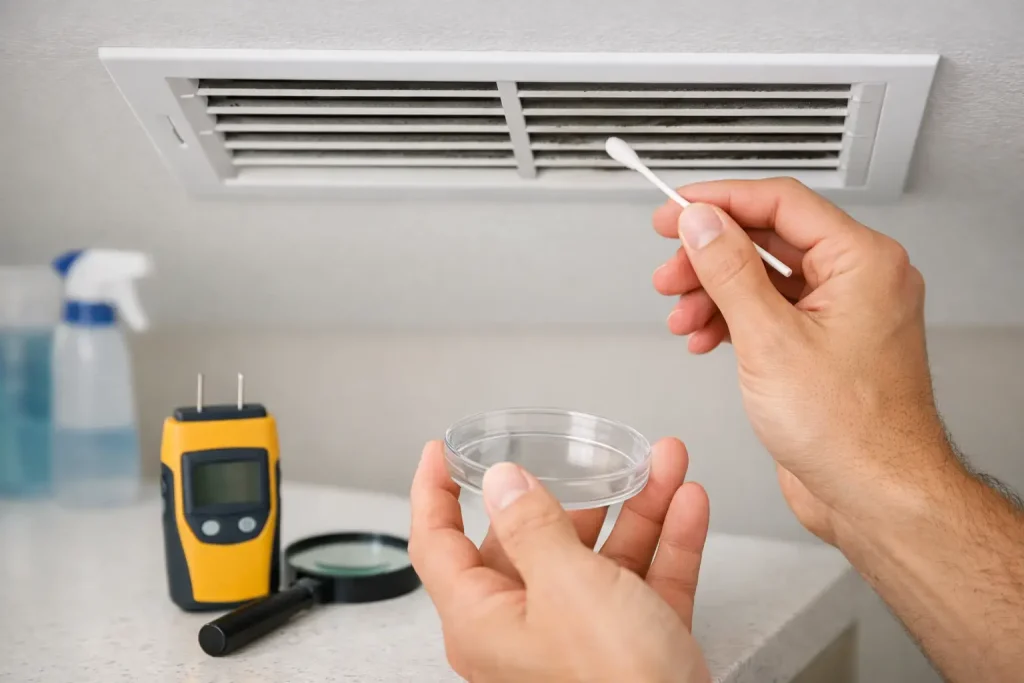
A DIY test designed for AC vents allows you to collect a sample from the system without cutting into ducts or paying for a full inspection as your first move. With Clean Vent Air Solutions, the process is built around three simple actions: clip, combine, and cover. After the sample is collected, results are available within 24 to 48 hours, with an optional lab report when additional validation is needed.
Testing is especially useful when you have several warning signs but no obvious visible growth. It can help you decide whether you are likely dealing with a mold concern that calls for professional HVAC service or remediation, rather than spending money on cleaning services based on a guess.
Timing matters. Test when the system has been operating normally and you are actively noticing the odor or symptoms. If you have just had the ducts professionally cleaned, sprayed the vents with a disinfectant, or replaced major components, your result may not reflect the conditions that first caused concern.
Do Not Confuse Dust With Mold
Many homeowners look into a vent, see dark debris, and immediately fear the worst. That reaction is understandable, but accurate identification protects you from both unnecessary expense and delayed action.
Dust tends to be dry, loose, and evenly distributed. It often wipes away easily and returns gradually. Mold may look more concentrated, patchy, or embedded in a surface. It can be accompanied by moisture, staining, a musty odor, or deterioration of nearby material. In some cases, mold grows on dust and organic debris inside a damp system, so the difference is not always obvious by appearance alone.
Avoid scraping material from deep inside the ducts, disturbing insulation, or using household bleach in the system. Bleach can create strong fumes, may damage surfaces, and does not fix the underlying moisture problem. Aggressive brushing or vacuuming without proper containment can also send particles into the air.
Know When a Professional Should Get Involved
A positive test, visible growth, or ongoing moisture issue does not always mean the same response. The right next step depends on where contamination is found, how widespread it is, whether the HVAC equipment has been damaged, and who occupies the building.
Professional help is a smart choice when mold appears widespread, water damage has affected walls or insulation, the system has standing water, or occupants have significant respiratory sensitivities. An experienced HVAC technician can check drainage, coils, insulation, airflow, and duct conditions. A qualified mold remediation professional may be needed when contamination extends beyond the HVAC system or involves building materials.
For renters, document odors, visible signs, leaks, and test results in writing. Notify the property manager promptly and keep copies of your communication. Small business owners should take employee concerns seriously, particularly if multiple people notice odors or symptoms in the same area.
Take Action Before the Problem Gets Bigger
Do not wait for mold to become visible in every room. A musty odor from the vents, unexplained irritation indoors, recurring dark buildup, or HVAC moisture is enough reason to investigate. Catching a problem early can make the solution simpler and may help protect the people who depend on the air in your home or workplace every day.
Start with what you can observe, confirm the concern with a focused air-duct test, and address the moisture source instead of covering up the smell. Clean air begins with a clear answer.